

A new paper proposes that...Bitcoin mainnet may soon add privacy transfer capabilitiesThe research team Alloc Init published " Shielded Bitcoin : Private Transfers on Bitcoin L1 ", which states that this design does not require a soft fork, does not need to create a new blockchain, and does not rely on any hosting intermediaries.
The goal of this scheme is to conceal the identities of both parties involved in the transfer and the amount of the transfer without altering Bitcoin's existing consensus rules. Researchers believe that such capabilities are more attractive to corporate treasuries, trading institutions, and users of large amounts of funds, as Bitcoin's public ledger exposes associations between amounts, times, and addresses for an extended period.
Hide transfer information through encrypted bills
Shielded Bitcoin adopts a meta-protocol structure to encapsulate value within encrypted tickets, rather than displaying it directly on the blockchain. Each ticket records the amount and information that can be identified by the recipient, but this content itself is not made public.
When a user initiates a transfer, they need to write the encrypted data along with a zero-knowledge proof onto the Bitcoin blockchain. This proof is used to confirm three things: that the funds being spent actually exist, that the sender has the right to use those funds, and that the input and output amounts are balanced. The entire process does not disclose the specific details of the transactions or the amounts involved.
To prevent double spending, each ticket will correspond to a unique serial number, which is nullifier. Once this marker appears on the blockchain, it is considered to have been used, and subsequent duplicate submissions will be rejected. The Bitcoin main chain itself does not need to understand these rules; it is only responsible for storing and sorting the relevant data.
Not dependent on a host or a single operator
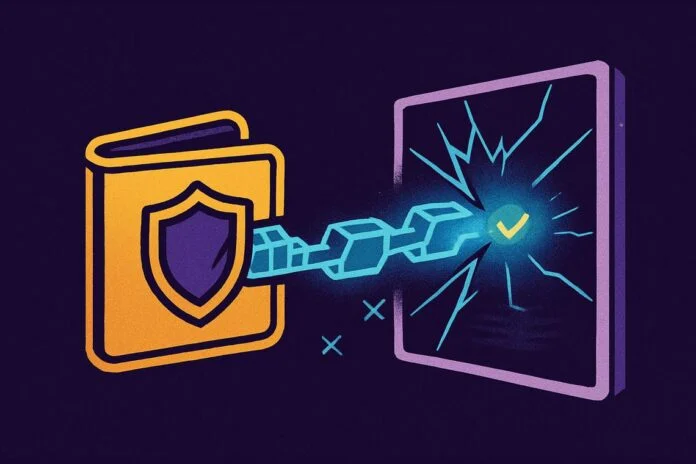
The paper states that no operator or intermediary will hold Bitcoin on behalf of users. It is still the users' own control keys that truly control the assets. Every transaction must be accompanied by valid proof in order to be accepted by the system.
verification is mainly carried out by programs known as indexer. They are responsible for monitoring private transactions on the chain, checking the validity of proofs, and ensuring that serial numbers are not reused. The research team stated that indexer can only provide verification and synchronization services and cannot access users' funds. Even if a certain indexer provides incorrect or outdated data, users can switch to other services or replay the historical records on the chain themselves.
Entrances and exits will still expose traces on the chain.
The scheme also includes the design of a read-only key, which allows users to disclose specific transfer information to accountants, auditors, or counterparties without relinquishing control over the funds. However, the paper also points out that once the read-only key is shared, it may expose all records within its visibility range. Therefore, in limited auditing scenarios, disclosing information on a case-by-case basis is more appropriate.
The processes of funds entering and exiting the privacy system are referred to in the paper as peg-in and peg-out, with the related mechanisms being named PIPEs. The research team stated that the complete details will be explained in another accompanying paper. According to them, this process also does not rely on hosting; instead, it controls Bitcoin signature permissions through cryptographic methods.
However, this design is not without limitations. The zero-knowledge proof system Groth16 used in the paper requires a one-time credible setup, and its security depends on at least one participant being honest during that setup process. In addition, the timing and amounts of funds entering and exiting the privacy system are still visible on the blockchain, allowing external observers to infer subsequent activities based on this information.
Differences between CoinJoin and Zcash
From a positioning perspective, Shielded Bitcoin is not the first solution to attempt to enhance the privacy of Bitcoin. CoinJoin, PayJoin, and Silent Payments all reduce the difficulty of tracking within the existing transaction model, but the amounts and most of the transaction relationships are still visible.
The paper argues that Zcash is the most conceptually close to this approach, as both utilize a combination of encrypted tickets, nullifier, and zero-knowledge proofs. The difference lies in the fact that Zcash operates on an independent blockchain, whereas Shielded Bitcoin attempts to derive its state entirely from the history of Bitcoin.
The research team also compared it with Glass Coin. The latter relies more on users saving and transmitting private proof data, whereas Shielded Bitcoin chooses to directly publish the data required to reconstruct the system state onto the blockchain in order to reduce issues arising from the loss of private data.
The paper is still in the research phase at present, but it reflects a persistent direction: to enhance the privacy capabilities of the mainchain without modifying the underlying rules of Bitcoin.