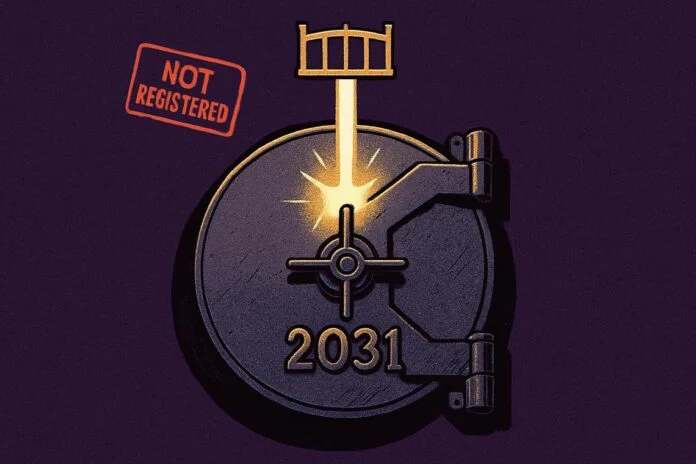


The U.S. Securities and Exchange Commission (SEC) has just provided crypto issuers with an explanation they have been waiting for since March: a clearer delineation of the line between functional blockchain projects and unregistered securities offerings. On September 25th, SEC staff released a new set of crypto FAQ, detailing how the agency's previous interpretations of federal securities laws apply to pledged receipt tokens, marketing terminology, token repurchases, and when "helping the network grow" becomes what regulators refer to as a key management effort.
Key Points
- On September 25th, SEC staff released FAQ, clarifying how their interpretation of the federal securities law in March applies to crypto assets, including pledged receipt tokens.
- The issuer's self-description regarding functionality or decentralization – and not just the definition of SEC – determines whether the work they have committed to has been completed.
- Maintenance, upgrades, and development funding support after the network goes live are generally not considered key management efforts within the Howey testing phase.
- Pledge receipt tokens may be regarded as digital tools or digital commodities, depending on their structure and whether they are linked to a functional network.
- CFTC updated their own cryptocurrency FAQ on September 24th, which involved the tokenization of customer funds and blockchain-based accounting.
SEC releases new FAQ to clarify the regulatory framework for crypto assets
What changes actually occurred on Friday? In short, the rules themselves did not change, but the explanations became clearer. The finance department of SEC issued this guideline, explaining how their explanatory release from March – namely, the document that for the first time drew a distinction between securities, digital commodities, and investment contracts related to crypto assets – should be applied to the scenarios that issuers constantly encounter in reality.
The release in March established a classification framework to distinguish non-security crypto assets and any investment contracts that may be attached to their sale. The new SEC crypto FAQ does not rewrite this framework, but rather addresses more specific and practical questions: what will happen after the network goes live, how should pledge receipt tokens be classified, and when will a company's marketing activities cross the line into commitments that regulatory authorities would consider related to securities.
The scope of FAQ and its relationship with the March explanation

Staff members have made it clear that the document dated September 25th does not create any new laws. These FAQ have no legal effect; they will not change or amend the applicable laws, nor will they impose any new or additional obligations. They merely serve to explain how the staff of the company's finance department understand the application of the existing framework in these specific matters. This distinction is important because in August, SEC proposed a broader set of rules known as Regulation Crypto Assets. That proposal included a conditional safe harbor that required issuers to permanently complete or cease their promised management efforts, but it is still in the rule-making process and is completely separate from this week's FAQ.
The role of issuers in functionality and decentralization
A more influential clarification concerns who determines whether a network is “functional” or “decentralized” enough to have legal significance. The definition provided by SEC in March established a framework for classification, but it does not determine whether the issuer has fulfilled its specific commitments to buyers. Instead, the threshold is set by the issuer’s own statements. In fact, this means that if a company tells investors that its network will be “completely decentralized” at a certain point in time, then the criterion for judgment is the threshold set by that company itself, rather than some universal SEC list.
Post-launch activities, marketing strategies, and considerations for investment contracts
Once a network is launched and begins to operate, will ongoing development work still expose it to securities regulations? Usually not – but the answer depends largely on what the issuer actually promises and how they describe the project after it goes live.
Key management efforts during the testing phase with Howey after the service goes live
Staff members indicate that once an encryption system has acquired certain functionalities, efforts made to ensure, maintain, improve, or enhance the services provided by that system—such as those efforts related to funding development projects—generally do not constitute key management efforts within the scope of Howey testing. This is an important clarification for those teams that continue to release updates after the system goes live and are concerned that their ongoing participation might lead to the tokens being subsequently classified as securities. It is also crucial to note the limitation here: this conclusion only applies to systems that staff consider to have already achieved these functionalities and does not extend to ongoing development on networks that have not yet reached this threshold.
Marketing has also been given the same meticulous attention. Typically, leveraging existing promotional networks does not in itself constitute a commitment to key management efforts. The same applies to visionary descriptions of future features, as long as these features are not linked to the potential for profit for stakeholders. However, staff repeatedly emphasize that whether any specific communication crosses the line or not still depends on the specific facts and circumstances; there is no universal template that can automatically ensure that marketing language is safe.
Classification of Staked Receipt Tokens and Receipts
Pledge has become one of the most challenging classification problems in the field of cryptography, and it is precisely in this area that SEC attempts to establish some order.
When can pledge receipt tokens be considered digital tools or digital commodities?
Staff members stated that pledge receipt tokens, which represent certain digital commodities and are not subject to investment contract obligations, can be considered digital tools as they merely certify ownership of the underlying assets. However, tokens issued by protocol-based liquidity service providers may also be classified as digital commodities if their value is inherently linked to the programmed operations of a functional cryptographic system and is driven by supply and demand dynamics, rather than by the commitments of a centralized issuer.
Definition and Characteristics of Receipts
FAQ also clarifies that, in this context, what constitutes a 'receipt'. Such a document merely serves to confirm that a certain amount of assets has been entrusted to the custodian and serves as proof of the depositor's ownership—nothing more. It does not change the rights or earnings of the underlying assets, nor does it provide any additional financial incentives to the holder. Importantly, the issuer of the receipt shall not transfer, lend, pledge, re-pledge, or otherwise utilize the deposited assets, and these assets cannot be subject to claims by the issuer's own creditors. Holders may still receive rewards derived from the underlying assets through pledging, but the receipt tokens themselves do not create such rights, nor do they determine their extent.
Issuer control, token buyback, and trading platform roles
For market participants, the most practical aspect of this announcement is what the issuer can say and do after the launch, without inadvertently triggering new securities issues.
The statements of the issuer after the launch of the functional network and the formation of the investment contract
Once a functional cryptographic system develops to a point where no single party—be it the original issuer or anyone else—can control its success or failure, the statements made by that network's issuer generally do not constitute a new investment contract. The response from the staff directly links this point to control: if no one possesses the kind of influence related to the analysis of Howey, then it is unlikely that the continued comments from the original team will trigger new securities risks.
How does the token buyback announcement change depending on network status?
Repurchase is one of the clearest demarcations in the entire publication, but it can vary significantly depending on the state of the network. For functional cryptographic systems, announcing a repurchase plan does not constitute a commitment to key management efforts. However, before the system reaches the functional stage, the situation is reversed: if the issuer describes the repurchase as something that can bring benefits or returns to token holders, then such an announcement may be seen as a commitment. In other words, the same corporate action can be interpreted very differently depending on the development stage of the network.
CFTC Update on Tokenized Assets and Blockchain Accounting Rules
This week, it's not just SEC pushing forward with encryption guidelines. On September 24th, which is the day before SEC, the Commodity Futures Trading Commission (CFTC) updated its regulations related to cryptocurrencies, covering two areas that are becoming increasingly important for companies building on blockchain infrastructure: how customer funds can be invested in tokenized versions of previously approved assets, and how companies can use blockchain-based systems to meet accounting requirements. Regulated futures companies and clearing institutions can invest customer funds in tokenized forms of approved assets, provided that they meet existing investment and custody requirements; whereas companies that use blockchain to meet legal accounting requirements must still be able to provide these records even if there are failures with the blockchain or its block browsers.
Overall, the releases of SEC and CFTC point to the same underlying dynamic: regulatory authorities are attempting to address specific and recurring compliance issues through staff explanations, rather than waiting for new legislation. For issuers and platforms that are still figuring out their way in staking products, repurchase plans, or blockchain accounting, this week's guidelines provide clearer boundaries – even though the underlying rules themselves have not changed.
FAQ
What regulatory issues regarding crypto assets have the new SEC FAQ clarified?
They clarified how the interpretation of the federal securities law by SEC in March 2026 applies to crypto assets, including pledged receipt tokens, marketing claims, and activities after launch.
How does the issuer's description affect the classification of cryptographic systems?
The statements made by the issuer determine the barriers to functionality or decentralization, and these barriers will affect whether the cryptographic system fits into the classification framework of SEC.
Does the maintenance or development service provided after launch constitute a key management effort in the Howey testing?
Usually not considered as such. Efforts made after a product goes live, such as maintenance, improvement, or efforts to promote network effects, generally do not fall under the category of key management efforts.
This article was generated with the assistance of artificial intelligence and has been reviewed by an editorial team.