

"Reducing from 12.8 seconds to 150 milliseconds" can easily be interpreted as a completed network speed improvement. However, the current more accurate status of the Alpenglow consensus upgrade is still in the testing phase: the official test network browser has already shown Alpenglow in operation, yet the foundation's upgrade page still describes the target time of around 150 milliseconds as a definitive goal, rather than a commitment that has already been fulfilled for mainnet users. When the mainnet will be activated remains to be seen, depending on subsequent tests, client preparations, and formal activation arrangements. For trading platforms and application developers, what needs to be done now is not to claim on their promotional pages that "second-level speed improvements have been achieved," but to confirm whether their systems can adapt to the new confirmation semantics.
Solana The original TowerBFT consensus relies on validators to write voting transactions into blocks, which then gradually lead to a final confirmation. Alpenglow In the first phase, Votor the system is modified to allow validators to send votes directly to each other and combine them into a quorum certificate, with the goal of reaching a conclusion within one or two rounds. According to the official documentation, the fast path requires about 80% of the staked weight to vote, while the fallback path uses a threshold of around 60%. These are the thresholds set by the protocol design, but it does not mean that every transaction will be completed within 150 milliseconds under all network conditions. Especially under stress, when nodes are offline, or during network fluctuations, the user experience still depends on the entire network chain, not just the theoretical consensus speed.
What exactly is being verified with the test going live online?
The value of a test network is to put new consensus mechanisms into an environment that is closer to real-world operations, in order to observe and verify whether validators' upgrades, voting processes, block generation, final confirmation, and fault recovery functions as designed. The official test network browser clearly indicates “Alpenglow on Testnet”. This is a verifiable record of the status, but it only indicates that the relevant mechanisms are in operation on the test network. It cannot directly prove the launch time of the mainnet, nor can it infer the future stability of the mainnet from the data of the test network at any given moment. To refer to “testnet” as the “mainnet” or to use a target value as the actual average of the entire network would be an unwarranted leap in interpretation.
This change mainly occurs at the consensus layer, rather than at the program execution layer. The notes from Solana emphasize that SVM and the existing program execution methods remain unchanged, and the transaction and fee mechanisms will not be rewritten due to the first phase of Alpenglow. In theory, ordinary users' actions such as signing and sending transactions do not need to be migrated; however, teams that provide block streams, confirmation status, and on-chain indexing services need to consider the possibility of multiple bank occurring within a single time slot, as well as the new `bank_id` field. Although these may seem like technical details, they could affect the transaction posting on trading platforms, the display of wallet status, and how risk control systems interpret "confirmed" transactions.
The preparations on the verifier side are more detailed. The official guidelines require that the operating node must possess a registered BLS public key and run the compatible Agave client in order to participate in the new Votor consensus. Node operators also need to check monitoring and rollback plans to ensure that not only binary files are updated, but also voting keys, metrics, and operational procedures are properly managed. If a consensus upgrade is not successfully migrated by enough verifiers, even the most impressive delay targets cannot become a credible final confirmation on the mainnet.
Beyond speed, it is more important to ensure semantics are correct.
Financial applications focus on "certainty" rather than just "speed." If payment services prematurely display a state that has not been finally confirmed as irreversible, risks will only become apparent when errors occur; if one continues to wait in the old state, the speed benefits of Alpenglow may be consumed by their own systems. During the upgrade period, developers should conduct retests in a test network using real business scenarios: when to provide users with notifications after a transaction is submitted, when to allow withdrawals or settlements, how to handle duplicate events during node switches, and how the system should recover in case of temporary failures. Only when the entire process is adapted can improvements at the protocol layer be translated into improvements at the product layer.
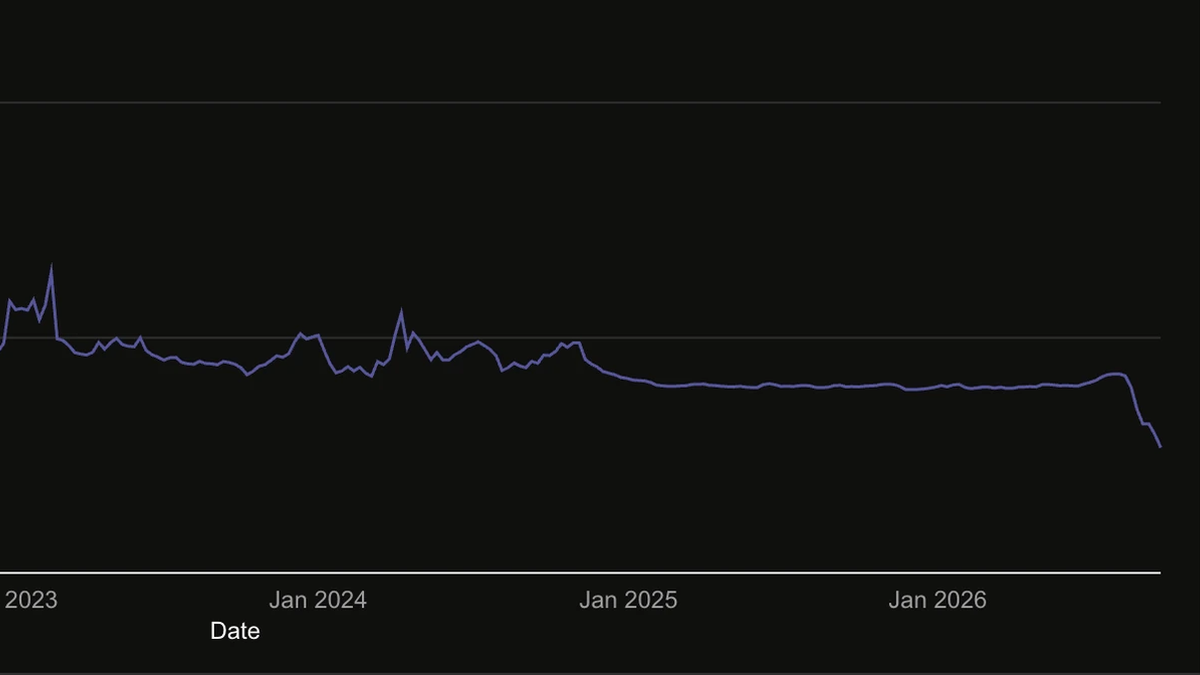
The upgrade roadmap for Solana is also divided into different stages. Votor is currently the focus of consensus transformation testing; another part, Rotor, is aimed at block propagation, and the official page indicates that this has not yet been scheduled for a time. These two parts cannot be combined and claimed as "the entire Alpenglow has been fully launched." Similarly, the appearance of Alpenglow on the test network does not mean that all wallets and service providers in the ecosystem have completed their preparations. The official transition dashboard provides a real-time observation window, but the instantaneous data changes over time, so a single screenshot cannot replace a long-term performance report.
This advancement of the testnet is an important milestone, as it allows the new consensus, which has previously been mainly confined to design and specialized environments, to be tested in a public network. It also serves as a reminder to the market to set realistic expectations: the goal is for a faster final stage, but for now, we are still in the testnet phase, with the mainnet requiring further steps before it is ready. For real users, what is worth waiting for is not just the claimed “150 milliseconds” speed; rather, it is to see whether the confirmed speed and reliable performance will be realized under peak trading conditions, node failures, and complex use cases once the mainnet is activated.
The outside world should also distinguish between “faster final confirmation” and “increased transaction throughput.” The former refers to the time required for a transaction to enter an irreversible state, while the latter refers to how many transactions a network can process within a certain period of time. The two may affect each other, but they are not the same indicator. The main focus of Alpenglow is to rewrite the voting and dissemination processes; it cannot be inferred from a 150-millisecond target that fees will necessarily decrease, nor can it be assumed that the number of transactions per second on the chain will increase by the same multiple. What wallets, trading platforms, and payment systems can truly promise to users should be based on continuous observations after the mainnet is implemented and on their own end-to-end tests.
Cover material: Solana Official Alpenglow Upgrade the visual design of the page, retaining only the main visual elements of the protocol and removing large sections of explanatory text; do not represent schematic diagrams as actual data centers or live deployment sites.