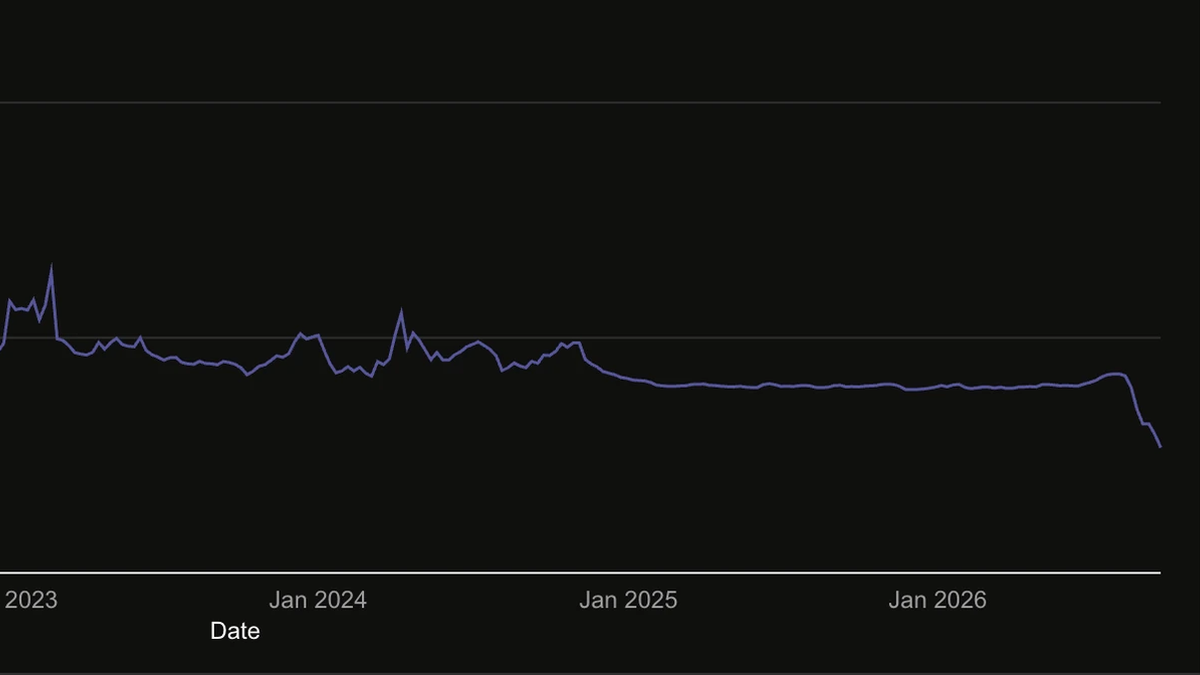


On September 28th, the Solana Foundation released a technical analysis regarding the reduction of time slots: the target time slot for the network was gradually reduced from about 400 milliseconds to 250 milliseconds. The foundation examined the accompanying changes in block skipping, voting delays, and validator earnings indicators. To start with the conclusions: the overall block skipping rate in the observed samples remains low and relatively stable, with no prolonged periods without regular blocks; however, voting delays have increased, and nodes in Asia and South America deserve special attention. Faster speeds are not just a mere report card; while allowing users to see the next block more quickly, the network also provides validators distributed around the world with a shorter collaboration window.
The "time slot" discussed this time refers to the unit of time during which leaders are scheduled to produce blocks, and it is not equivalent to the final confirmation time when a transaction becomes irreversible. Yesterday, Solana posted news about Alpenglow being launched on the test network, discussing the goal of achieving approximately 150 milliseconds of finality in the future consensus mechanism; today's analysis, however, looks back at observations made after shortening the time slots on the existing mainnet. These two events occur at different levels, and just because both figures include "milliseconds," it cannot be assumed that users have already achieved finality in 250 milliseconds, nor can the capabilities demonstrated by Alpenglow on the test network be prematurely applied to the mainnet.
Why can fast time slots potentially improve the experience while also increasing the pressure on verifiers?
The foundation considers block 440,208,000, which corresponds to the 1019th epoch, as a significant milestone in this round of time slot reduction. The technical logic is not complicated: when it's a verifier's turn to generate a block, the shorter the waiting time, the more frequently the network can theoretically advance; however, cross-continent transmission, verification, and voting also need to be completed within a tighter timeframe. If some nodes are at a disadvantage due to geographical location or network conditions, the speedup at the protocol level may lead to new inequalities at the operational level.
The report first observes the block skipping rate. The intended leader did not allow the blocks to be included in the final adopted chain; this could be due to nodes being offline or because the blocks ended up in later abandoned forks. Shortening the time interval will only directly affect the time pressure of the latter scenario, and it is not possible to judge the stability of all nodes based solely on the block skipping rate. The foundation stated that during the period when the time interval was reduced from 400 milliseconds, the overall block skipping rate did not significantly increase accordingly. This indicates that the production pipeline in the current sample is generally keeping up, but the report also reminds that the 250-millisecond target has only been in operation for a short duration, and some samples involving cross-continental transfers are very small in size.
For example, the handover of leadership from Asia to Oceania, and from Europe to Oceania, was reported as a situation that required close attention; there were only 7 observations during the 250-millisecond phase and 35 observations during another phase, respectively. Such figures are not sufficient to determine local changes as a definite long-term trend, let alone to claim that verifiers in a certain region are 'slowing down the entire network.' What is truly worth continuous public scrutiny is whether the block skipping rates in different geographical combinations will worsen as the sample size increases, and whether network upgrades will require smaller operators to use more expensive bandwidth and hardware, which could ultimately affect the distribution of verifiers.
There is an improvement in the “empty time” between consecutive blocks without any standard blocks. The foundation states that in the past, the dominant consecutive empty periods exceeded 1800 milliseconds, but after shortening the time slots, they now fall within the range of 1200 to 1400 milliseconds. For users, this means there are fewer long pauses in the network, which may result in smoother updates of transaction status; however, this metric does not guarantee the completion of each transaction. The user experience also depends on congestion levels, priority fees, RPC services, and the way wallets display information. An average value on one chain does not automatically become the definitive delay for all payments and transactions.
For a 200-millisecond target, it's not just about speed; it's also about who remains in the network.
The costs have already become apparent on the voting side. Reports indicate that after the time slots were shortened, there was an increase in voting delays, with Asian and South American validators being more significantly affected. Therefore, caution is needed when discussing a 200-millisecond target before the launch of Alpenglow. The Solana Foundation also provided data on voting points losses: under a 250-millisecond target, the loss ratio without considering stake weight is approximately 1.636%, while with stake weight considered, it is about 0.0874%. There is a significant difference between the two, suggesting that large-stake validators may be in a different actual situation from regular validators. If only the lower number after weighting is reported, the pressure borne by smaller operators may be obscured within the average value.
The report also indicates that the high percentile time window during which a single leader continuously controls transaction sequencing has decreased from about 3 seconds to about 2 seconds. Theoretically, a shorter window would compress the operational time for certain strategies aimed at extracting value; however, this does not mean that the maximum value that can be extracted has disappeared. Transaction sequencing is still influenced by fees, informational advantages, and application design, and shortening the time only changes one of these factors. Similarly, the foundation believes that the overall architectural framework has withstood this increase in speed, but this does not mean that the next 200 milliseconds can be implemented without further verification.
For developers and investors, the more valuable aspect of this report is that it breaks down an "acceleration" upgrade into verifiable operational indicators: block skip rates, consecutive gaps, inter-continental handovers, voting delays, and point losses. These factors may interact with each other, and there is no single indicator that can prove that the network is "comprehensively better." At this stage, it can be said that the 250-millisecond target has entered the mainnet observation phase, and there has not yet been a noticeable deterioration in the overall block skip rate; as for whether lower time slots can balance global node fairness, economic incentives, and the ultimate user experience, more data samples and evidence from the next round of upgrades will be needed. Focusing solely on speed records may lead to missing the real questions that the network needs to address.