

OpenAI On Tuesday, perhaps the highlight of Dev Day is its agent assistant named Dots, or the new AI model. However, taken overall, multiple announcements from this AI company point to a larger plan: to disrupt the traditional app store model. When viewed together, today's release by OpenAI is actually turning ChatGPT itself into a place where software can be discovered, launched, and used jointly by people and agents.
In addition, OpenAI has also introduced a method that allows users to carry their ChatGPT identity to other places, while also permitting them to use their existing AI quotas in third-party applications.
This is not the first time that OpenAI has attempted to run the application within a chatbot interface that is familiar to it, but the current approach is more comprehensive than before.
Firstly, OpenAI is turning ChatGPT itself into an entry point for launching applications. The company stated that this chatbot currently has 1.2 billion users per week, but it has not yet fully utilized its potential as a discovery mechanism to help users find and use applications that collaborate with AI.
To change this, ChatGPT will proactively suggest applications that may help users complete their tasks during the conversation. Afterwards, users can connect to those applications and start using them directly within ChatGPT.
This change also benefits from the expansion of the ChatGPT plugin architecture, which now supports extended functions.
This enables application developers to build interactive panels that allow users to use their tools while chatting with ChatGPT. As a result, applications and services that users previously used through web pages, native desktops, or mobile apps have now become something that can be directly operated within ChatGPT.
Developers who integrate with this system can build the native version of their applications through AI, just as they would through open networks or mobile app stores. As more and more discovery activities take place within AI chats, this has become a distribution channel that is hard to give up.
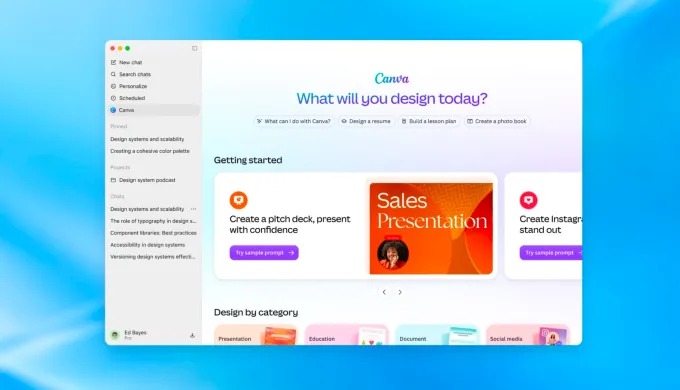
Users also have the motivation to use this channel because "logging in with ChatGPT" will allow them to carry over their own AI quota. OpenAI indicates that there are already 16 initial partners in this program, including Cognition's Devin, Notion, Vercel, T3, OpenClaw, and Dactyl, among others, but the company plans to continue adding more partners soon.
In a demonstration during OpenAI Dev Day, the company showcased how its new meeting application operates within ChatGPT and displayed upcoming meetings from users' calendars. There, users can easily choose to use AI to take meeting notes, and then receive a summary of follow-up tasks after the meeting is over.
In another example, users can collaborate with applications that focus on design, such as Figma and Adobe, to make modifications to the current project, or to use a certain feature that would otherwise require a separate application to accomplish.
OpenAI also mentioned improvements to the process for developers to submit plugins for review – if you wish, you can think of it as the OpenAI version of Apple's App Review. Now, developers will be able to track the review progress, view the content that needs to be fixed, apply for manual review, and update their plugin tools without having to resubmit the entire application.
The company also announced the launch of a new enterprise application market where partners can promote their services. At the time of launch, there were already over 30 partners providing applications, including Adobe, Figma, Sierra, Decagon, HubSpot, Salesforce, ServiceNow, Harvey, Legora, CrowdStrike, Baseten, and others. OpenAI stated that eligible customers can use a portion of their OpenAI commitment quota for approved partner software.
In addition to transforming ChatGPT into an application discovery tool that allows users to directly connect to applications, OpenAI's embrace of proxies is also gently ushering users into a new phase: people no longer need to overthink which application to use or why to use it, but rely more on the recommendations of the AI proxy.
With the launch of its autonomous AI proxy named Dots, the proxy will browse web pages on behalf of users and execute tasks required within its own cloud infrastructure. Each Dot comes with its own cloud computer and browser, and can also use connected applications. Compared to the old model, users who previously wanted to manage certain types of projects—such as setting up websites or coordinating meeting calendars—had to download different applications onto their computers or phones in order to complete these tasks.
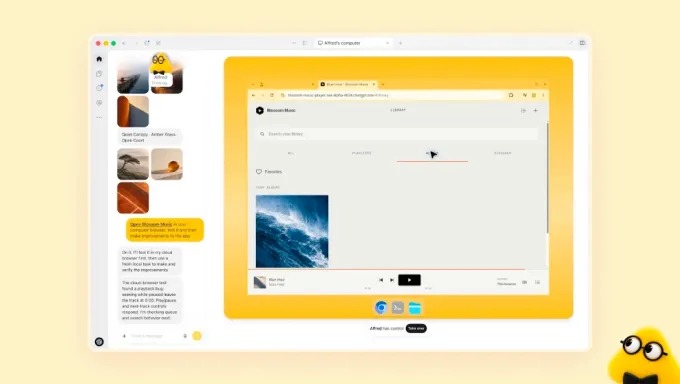
And now, users only need to tell AI what they want to accomplish, and it will execute it on their behalf directly. In some cases, the agent's work may require access to another AI model or a specific application. But this is something that the agent can provide for the user, rather than the other way around – that is to say, users no longer have to search for the specific tools needed to complete tasks on their own.
OpenAI indicates that Dots will be able to connect to its ecosystem, which now comprises over 4,000 applications.
More importantly, Dots can also take the initiative to get involved, perhaps by helping to handle a certain project or a vulnerability, or by dealing with tasks that users have forgotten about – but all of this requires user approval. Dots will use the connected applications in the background to carry out what OpenAI calls “proactive research,” and it will operate in read-only mode; however, users can still control the actions taken by Dots.
It is worth noting that OpenAI did not reveal any additional plans in this regard today. Instead, they focused on demonstrating how to build elements such as discovery, distribution, and user interfaces to compete with the app store model. They also introduced an identity layer and a mechanism for sharing users' existing ChatGPT AI quotas. On Tuesday, the company did not announce any billing or revenue-sharing system plans that would be comparable to those of traditional app stores either.