

On a sunny day in late September, in Seattle, about 50 executives representing major Microsoft customers were given a rare opportunity: they could ask any questions to Satya Nadella, CEO.
One participant wanted to know what Microsoft could do to help companies adapt to the era of artificial intelligence. In his response, Nadella emphasized that "internal dissemination within companies" is very important, which means that AI tools need to be widely deployed.
"Like with everything, change always comes from the bottom up, from the top down, and also from the middle upwards," said Nadella. Dressed in a tight-fitting black crew-neck shirt and dark grey trousers, he walked across the stage in the city center of Paccar Pavilion.
For 59-year-old Nadella, this gathering took place at a critical moment. As someone who has spent more than half of his life at Microsoft, he is working hard to enhance the role of this software giant in the AI craze. Recently, Nadella has been more frequently involved in discussions about AI; last month he posted on X about the need for a "deliberate pace" in model development, and a few days later he responded to security concerns at the All - In Summit event in Los Angeles.
Despite having a market value of nearly $4 trillion, Microsoft has yet to truly stand out in the AI field. NVIDIA dominates AI chips, Anthropic and OpenAI possess the most advanced models, Meta has just launched its first personal agent for the mass market, while Google's services based on Gemini are very popular among both businesses and consumers.
Microsoft has been actively involved in AI through investments in OpenAI for a long time, but cracks have begun to appear in this alliance. Although this software giant has a large business scale renting chips to AI developers via its Azure cloud service, the popularity of its Copilot technology in the workplace is not high, and its own AI model remains niche.
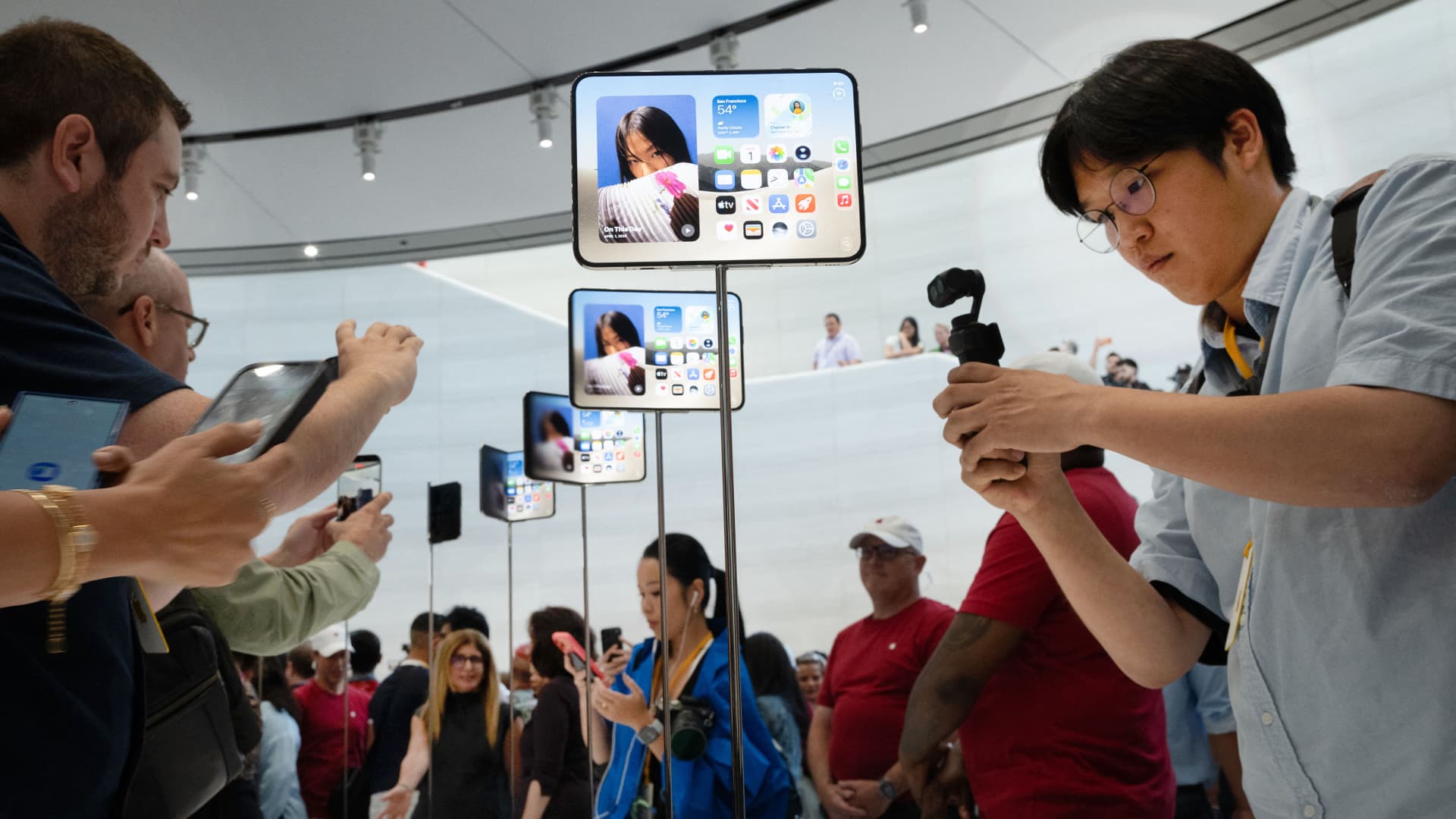
Microsoft will host events Windows and Surface in San Francisco on Wednesday, which are described in the invitation as "a conversation about how local AI will shape the next chapter of PC."
Wall Street is not enthusiastic about this story. Even taking into account the significant rebound in the third quarter, Microsoft's stock price has still lagged behind its large tech peers and the broader Nasdaq index this year, rising only by 7% as of last Friday's close. Since 2023, Microsoft has not outperformed the S&P 500 index in any calendar year.
Tiffany Wade, the co-portfolio manager of Microsoft shareholder Columbia Threadneedle, stated that there are still many unknowns surrounding Copilot, while Copilot is at the core of Nadella's AI strategy.
"I think the product needs to mature a bit more before we really figure out the best solution or pricing," Wade said in an interview.
For investors who have held Microsoft shares for a long time, Nadella has a solid track record in dealing with industry changes. He took on the role of CEO in 2014, succeeding Steve Ballmer; during Ballmer's 14-year tenure, Microsoft's stock price fell by about 33%, and the company gradually slipped into the traditionally questioned realm of software.
Subsequently, Nadella turned Microsoft into a cloud computing giant. He abandoned the Office permanent licensing model and pushed the company to shift towards subscription-based software as a service (SaaS) products, in conjunction with Azure infrastructure. He also allowed customers to integrate products from competitors such as Oracle and Salesforce, rather than insisting on a pure Microsoft technology stack.
Trained as an electrical engineer and computer scientist, Nadella also became a shrewd dealmaker, expanding Microsoft's territory by acquiring the developer of "Minecraft" Mojang, the business social network LinkedIn, and the code-sharing service GitHub.
In recent months, Nadella has acknowledged to investors that the company needs to change its business model again, this time to reflect the shift towards a pay-per-use model driven by AI. This means that Microsoft will become a supplier of a large number of token, and token will be used to measure computing usage, also representing the "currency" in the AI economy.
Nadella stated during Microsoft's July financial report conference call that success would mean "further expanding our TAM," referring to the abbreviation for "Total Addressable Market."
The growth story depicted by Nadella revolves largely around software production: developing more code, and doing so more quickly with the help of the latest and most powerful AI tools.
"Within a year, we have progressed from code assistance to agent programming, and then to software factories," Nadella said at a customer event at the end of last month.
Today, he hopes that Microsoft's customers will also establish their own software factories and invest more in this process to help produce code. He also hopes to empower non-technical knowledge workers. At the event, some of Nadella's deputies released a Copilot "super application" that can perform increasingly complex tasks, generate simple applications, and act as virtual teammates.
Nadella had anticipated all of this in advance. Microsoft first invested in OpenAI back in 2019, when the company was still just a startup laboratory. In 2021, one year before the release of ChatGPT, Microsoft collaborated with OpenAI to launch GitHub Copilot. This tool can generate portions of content for applications and websites based on a large amount of open-source code.
They caused a sensation in their early days. However, as the generative AI market heated up rapidly, developers turned to products launched by AI native startups, such as Cursor which has now been acquired by SpaceX, as well as Anthropic which introduced Claude Code.
"Lessons Learned"
Microsoft's lag in keeping up with rapid changes has caused GitHub to lose a portion of its market share.
Earlier this year, Microsoft adjusted the pricing of this programming tool to make it more in line with computational needs. Some customers initially expressed opposition, but by July, the company claimed that its user base had reached 50 million, up from 26 million in October last year. This means that one-fifth of the users on GitHub are already using it.
Nadella stated during the July financial report conference call that GitHub Copilot sales grew by 60% compared to the previous quarter, and there was "significant consumer revenue" after the new model took effect.
GitHub Operations Manager Kyle Dyer said in an interview, " GitHub Copilot learned a lesson from going out."
Dagel stated that GitHub employees share this experience with other teams at Microsoft that are considering a pay-per-use billing model.
Microsoft Security Products Executive Vice President Hyatt Galott stated that the company will charge based on the intensity of customer technology usage.
“I always tell the team that when customers are consuming, it means we are creating value. For me, the truth starts with the customer,” said Galott. “If they are not consuming, it means we have not provided value.”
Currently, Microsoft's enterprise product portfolio still relies on a subscription model. For its core Microsoft Office suite – which includes Word, Excel, and Teams – customers typically sign contracts for multiple years at a time, and an additional $30 is charged per person per month for Copilot. Microsoft has 30 million Copilot licenses, with a business version Office 365 user base exceeding 450 million.
An uncertain factor in Microsoft's AI roadmap revolves around Mustafa Sulaiman.
Suleiman previously co-founded the AI laboratory DeepMind, which was acquired by Google in 2014. In 2024, Nadella hired him to lead work related to AI, at a time when Microsoft's relationship with OpenAI was cooling down.
Last year, Microsoft lost its status as the exclusive cloud service provider for OpenAI; this year, its license to OpenAI intellectual property also became non-exclusive. This means that although Microsoft has made significant investments in AI laboratories, it no longer enjoys preferential treatment. In April, Microsoft stated that it remains the “primary cloud partner” of OpenAI.
Suleiman's team has already launched models for programming, image generation, and reasoning. This week, he boasted on X that a new speech-to-text model is "the most accurate real-time transcription model in the world... #1 !!!". However, according to independent rankings, in terms of raw digital intelligence, the team still cannot compare with Anthropic or OpenAI.
Microsoft executives stated that having model development and application development under the same umbrella has its benefits. Teams responsible for Teams and other Office productivity applications have achieved higher performance and lower costs by leveraging Sulaiman's transcription model, and engineers also receive clearer feedback when developing products, said Executive Vice President Charles Lamanna.
"The collaboration with Mustafa is much closer," he said.
Sulaiman is still quite prominent within Microsoft, but his responsibilities have changed. In March of this year, Microsoft announced the integration of the engineering teams responsible for the business and consumer versions of Copilot assistants, as the adoption process had been slow. Jacob Andrew was promoted to Vice President of Experience Execution, while Sulaiman was asked to focus on model development.
At the same time, Nadella has been downplaying the importance of having world-class models in isolation.
"In my view, our priority must be to build a cutting-edge ecosystem, not just a cutting-edge model, so that value can flow widely to every company, every industry, and every country," he wrote in a SN Scratchpad website post in June.
At the Copilot event in September, Nadella stood in front of a slide that displayed how Copilot could connect to “every model,” and listed the logos of Anthropic, OpenAI, SpaceX, as well as Microsoft’s AI.
Fix the economic model
More and more, Microsoft has found that these model leaders are eroding its own territory, as they have launched products for network security, customer service, and other functions.
In January, as the momentum of Claude Code at Anthropic was strengthening, Microsoft executives were impressed by its ability to leverage a large number of tools to complete tasks, said Jared Spataro, Microsoft's head of work marketing for AI. An anonymous source familiar with the matter, who requested to remain anonymous for confidentiality reasons, stated that Microsoft suffered a setback in its dealings with Anthropic, which prompted the company to conduct close studies of this rising competitor.
A Microsoft spokesperson declined to comment.
Spartaro stated that the company realized at that time that it was necessary to change the mechanism.
“At that moment, we were very clear about it. It was like, oh, wow, we couldn’t continue to provide the best results at a fixed monthly price per user,” said Spataro. “We realized that we needed to start thinking about our business model.”
The company then proceeded to develop a more comprehensive pay-per-use billing scheme, known as usage-based billing, abbreviated as UBB. Spataro stated that the first UBB product was Copilot Cowork, which was capable of handling large-scale productivity tasks and could display progress.
Nadella stated during the July financial report conference call, "Earlier this month, we added pay-as-you-go billing to Cowork. Thousands of customers have already paid for it and are actively using it."
Cowen Analyst Derek Wood stated that this is a strong signal.
"This could result in effects similar to what we saw after Claude Code shifted to consumption-based pricing, such as a significant increase in token bills," Wood said. He suggested buying Microsoft stocks. "This situation is also entirely possible with Cowork."
Nadella himself is also a user. In a podcast recorded after the event in September, he said that he could have Cowork prepare a spreadsheet for supply chain optimization and demonstrate various scenarios.
“It will produce a great result,” he said.
David Berry, Vice President of consulting firms Directions, on, and Microsoft, stated that executives at IT who are facing tight budgets are not all prepared to accept Cowork.
"People are very worried that once it's available, everyone will start to drain their bank accounts," Berry said. "There's no way of knowing whether people have actually gained any benefits from it at all."
As the era of ChatGPT is about to celebrate its fourth anniversary, Microsoft is still in search of a hit product, whether at the model level or the application level. Although Nadella has managed to win back investors' trust by revitalizing Microsoft, he cannot allow the company to become a follower in the AI era.
Berry stated that he still believes Nadella to be the right person to take the helm.
"He seems to be able to handle these situations, or identify them, and come up with plans to change and evolve the business," he said. "The challenge is that, in a sense, we are facing more unknown factors with AI, so market dynamics are more diverse, but he seems to have a plan, and he is executing that plan."
In Seattle, Nadella concluded his response to questions about transformation with one sentence: Senior leaders within the organization play a key role.
"Only leaders who take action themselves have the ability to bring about change," he said. "Otherwise, they're just rushing from one media event to another, aren't they?"
He added, "You really have to be immersed in it."
WATCH: BofA's Liani discusses Microsoft's rating upgrade: Investors have underestimated its differentiation in AI