

It can be said that safety is not merely reflected in the crime rate.
Being prepared for emergencies is also a form of safety; the number of emergency responders in the vicinity also affects one's sense of security. In times of concern about unemployment and inflation, an individual's financial situation can also influence their perception of safety.
A report released on Monday by the personal finance website WalletHub evaluated the 50 states of the United States and ranked them from the safest to the least safe.
WalletHub evaluated 52 indicators for each state, covering five categories: personal and residential safety, financial security, road safety, workplace safety, and emergency preparedness.
Personal and residential safety categories include factors such as crime rate, the number of emergency response personnel per 10,000 people, and the number of community patrol organizations per 10,000 people.
When assessing financial security, WalletHub examined indicators such as unemployment rates, median credit scores, the number of identity theft complaints per 10,000 people, and poverty rates.
The workplace safety ranking for WalletHub takes into account the number of fatal work-related injuries per 100,000 full-time employees, as well as the presence of programs related to the Occupational Safety and Health Act.
Finally, the emergency preparedness ranking takes into account the history of each state's exposure to climate disasters.
WalletHub utilizes data from institutions such as the U.S. Census Bureau, the Bureau of Labor Statistics, the Department of Labor, the National Highway Traffic Safety Administration, the Centers for Disease Control and Prevention, and the Crime Victims Center.
Here are the 10 safest states in the United States, as well as the 10 least safe states.
1. Vermont
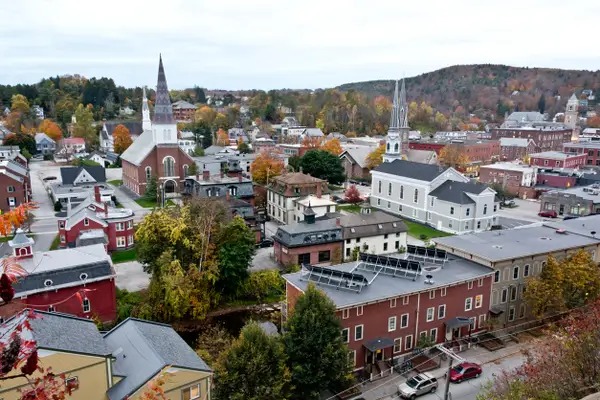
WalletHub ranks Vermont as the safest state in the United States.
Vermont has an unemployment rate of 2.7%, which is one of the lowest in the United States, and this has helped it rank fourth in financial security. The state also has the second fewest complaints of identity theft per 10,000 people in the country.
The state ranks third in road safety across the United States, second in highway quality, and fifth lowest in traffic fatalities.
Its workplace safety ranking also made it into the top ten, with a comprehensive ranking of sixth.
Vermont ranks 16th in personal and residential safety and 11th in emergency preparedness.
2. Massachusetts

As the second safest state in the United States, Massachusetts ranks in the top ten in almost every category analyzed by WalletHub.
The state ranks second in personal and residential safety, with a low crime rate. According to the WalletHub report, it has the eighth lowest number of theft cases and the fourth lowest number of murder cases in the United States. Massachusetts also ranks second in road safety, eighth in financial security, and ninth in emergency preparedness.
It has the lowest safety rating in its workplace, ranking 23rd overall.
3. Maine
Maine’s lower crime rate has placed it in the top three of the safest states in the United States. Between 2024 and September 2026, the state experienced the fewest mass shootings, had the third lowest number of murders per capita, and the lowest number of aggravated assault cases per capita, thus ranking fourth in terms of personal and residential safety.
Maine ranks 16th in financial security, with an unemployment rate of 3.4%, and its poverty rate is the 12th lowest in the United States.
It ranks 8th in road safety, 21st in workplace safety, and second in emergency preparedness.
4. New Hampshire
New Hampshire has been rated as the fourth safest state in the United States, yet its financial security ranking is the highest among all states.
The state ranks third in personal and residential safety, and fourth in emergency preparedness.
It has lower rankings in road safety and workplace safety, at 12th and 41st respectively.
5. Connecticut
Connecticut has the highest ranking for personal and residential safety in the United States.
The state ranks 21st in both financial security and road safety, 25th in workplace safety, and 15th in emergency preparedness.
6. Utah
Utah ranks first in road safety, third in emergency preparedness, and fourth in workplace safety.
Its financial security ranks 26th, and personal and residential security ranks 35th.
7. Minnesota
Minnesota ranks second in workplace safety, sixth in road safety, and seventh in financial safety. The state also ranks 23rd in both personal and residential safety as well as emergency preparedness.
8. Indiana State
WalletHub ranks Indiana as 7th in personal and residential safety, 25th in financial safety, 11th in road safety, 10th in workplace safety, and 28th in emergency preparedness.
9. Rhode Island
In Rhode Island, both personal and residential safety as well as emergency preparedness are rated as the eighth best in the United States. The state ranks 20th in financial safety, 16th in road safety, and 39th in workplace safety.
10. Hawaii State
Hawaii state ranks 10th, at the very bottom of the top ten safest states in the United States, which are listed as WalletHub.
Hawaii State stands out in terms of financial security, ranking second in the United States. It is 20th in personal and residential safety, 26th in road safety, 22nd in workplace safety, and 13th in emergency preparedness.
Continuing down, you will find the top 10 states rated as the least safe in the United States.
41. Georgia
Georgia ranks 34th in terms of personal and residential safety, and 35th in terms of road safety.
42. Alabama State
Alabama ranks 36th in personal and residential safety, 34th in financial safety, 31st in road safety, and 40th in emergency preparedness.
The state has the lowest unemployment rate, alongside Vermont, North Dakota, Hawaii, and South Dakota.
43. Colorado State
In Colorado, personal and residential safety ranks 46th among all states in the United States.
The state ranks 19th in financial safety, 41st in road safety, and 38th in workplace safety.
After contacting Eric Marumama, the press secretary of Colorado Governor Jared Polis, Business Insider raised questions about the methodology used for the WalletHub rankings. In his email, he stated, "I'm not clear why this ranking of states from safest to least safe takes into account factors such as credit scores, college savings, and family emergency funds, which are very different from public safety and crime."
Maruja Maruca added that since Boulder "signed into law provisions to fund law enforcement agencies, invest in proactive crime prevention strategies, and increase penalties for car theft," the crime rate in Colorado has "significantly decreased year-over-year in key areas."
He said, "From 2024 to 2025, violent crimes decreased by 10.7%, aggravated assaults decreased by 9%, and property crimes decreased by 17.3%. Our efforts are paying off, and these are the same data that Governor Polis is focusing on when evaluating how to make our state safer."
44. Missouri State
Missouri ranks 46th in road safety.
Its financial security ranks 23rd, and personal and residential security ranks 29th.
In the category of emergency preparedness, the state ranks 41st.
45. Oklahoma
46. Arkansas
Arkansas ranks 44th in personal and residential safety, and 43rd in financial safety.
WalletHub reports that the state has the fourth-highest number of deaths per 100 million vehicle miles traveled, and also ranks 47th in the number of assault cases per capita.
47. Florida State
Florida ranks 31st in terms of personal and residential safety.
This "Sunshine State" ranks 45th in financial security, 46th in workplace safety, and 47th in emergency preparedness.
48. Texas State
Texas ranks 40th in terms of personal and residential safety, financial security, and road safety.
49. Louisiana
Louisiana ranks 49th in financial security and emergency preparedness, and 43rd in workplace safety.
The ranking of WalletHub also shows that Louisiana, along with New Jersey and Wyoming, has the highest number of law enforcement officers per capita, and the state also has the third-highest number of assault cases per capita.
50. Mississippi State
WalletHub rated Mississippi as the least safe state in the United States, with the state also having the lowest rankings in terms of financial security, road safety, workplace safety, and emergency preparedness.
However, in terms of personal and residential safety, the state is considered average: it ranks 22nd in terms of safety.
According to the data from WalletHub, this state ranks alongside Florida, South Dakota, North Dakota, and Louisiana as having the highest total losses from climate disasters per capita.