

Cardano has enabled a new layer of compliance tools for tokenized finance. CIP-0113 is a programmable token standard that allows issuers to directly attach KYC checks, transfer restrictions, as well as freezing or seizure rules to their assets. After this proposal, which included 90 submissions, was merged on September 29th, the standard was launched on the mainnet; Cardano Foundation officially confirmed this deployment on October 7, 2026.
Key Points
- After the merger was completed on September 29th, CIP-0113 was launched on the Cardano mainnet and officially announced to the public on October 7th.
- Emitters can now embed KYC, transfer restrictions, freezing, and seizure controls into tokens.
- This standard is aimed at regulated stablecoins, tokenized funds, and bonds.
- This launch does not require a hard fork; the rules will be executed by the Cardano ledger itself.
- Eternl, GeroWallet, CardanoScan, and BloxBean already support this framework.
Cardano Programmable Tokens Aim at Regulated Finance
According to crypto.news, the Cardano programmable tokens under CIP-0113 are designed for assets that still require continuous supervision after their first transfer, such as regulated stablecoins, tokenized funds, and bonds. The rules chosen by the issuer will be checked by the Cardano ledger itself at each time a token is transferred, minted, or destroyed, rather than relying on external servers or a company's internal control panels.
On-chain execution is its core selling point. A regulated fund can require that both the sender and recipient undergo identity verification before a transfer is settled; whereas stablecoin issuers can block wallets that are on the sanctions list. This standard does not grant anyone the power to freeze ADA itself or to seize all existing native tokens on Cardano; these freezing and seizure functions only apply to specific programmable tokens for which the issuer chooses to incorporate them.
Compliance mechanism that does not require a hard fork
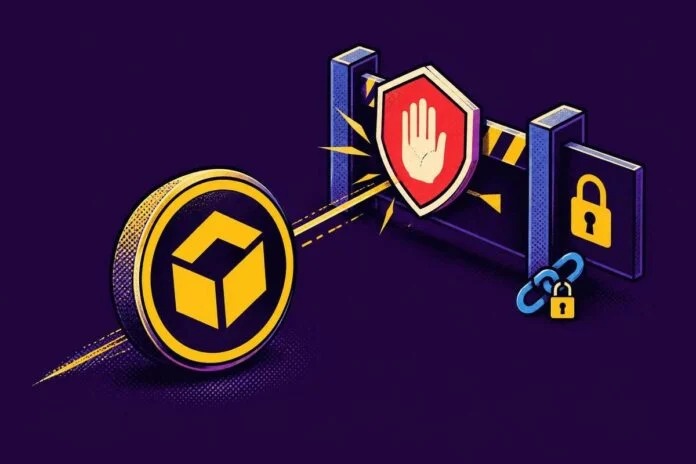
CIP-0113 does not require Cardano to modify its underlying consensus rules. Tokens built according to this standard are still ordinary Cardano native tokens; they simply have an additional layer of verification logic to determine whether a certain asset transfer is allowed. Crypto Briefing reports that these tokens are still operating under the existing eUTXO model of Cardano, and the foundation states that the execution costs will remain predictable.
Operator Permissions and Custom Modules
The framework adopts a modular design, rather than a set of fixed rules and manuals. Issuers can add allowlists, blocklists, and restrictions based on KYC, and they can also write completely custom logic. Furthermore, these modules can be updated without modifying CIP-0113 itself later on. According to the reference implementations cited in crypto.news, authorized operators may also be granted the power to pause transfers or transfer assets without the holder's approval, provided that the token's own rules permit it; moreover, this management authority can be allocated to multiple operators, rather than being concentrated on a single account.
The wallet is supported by regulatory authorities.
Cardano The existing tools already provide support upon launch. Eternl, GeroWallet, CardanoScan, and BloxBean all support the CIP-0113 function, and the foundation's September ecosystem report has also confirmed the integration of CardanoScan, Eternl, and Gero Wallet. Institutional custody support will be launched separately: it is expected that Fireblocks will support Cardano native tokens by March 2027, which will enable its institutional clients to custody, send, and receive assets built based on this standard.
In terms of auditing, according to an update from the foundation in September, the first programmable token module has completed security testing with no serious or high-risk issues found. The main implementation codebase indicates that professional audits have been conducted, and any issues that were identified have either been fixed or accepted as part of the remaining design limitations. The CIP-0113 programmable asset tokens have been recognized by the Swiss Capital Market and Technology Association (SIX): from a smart contract perspective, they are functionally equivalent to CMTAT. Moreover, CMTAT is precisely the framework upon which CMTA relies when tokenizing financial instruments such as stocks, debt securities, and structured products.
Cardano Why should rules be transferred along with assets?
Cardano, the CEO of the foundation, Frederik Gregaard, defined this design as emphasizing sustainability rather than a one-time check. He stated that regulated assets need to have rules that "flow along with the assets and are enforced with each movement." Based on this understanding, CIP-0113 provides an mechanism for issuers to ensure that compliance checks remain tied to the tokens even after they leave the initial issuance platform.
Currently, there are no named stablecoins, bonds, or tokenized funds issued under CIP-0113. A announcement on October 7th stated that wallets, block browsers, and developer tools integration constituted the infrastructure at the time of the framework's launch, and traced the technical advancement of this proposal back to January 2023, until it was merged into the mainnet on September 29th.
This article was generated with the assistance of artificial intelligence and has been reviewed by an editorial team.