


ETH The price fell below $2,600, and sellers regained the upper hand after failing to hold a rebound towards $2,700.
Despite the price decline, Ethereum network activity remains high, with nearly 520,000 active addresses per day.
Ethereum prices are falling below $2,600, but there is a more significant signal behind the selling pressure. Network activity remains high, and social attention surrounding ETH also remains stable, which creates a clear divergence between price momentum and interest on the chain. As sellers suppress the short-term trend, this divergence could indicate early surrender or it might suggest that buyers are quietly preparing for the next round of gains. The coming trading sessions may determine which side will take the upper hand.
Despite the price decline, Ethereum's on-chain signals remain strong.
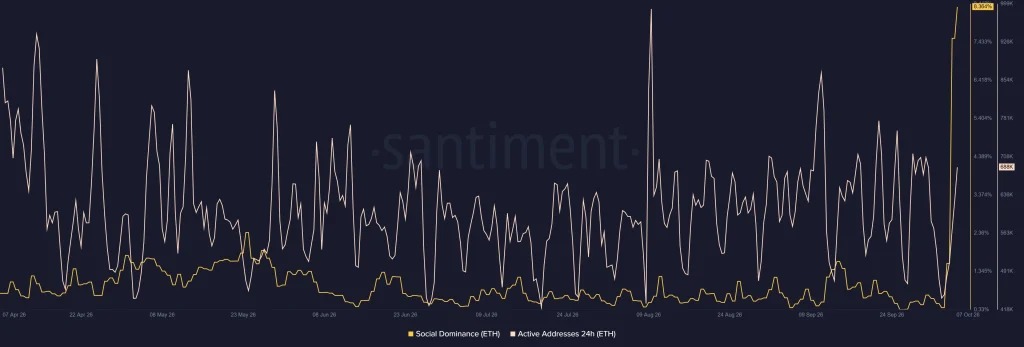
ETH On-chain data indicates that there is a clear differentiation in the current structure. The number of active addresses remains high, suggesting that the fall of ETH below $2,600 has not diminished network participation. The latest, more comprehensive network data shows that the number of daily active addresses is close to 520,000, a significant increase from the previous reading. This indicates that, despite the weakening of short-term price momentum, Ethereum is still experiencing considerable user activity.
The key lies in the divergence between price and attention. The trend of ETH is weakening, but online participation and market attention remain relatively strong. If this trend continues, the current pullback may not cause as much damage to the fundamental demand for Ethereum as the price trend suggests.
Macroeconomic pressures continue to weigh on Ethereum
Ethereum's weakness also occurs against a difficult macroeconomic backdrop. Brent crude oil has surpassed $100 per barrel, with recent trades around $102 per barrel; the yield on 10-year U.S. Treasury bonds has risen to over 5.3%, and the Dow Jones Industrial Average (DJI) is around 102. Higher oil prices have reignited concerns about inflation, while higher Treasury bond yields and a stronger dollar are creating a more challenging environment for risk assets.
There is an additional layer of uncertainty surrounding the Federal Reserve's prospects. The market has already lowered its expectations for a rate hike in October, but persistently high energy prices could complicate the inflation picture. This makes the crypto market more sensitive to any upcoming economic data and changes in monetary policy expectations.
In addition, institutional capital flows are also putting pressure on this situation. The US spot Ethereum ETF recorded a net outflow of $201.9 million on October 6, marking the sixth consecutive trading day of capital withdrawal. Since September 29, this series of outflows has taken away approximately $407.8 million from the ETH fund.
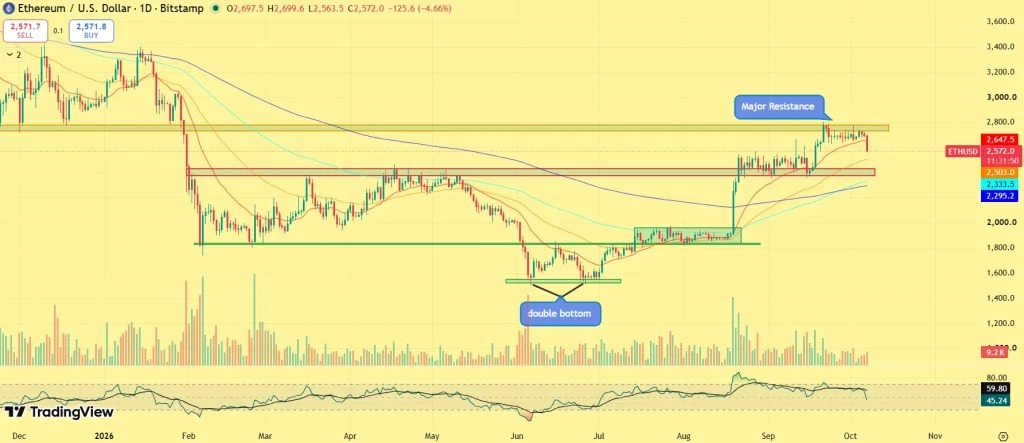
Ethereum Price Analysis: $2,600 is the Current Critical Battlefield
Below the recent rebound highs, the market structure remains fragile, but this pullback is also pushing ETH towards a potential oversold state. If buyers can hold onto the current support level, strong on-chain data could provide a foundation for a rebound. However, if the support area below is decisively broken through, the situation will be different, indicating that strong network activity has not yet translated into sufficient spot demand.
ETH What comes next: The network remains stable, but buyers need to return.
If network activity continues to remain high and institutional selling pressure begins to weaken, the reasons for optimism will strengthen. Until then, Ethereum may continue to be volatile as traders weigh between a resilient fundamentals and weak capital flows. A more significant signal would be whether strong network usage will ultimately translate into new spot demand.