

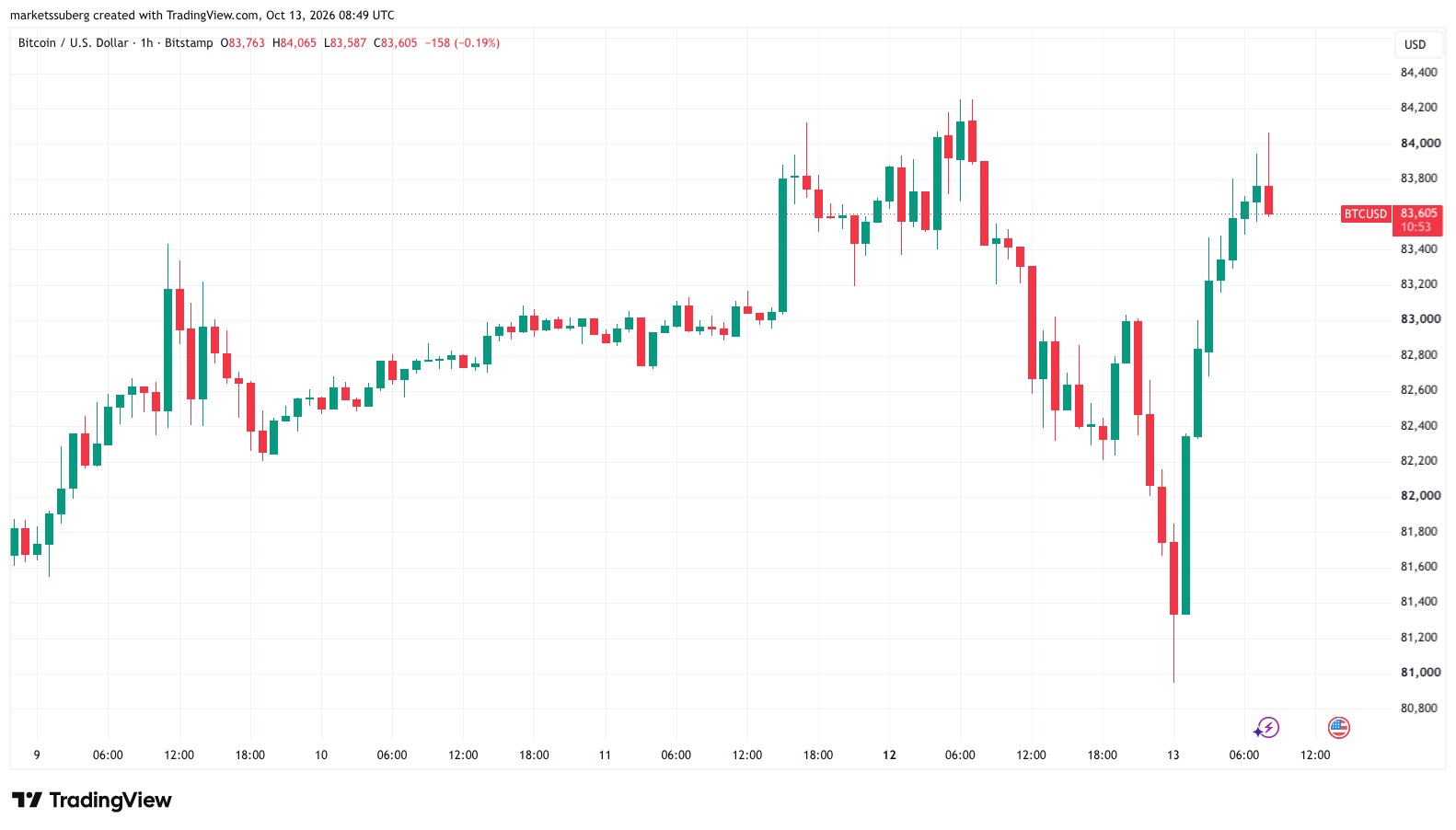
The liquidity of Bitcoin has kept the price of BTC below $84,000, while at the same time, the selling pressure on South Korean tech and semiconductor stocks continues to intensify.
On Tuesday, Bitcoin (BTC) rebounded to near $84,000, and despite another decline in the South Korean stock market, the crypto market managed to avoid further losses.
Key points:
- On Tuesday, Bitcoin's trend diverged from that of the plummeting Asian tech stocks, rebounding from a low near $81,000.
- Against the backdrop of investors' ongoing concerns about the prospects of AI and competition from China, semiconductor stocks led the decline, and South Korea's KOSPI index faced heavy selling pressure.
- The resistance level on the exchange order book limits the upside potential of BTC to around $84,000.
South Korea's KOSPI breaks below the 200-day trend line, market panic returns
Data from TradingView shows that on Tuesday, BTC / USD rose by more than 2.5%, reaching a high of $83,944 at Bitstamp, and thus recovering from the losses seen on Monday.
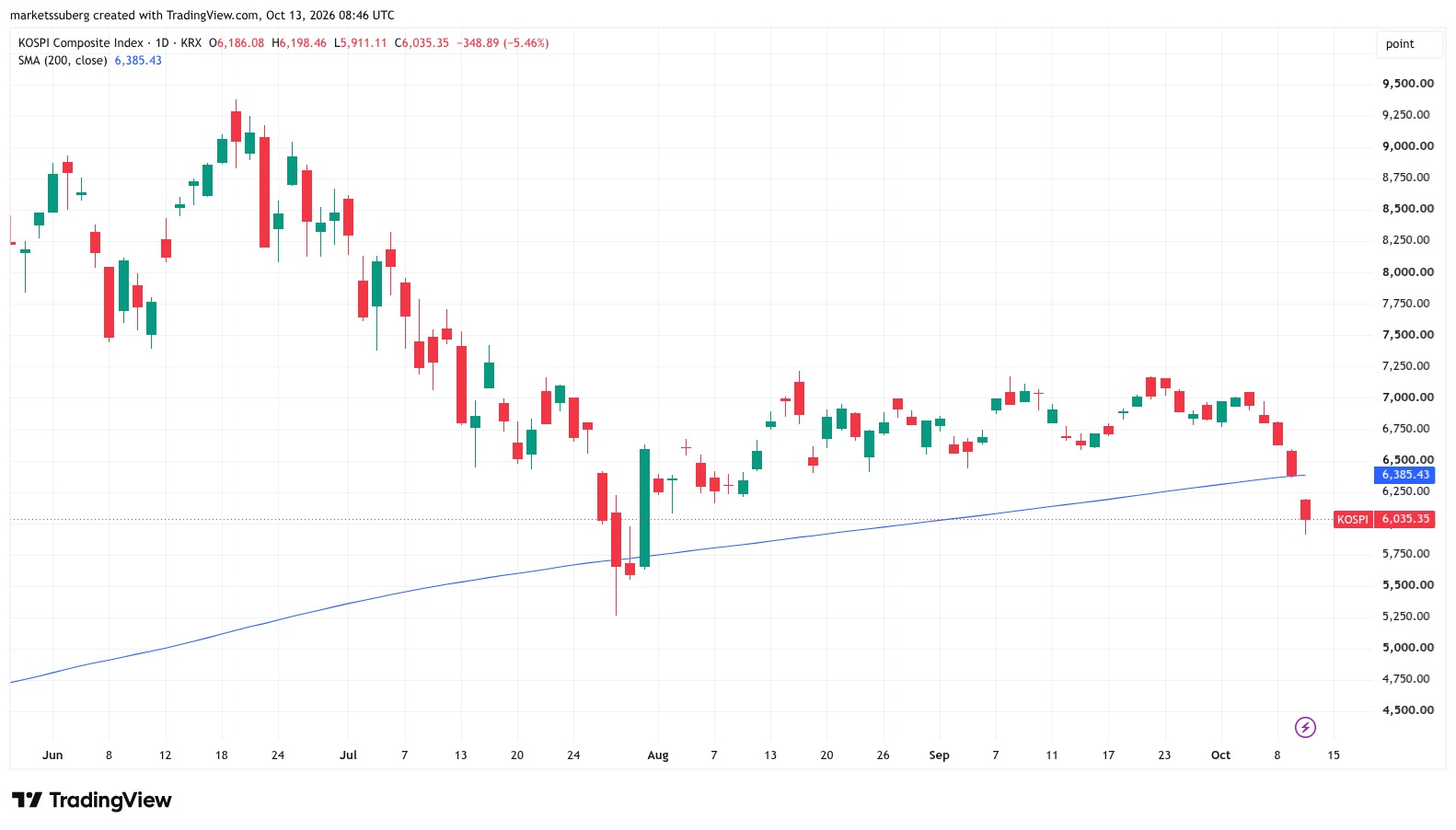
As the rise occurred, a new wave of selling in technology stocks on South Korea's KOSPI Composite Index accelerated, with the index's cumulative decline this week expanding to 7.4%. This is the first time since late July that the index has fallen below its 200-day moving average.
Semiconductor stocks were particularly under pressure, with SK Hynix closing down more than 10%; at the same time, after Samsung announced earnings for the third quarter that fell short of expectations last week, the existing pressure further intensified. Since the beginning of 2026, foreign investors have sold approximately 173 trillion Korean won (129 billion US dollars) worth of SK Hynix and Samsung stocks, accounting for the vast majority of the sales within KOSPI this year.
This weak trend reminds one of the sell-off in August. At that time, concerns regarding the AI craze and the debt obligations of related companies triggered a sharp decline, which quickly spread to global markets.
Ling is one of those who point out that competition from China is increasingly becoming a problem for Korean investors, but he also acknowledges that relevant industries in China still face 'technological barriers'.
Despite the weakened demand for ETF, the price of Bitcoin still rebounded.
Unlike the sell-off in August, Bitcoin did not follow the downward trend this time; instead, it moved back towards its local range upper limit of $80,000 to $87,000.
At that time, the analysis suggested that the relative strength of Bitcoin was possibly related to central banks around the world relaxing their monetary policies. This week, important inflation data from the United States will be released, followed by the Federal Reserve's interest rate decision on October 28th. The market expects interest rates to remain unchanged at the current level of 2.75% to 4%.
Despite the decline in investors' interest in BTC in October, Bitcoin still exhibited relative strength. American spot Bitcoin ETF has seen a net outflow of $451 million so far this month, with a single-day net outflow of $69 million on Monday.
Traders pointed out that bulls have struggled to hold above $84,000 on shorter time frames. CoinGlass data shows that the liquidity of sell orders in the exchange order book around this level is increasing.