IT Home, October 15th news: According to Bloomberg, the voice of Céline Dion resounded throughout the Palais des Plénitudes stadium on the outskirts of Paris. Her performance of the theme song from "Titanic" was so clear that even the audience in the farthest areas of this massive venue could hear it as if they were standing right beside her on stage.
On the night of this recent performance, among the 35,000 spectators in the stands, most of their attention was focused on the fashion of this pop singer and her condition while performing during her recovery from a rare neurological disease, rather than on the dense array of speakers surrounding the stage. However, these black boxes are part of a sound system developed by a French company, L-Acoustics. This company is using artificial intelligence to reshape the auditory experience of live events.
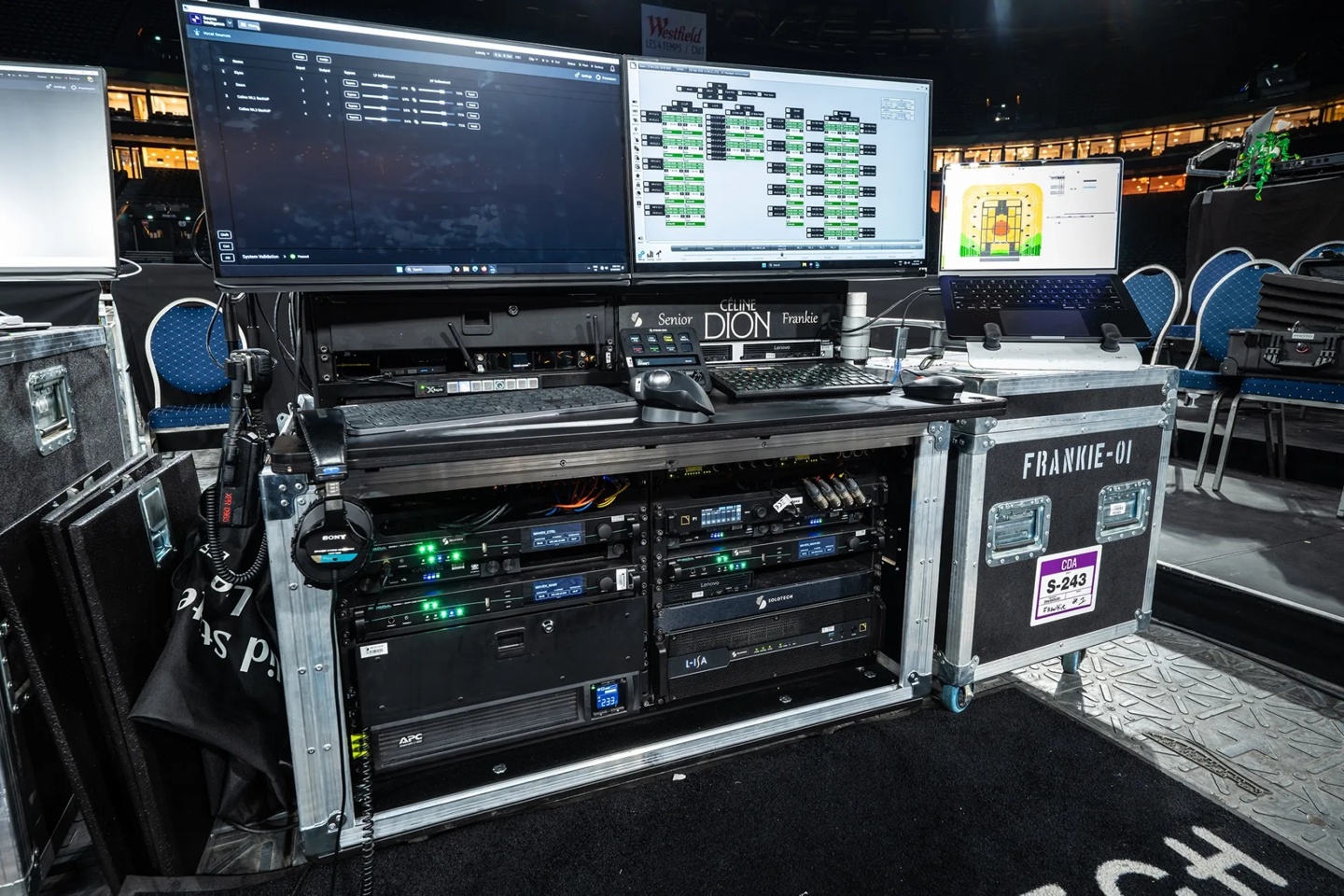
Earlier this year, L-Acoustics, which is quite renowned in the niche field of high-end audio, launched a new software platform called Source Intelligence. This platform utilizes machine learning technology to separate singers' voices in real-time from various types of background noises. It can filter out other instruments, backing vocals, audience noise, and the mixed environmental reverberation within the venue, producing clear vocals while also suppressing the howling sounds that can ruin a performance. According to the company, Source Intelligence can reduce non-vocal signals by up to 40 decibels, and this technological advancement has left a deep impression on audio engineers.
Denny Savic, who has collaborated with Céline Dion for 38 years and served as the main sound engineer for this performance ( Denis Savage ), said, "It's almost like magic."
He is responsible for using Source Intelligence to debug the live performances of this Canadian singer. He said, "When debugging Céline Dion's concert mix, what the audience wants to hear is Céline Dion herself. You must always ensure that her vocals are in the most prominent position in the mix. The set of tools from L-Acoustics makes this process much easier."
Today, live performances are more popular than ever before, and they also involve a higher level of technology. Many audio companies are developing technologies to improve sound quality. Sound systems are a core component of concerts, yet they are often overshadowed by the noise from the audience and visual effects. Voice separation and noise reduction technology has been around for a while, having been first pioneered by nightclubs DJ. Other audio companies have also started using machine learning and neural networks in their software, such as Alpha Labs and Cedar Audio Ltd. German competitor D& B Audiotechnik released a system last month that allows sound engineers to virtually preview the concert sound effects that each seat in the venue will hear.
The anti-hiss system of Alpha Labs allows products like De-Feedback to be compatible with devices from multiple manufacturers, whereas L-Acoustics adopts Apple's approach to build a closed ecosystem. Source Intelligence can only be used in conjunction with L-Acoustics's own audio systems and requires the use of that company's L-ISA second-generation processor, thereby binding customers to their complete set of software and hardware ecosystem.
L-Acoustics was founded in 1984 by Christian Hail ( Christian Heil ), a physicist who has a passion for acoustics. The inspiration for its establishment came from a concert by Pink Floyd. As the live music industry flourished, the company's order demand soared significantly. L-Acoustics Recently completed a comprehensive renovation of the sound systems at Hollywood's outdoor theaters, and major tours by artists such as Harry Styles, Bruno Mars, Waken, and Rosalia all relied on the Source Intelligence platform to provide live sound effects.
L-Acoustics has been deeply involved in hardware for a long time. In the 1990s, it was this company that promoted the popularization of "line array" stacked speaker technology. Today, by expanding into AI software business, the company is able to provide a complete set of integrated audio solutions. Laurent Vasière, Co-CEO of Laurent Vaissi, stated in his office in Nashville: "Having only high-quality speakers is not enough; we also need high-quality audio materials and sound processing capabilities."
Vasye stated that L-Acoustics expects its revenue to reach 400 million euros next year (Note from IT: The current exchange rate is approximately 2.998 billion yuan), representing double-digit growth compared to 2026. This unlisted company's main business comes from large-scale live performances, and it is also expanding into theaters, sports venues, nightclubs, and some high-end retail scenarios.
Completing the audio design for the Plenitude Stadium presented a series of unique challenges. The stadium's stands have a total length of 13 kilometers and can accommodate up to 45,000 people. It was originally used for rugby matches and was even converted into a swimming pool during the Paris Olympic Games.
Céline Dion will hold 26 live performances at the Plenitude Gymnasium. The latest generation of L1 speakers are installed in the left, middle, and right areas of the stage. These speakers are smaller in size and lighter in weight than their predecessors, allowing for better control over the direction and coverage of sound propagation. This means that Céline Dion's vocals and bass are produced solely by the middle group of speakers, resulting in a more uniform sound throughout the entire inner venue area.
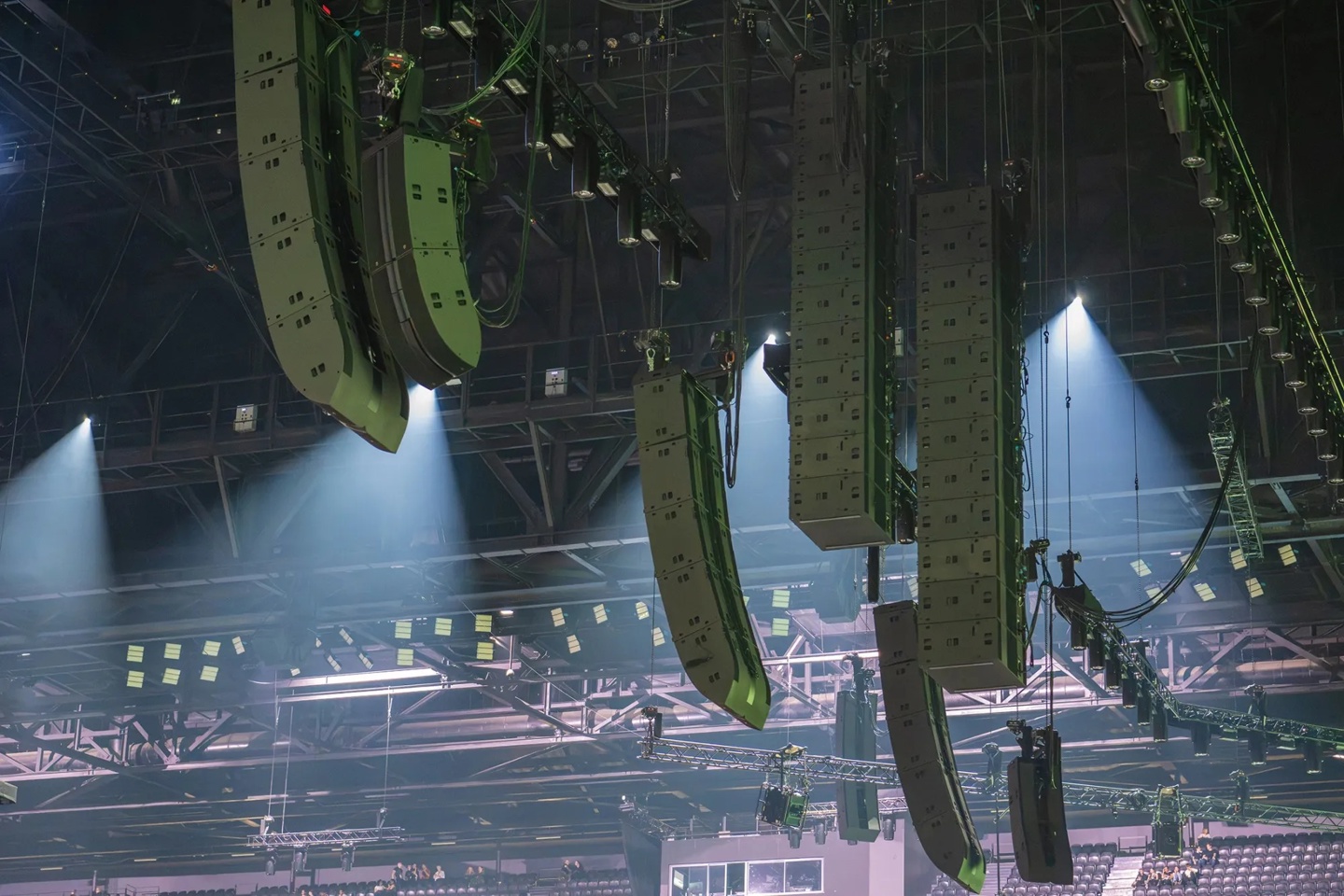
François Dejardin ( Fran ç ois Desjardins ), the system engineer in charge of this performance, said after the show on September 26th at the central sound control console of the venue: "Using a single sound source ensures stable and consistent sound, avoiding various issues such as crosstalk and echoes."
The sound pressure level in the stage area is up to 26 decibels lower than that in the audience seats. Savage said, “It’s almost impossible to hear loud noises on stage.” This makes it easier for Céline Dion to hear the actual accompaniment and the prompt sounds in her in-ear monitors, rather than the echoes of her own voice. “The sound quality is much cleaner.”
Vassiee explained that the total cost of the audio-visual and acoustic systems for Céline Dion's Plénitude concert exceeded 1 million euros (approximately 7.496 million yuan at current exchange rates). The budget for sound systems usually accounts for 10% of the production costs of a performance, which is lower than that for lighting (20%) and video (40%). The professional equipment used for Dion's on-site performances was purchased by the Montreal production company Solotech and then delivered to the event organizer, AEG Global Company. In the coming months, Solotech will use this set of L-Acoustics speakers for other performances; when Dion returns to Paris next year to start a new series of ten concerts, this equipment will also be used in this venue again.
L1 The speakers are assembled in Marcoussis, in the southern part of Paris. The L-Acoustics factory and headquarters are also located here, representing the company's French roots. Most of the components for their acoustic core technology, including some speaker parts, are produced in Germany and other regions of Europe, before being transported to France for final assembly. Vassier mentioned that the company currently has 1,100 employees, with about 20% dedicated to research and development, and the business has maintained stable growth over the past twenty years.
Despite there being many concerns within the music industry regarding artificial intelligence, Vassile believes that this software L-Acoustics will not replace the work of audio professionals. "It will not take away jobs from mix engineers; it will merely replace other traditional methods that engineers used to employ."