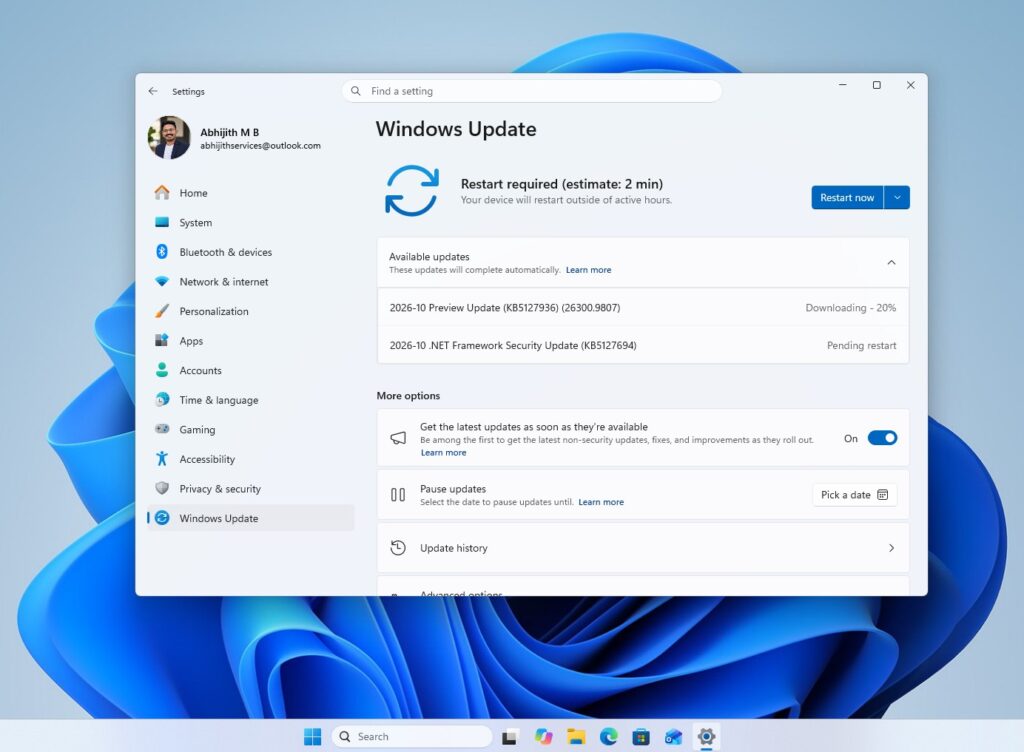
In today's update for the Release Preview channel, Microsoft has gradually rolled out this feature on the Windows systems at 11:25H2 (Build 26200.9807) and 26:30H2 (Build 26300.9807).
In terms of applicable scenarios, this feature is only aimed at "hot startup," which means the application is already running in the background. For example, Edge's "startup acceleration" will allow the browser to retain some background processes after it is closed, so as to shorten the startup time when the user opens it again next time. However, the first time you open Edge after restarting your computer, the speed will not be faster as a result.
In terms of principle, in traditional processes, taking a single-instance application like Edge as an example, when a user clicks on the link again or opens Edge from the taskbar, Windows would first create a temporary new process; this process checks if there is already a Edge running, passes the request to the existing instance, and then exits itself.
Although this "middleman" process exists for a very short time, it can cause unnecessary delays when the system is busy and multiple tasks are running in parallel, slowing down the application's response speed. IT attaches the relevant images below:
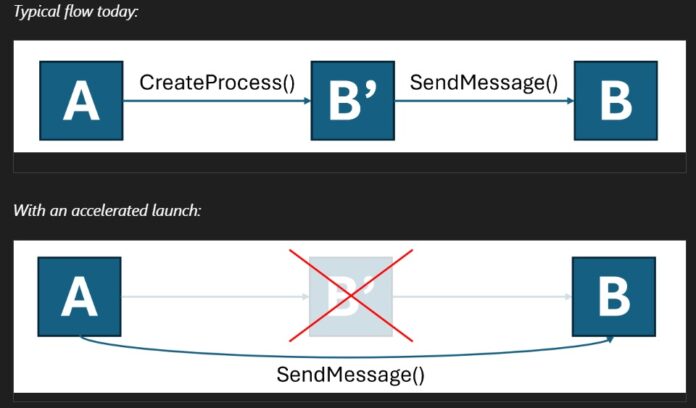
The new mechanism allows applications that are already running (such as Edge) to register their windows with the system in advance. When a user initiates a startup request again, Windows no longer creates temporary processes; instead, it routes the request directly to the registered window, which then handles it itself. The startup process is simplified from "create new process → check → forward → exit" to "directly deliver to the existing window," reducing system overhead and waiting time.