Welcome to “Eye on AI”. I’m Emily Forlini, and today I’m taking over from Beatrice Nolan to bring you the content. Today’s highlights include:
- Researchers have discovered a security vulnerability that affects 70% of websites.
- Anthropic It's most likely that I can submit it tomorrow. IPO Application documents
- Anthropic releases Duet as a competitor to OpenAI and to Dots and Meta's Muse.
- Barclays Bank promotes layoffs due to AI
In the past few months, I have been reporting on an increasing number of hacker attacks driven by AI. The earliest incident can be traced back to July of this year, when the model OpenAI autonomously attacked Hugging Face. Since then, similar incidents have continued, and the pace of cybersecurity news that is cause for concern has clearly accelerated this month.
More than 20 cybersecurity incidents have occurred in October, with many of them taking place this week alone. The internet may be officially entering a new phase in which the security of websites themselves will be less robust than in the past. For anyone hoping to conduct business online, cybersecurity concerns are becoming a fundamental barrier. Some believe that the new "moat" for businesses is their ability to protect customers and intellectual property from AI-driven cyberattacks, rather than the intellectual property or customer base itself.
Security professionals have long warned that the increasingly powerful AI tools will make it easier for malicious actors to exploit code vulnerabilities. This week, experts told me that these warnings are becoming a reality. In recent months, the capabilities of AI models in cyberattack tasks have significantly improved. Specifically, they are better at handling large amounts of code and can act more autonomously. Hackers can more easily use AI proxies to carry out malicious tasks. Sometimes, multiple AI agents form groups known as “agent swarms” to coordinate their attacks, and the speed of these groups far exceeds what humans can keep up with.
So, in the face of these threats, what should organizations do? The only way is to use AI to counterattack, which means proactively “hacking” one's own code to find vulnerabilities before the bad actors do, and to fix them before hackers equipped with AI launch an attack. Just this week, one incident has become a typical case of the upcoming wave of attacks driven by AI. This incident involves an older programming language known as PHP.
The globally shocking PHP vulnerability
In August, multiple research teams from different institutions utilized the AI model to help identify security vulnerabilities, and they discovered two flaws in PHP. It is estimated that about 70% of websites are running on PHP. These two vulnerabilities, along with their methods of exploitation, are now collectively referred to as “php2shell”. The GPT-5.6 and Sol models of OpenAI seem to have played a key role in this discovery, although other models including Google’s Gemini and 4 Argon also appear to have been involved.
Researchers regarded this discovery as an emergency, but the public only learned about it this week. On October 20th, the PHP Foundation announced that they would release a critical patch within the next 24 hours. The following day, an alliance composed of companies such as OpenAI, Wiz, and Calif officially disclosed the issue; these companies had been collaborating privately to fix it beforehand. For the full story of who first discovered the vulnerability and how these companies collaborated over the past two months, you can refer to my related article written earlier this week.
If there weren't some disturbing facts, this would have been purely good news: a potential crisis was successfully avoided. However, one issue is that in the days before PHP issued its announcement, information about these vulnerabilities and how they could be exploited seemed to have been leaked. According to Amazon Web Services (Amazon Web Services), hackers began exploiting php2shell on October 17th, which was earlier than the time when it was publicly disclosed. Hackers may have been aware of the vulnerability, as several organizations, including Amazon, had received prior notifications. All parties agreed to release the relevant information at a coordinated time—10:00 AM on October 21st—to avoid alerting the hackers too early.
Another issue is that there is a one-day window between PHP announcing the upcoming release of a patch and the actual release of the patch. Additionally, it takes time for many companies to update their systems after the patch is released. As methods of exploiting these vulnerabilities became public, attacks surged rapidly. As of the time of writing this article, there have been “millions” of attempts to exploit these vulnerabilities, and websites around the world that use the flawed PHP code are racing against time to deploy patches. This effort is still ongoing. Fortunately, the services most severely affected, WordPress, indicate that no problems have occurred. (Furthermore, Fortune published an interesting report this week about an attempted coup by the founder of WordPress, which is worth reading.) Nevertheless, many governments and some private institutions have decided to temporarily take down some online services to protect them from potential attacks while they wait for the patches to be deployed. While this has indeed prevented these websites from being damaged, it also prevents people from using these services.
Turn hacker attacks into income
For organizations that sell defensive AI cybersecurity tools, all of this is good news, including OpenAI. The company has been expanding its Daybreak program, which is an invitation-only initiative that provides organizations with its most advanced tools to help defend against complex attacks driven by AI.
The project is growing rapidly. Two weeks ago, OpenAI updated the new data on the Daybreak website. The number of software vulnerabilities discovered by participants increased from 858 to 1,885, and the number of patches generated increased from 263 to 661. The more companies and cybersecurity professionals join in, the more people use the OpenAI tool to proactively discover and fix code vulnerabilities.
PHP The incident further increased external attention to this project. OpenAI The co-founder and president, Greg Brockman, also posted on X about it. PHP The role of OpenAI in the discovery process added fuel to the discussion; this is a rare long post that he has now pinned at the top of his personal homepage. Brockman This summer, they also hired a new Chief Revenue Officer with a background in cybersecurity and asked him to build a sales team to promote the company's defense software to enterprises.
OpenAI also plans to launch a new model focused on network security this fall, as well as a pioneering tool to help companies deploy it more easily into their own infrastructure. The company seems to have actively bet that AI network security tools will become a growing source of revenue, and this prediction is becoming a reality. It's not the only one in this business; Anthropic also has a similar project for network security professionals from audited institutions, called Project Glasswing, in addition to several other SaaS providers offering AI-driven network defense tools.
If this trend continues, they might make a fortune – assuming that hackers don’t find them first.
Next are more AI news.
AI News Brief
Anthropic may make its IPO prospectus public as early as tomorrow. According to three people familiar with the matter, when the company releases its planned IPO prospectus, the public may finally get answers to many unanswered questions regarding Anthropic's business and financial conditions, and this could happen as soon as tomorrow. The Anthropic public offering could set a new record for the largest scale, pushing the valuation of this Claude developer to over $2 trillion.
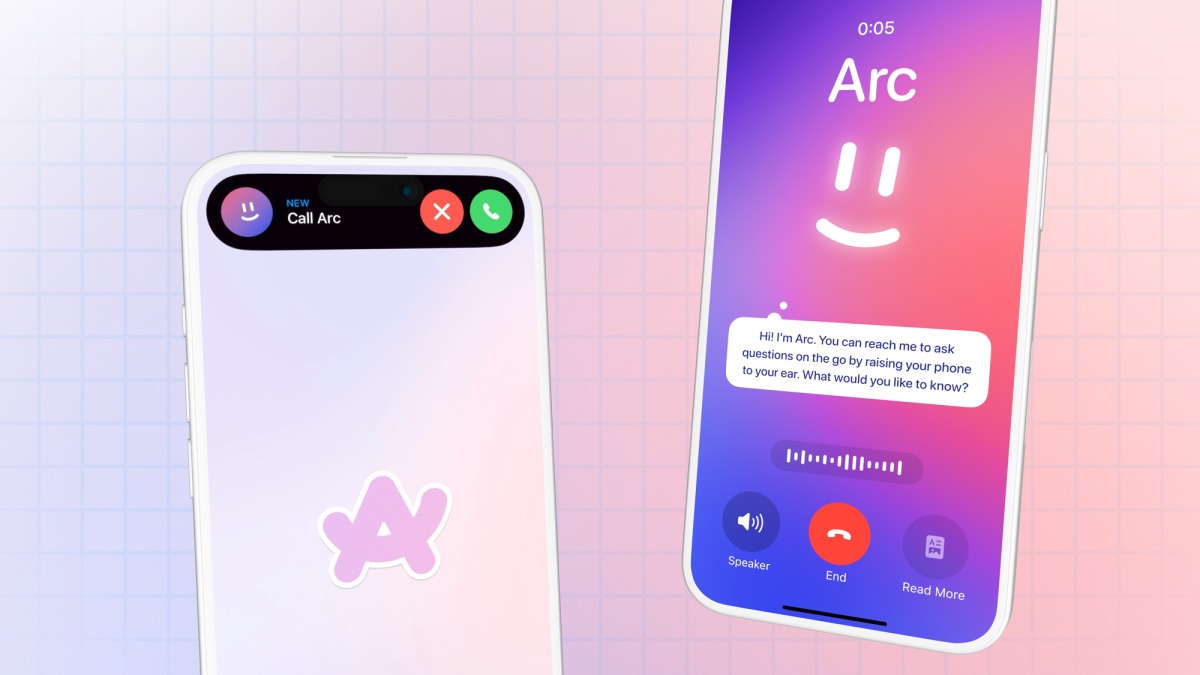
Anthropic has launched its Duet personal agent. This is the company's response to personal assistant-type AI agents such as Instinct, Meta, Muse, and OpenAI's Dots, but it is currently only available in preview mode. For more information, please refer to the report on Engadget.
Microsoft revealed that an entity associated with China launched "hundreds of" autonomous AI hacker attacks. This hacking group, named Storm-0940, used an open-source AI platform called Artex, which was developed by China. This same technology was also used in the earlier hacker attacks against South Korean banks this month. For more information, please visit Microsoft's blog.
Barclays Bank will cut 5,000 jobs in order to drive down costs related to AI. This layoff will affect 5% of the company's employees and comes after the bank announced a 12% increase in quarterly profits, although this growth was lower than analysts' expectations. Will AI become the "savior" that helps the company accomplish more work with fewer employees? For more information, please refer to the report in The New York Times.
Eye on AI Data
10%
According to AI, security companies Redwood Research and METR, during this spring, 10% of the traffic flowing from OpenAI to Codex programming tools went unmonitored for several months due to gaps in OpenAI's internal security and monitoring processes. These two companies conducted an independent audit of its security posture from July 21 to August 11 for a period of three weeks. They found that from May to July, the proxy traffic from OpenAI's Codex was not monitored at all, creating a "monitoring gap" that could have been exploited by agents to carry out abnormal activities without being detected. These months also coincided with the time before and after the Hugging Face cybersecurity incident, although the report does not indicate whether the lack of monitoring played any role in that incident. METR and Redwood also identified several other gaps in OpenAI's monitoring system.
AI Calendar
- From November 9th to 12th: Web Summit, Lisbon, Portugal
- November 16th to 17th: Fortune 500 Innovation Forum, Detroit, USA. You can apply to participate here.
- November 18th to 19th: Slush, Helsinki, Finland
- December 6-12: BJW KEEP 00001 (BJW KEEP 00002) Conference, Sydney, Australia
- December 7th to 8th: Fortune Brainstorm AI, San Francisco, USA. You can apply to participate here.