

For a long time, one of the biggest unsolved problems in the artificial intelligence boom has actually been quite simple: can the company that creates the world's strongest AI model really make money?
After carefully studying the IPO declaration documents of Anthropic on Monday, the answer finally emerged: it's possible, and there is even a good chance to make a lot of money.
Previously, several Chinese AI laboratories had gone public ahead of time, revealing poor financial results that raised doubts about the economic viability of this industry among the outside world. Now, Anthropic has demonstrated more convincingly how this business can operate on a large scale.
Financial data of Anthropic
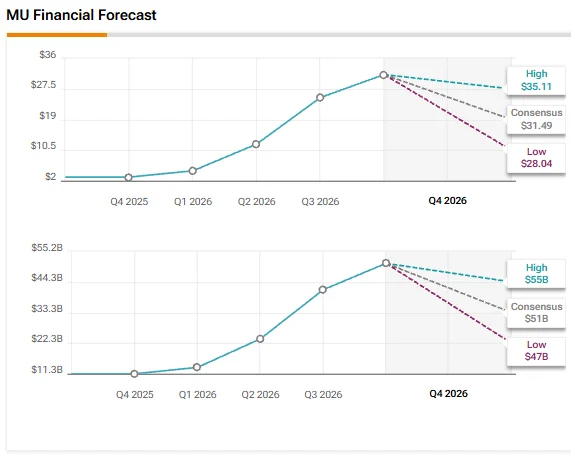
These figures are quite astonishing. Anthropic achieved revenue of $11.6 billion in the second quarter of 2026, a growth of 1368% compared to the same period last year.
During the same period, its computing power and infrastructure expenditures increased by 300%, while other costs rose by 741%.
In other words, the company's revenue growth rate is much faster than the increase in its most important costs.
Calculated for the second quarter, Anthropic generates $2.08 in revenue for every $1 spent on computing power; however, in the first quarter of 2025, this figure was only 40 cents. Over five quarters, this metric has improved by more than five times.
As a result, Anthropic achieved quarterly operating profits of $974 million, with an operating profit margin of 8%. Its adjusted operating profit margin reached 19%, compared to -129% a year ago.
Evercore ISI Top technology analyst Mark Mahaney wrote in a research report on Monday: 'The unit economics of Frontier Labs can become viable after scaling up.'
Better than Meta and Google.

There is also more evidence indicating that Anthropic has established an exceptionally efficient business.
In the year up to September 30th, Anthropic's revenue increased by approximately 1200%, while the number of employees only increased by about 170%. Its per capita revenue soared from $1.4 million to over $6.6 million.
For comparison, Mahaney estimates that Meta has an annual per capita revenue of about $3.2 million, while Google has about $2.5 million.
This comparison is not entirely fair. Anthropic relies heavily on cloud service providers, with the latter’s employees undertaking a large portion of the computational infrastructure and distribution work. Nevertheless, this improvement is still quite significant.
The Surprises Brought About by Customer Concentration
Another surprise is that, contrary to the concerns of some investors, Anthropic does not rely excessively on a few major clients as the outside world imagines.
As of September, Anthropic has over 11,900 customers with an annual revenue of at least $100,000, whereas a year ago this number was less than 950. There are more than 1,900 customers who spend at least $1 million per year.
In the first nine months of 2026, no single customer contributed more than 10% of the revenue. The top five customers accounted for approximately 21% of the revenue in the third quarter, which is lower than the roughly 36% in the first quarter.
Mahaney writes: 'The customer concentration may be better than feared.'
IPO File shows cash buffer
Anthropic possesses a considerable financial buffer. Its balance sheet as of June 30 shows that cash and short-term investments exceed $13 billion.
Mahaney It is estimated that since its establishment over five years ago, the company has consumed only about $9 billion in funds in total. This means it still has a long runway of funds ahead of it.
However, don’t ask me about the Anthropic value being 2 trillion dollars, 1.5 trillion dollars, 1 trillion dollars, or even lower. If I knew, as an investor, I could have made even more money long ago. Even professional investors don’t know.
Anthropic Faces a Warning of $800 Billion in Scale
However, there are also some significant warnings: The majority of Anthropic's revenue comes from pay-per-use customers, rather than those who sign long-term contracts. At the same time, some of its computing power agreements require minimum payments, regardless of whether the company actually needs the full capacity or not.
Mahaney estimates that Anthropic has signed computing power arrangements worth nearly $800 billion, but as of June, only about $266 billion of this amount belonged to the fixed or guaranteed portion.
This is still an astonishing figure.
Mahaney writes: 'These commitments assume compound revenue growth that has not yet been contracted upon.'
In other words: although the company has committed to spending tens of billions of dollars on the AI computing infrastructure, it has not secured the revenue needed to cover these costs in the future.
Importantly, of the potential $800 billion in risk exposure, most of it is not fixed. Many arrangements depend on whether capacity is delivered, can be adjusted, or include cancellation clauses.
Self-built computing power and capital expenditure
Another change is that on Monday, Anthropic warned that as the company shifts to leasing AI chips and operates more of its own computing infrastructure, rather than relying entirely on Amazon, Google and other cloud service providers, its expenses will increase.
Even if operating profits continue to improve, this could significantly reduce the attractiveness of future cash flows.
However, the core conclusion of the Anthropic IPO document is still difficult to ignore.
For many years, investors have been wondering whether selling AI can truly become a profitable business, rather than an extremely expensive scientific experiment.
Anthropic has now proven that it can do so. The next question is, as the bills become larger and larger, whether it will still be able to continue to do so.