Tesla's factory located in Megapack, Brookshire in Texas, has now officially become a Foreign Trade Zone ( foreign-trade zone ). This is a program by the U.S. Customs that allows manufacturers to defer payment of tariffs on imported parts. The approval from the Foreign Trade Zone Commission ( FTZ Board ) was published in the Federal Register on Monday and is valid for a period of 14 months.
It's easy to understand this as meaning that Tesla can be exempted from paying tariffs on Chinese LFP battery cells used within Megapack, but Tesla's own applications are not so straightforward: components affected by Section 301, Section 232, or Section 122 tariffs still need to pay taxes.
What has Tesla applied for?
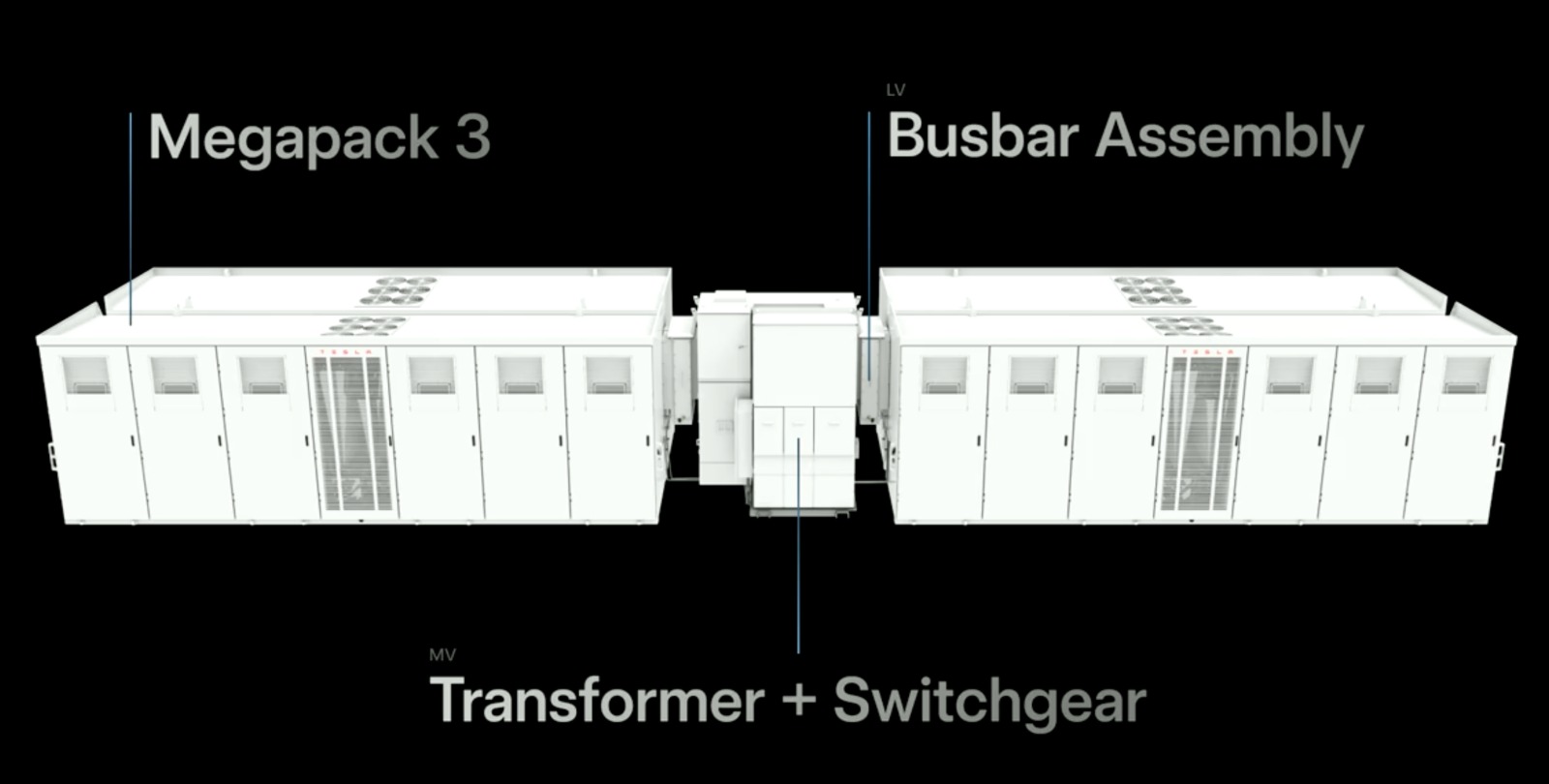
Tesla submitted an application on May 20th, requesting to include the 84AM zone within lot 84 in the Houston area's foreign trade zone. This factory is where Tesla began producing Megapack 3 in August, with a planned annual production capacity of 50 GWh.
The application documents list approximately 80 types of components that Tesla wishes to import according to the procedures for foreign trade zones, ranging from cooling pumps and transformers to busbars, wire harnesses, circuit boards, and battery cells. The tariff rates for these components can reach up to 6.5%, whereas for the finished products Megapack and Bento inverters, the tariff rates range from duty-free to 3.4%.
Such differences in tax rates are usually the reason why companies set up foreign trade zones. Manufacturers located within these zones can typically choose to pay taxes at the lower rate applicable to finished products, rather than at the tax rate for each imported component.
Tariff restrictions
However, the application documents also specify this restriction. The notification states that components subject to tariffs under Article 122 of the Trade Act, or Articles 232 or 301 of the Trade Expansion Act, "must enter the foreign trade zone with the status of privileged foreign entities ( privileged foreign status )".
Privileged foreign status will lock in the classification and tariff treatment of components when they enter the free trade zone. Therefore, the Chinese LFP battery cells used in Megapack that are ultimately sold in the US market are still subject to Section 301 tariffs on non-electric vehicle lithium-ion batteries from China; this tariff rate was increased from 7.5% to 25% on January 1, 2026. Tesla only pays this tax when the finished Megapack products leave the free trade zone.
The actual benefits obtained by Tesla include:
- Tariffs can be deferred until Megapack leaves the foreign trade zone, which helps with the factory's cash flow during the ramp-up phase.
- Megapack exported directly from the foreign trade zone is exempt from paying US tariffs.
- For components that are not affected by Chinese tariffs, steel tariffs, or other special tariffs, a lower finished product tax rate may apply.
- Waste does not require taxation, and there is also less customs declaration.
This is very useful, but it is not an exemption.
Receive the same treatment as other enterprises
This approval uses the same wording that has been in use by the Foreign Trade Zone Committee throughout this year. Production is “authorized on a limited basis” and is further “restricted by a 14-month period.”
This summer, Tesla also received similar approvals for Megapack and inverter production from California's Fremont, Livermore, and Lathrop, but these approvals were valid for one year only. Eastman Chemical, battery pack manufacturer Rose Batteries, and chip manufacturer Qorvo also received similar, time-limited "limited basis" approvals in 2026.
A 14-month timeline indicates that this approval is expected to expire around the end of 2027. That would roughly coincide with the time when LG Energy Solution is scheduled to begin supplying LFP battery cells from Michigan to Tesla Megapack under a $4.3 billion contract, with mass production anticipated to start in the second half of 2027.
Tesla's battery cell issues in China
Tesla did not avoid this issue. When tariffs were increased in April 2025, Chief Financial Officer Vaibhav Taneja stated that the energy storage business would be "particularly affected, as we purchase lithium iron phosphate (LFP) battery cells from China." At that time, we wrote that Tesla's only growing business was "stuck" by Trump's tariffs.
Since then, Tesla has established its own LFP battery cell factory in Nevada. However, Taneja indicates that this will only cover a small portion of Tesla's existing production capacity. The Brookshire facility alone is designed for an annual output of 50 GWh, in addition to the 40 GWh production capacity of Tesla's Lathrop factory in California.
Tesla's Megapack is bringing large-scale batteries into the power grid, but you can also reap the same benefits at home by combining solar energy with energy storage. With electricity prices rising by nearly 10% last year and expected to continue to climb, installing solar energy is one of the best ways to counter increasing costs. Coupled with leasing and PPA programs, you can start with zero down payment and immediately start saving money. If you want to find the best option, you can check out EnergySage. This is a free service, and hundreds of pre-approved installers will be competing for your business, so you can save 20% to 30% compared to searching on your own. There will be no sales calls before you choose an installer. Click here to get a free quote.
FTC: We use automated affiliate links that can generate income. For more information.