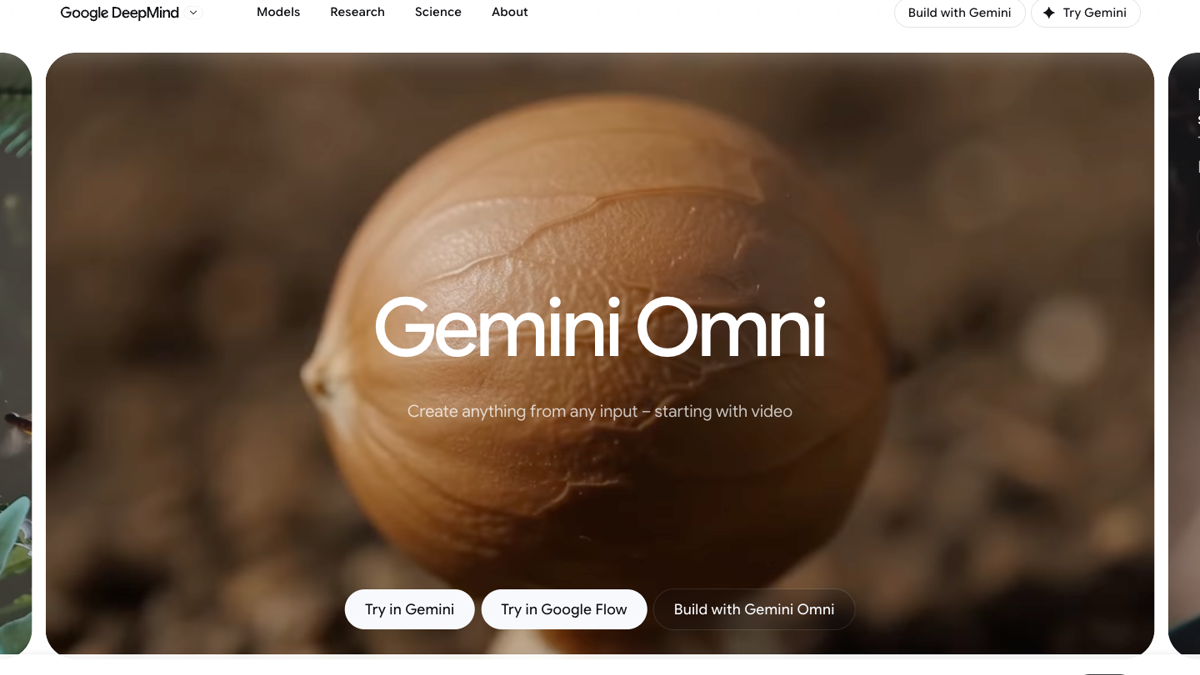


Giving a selfie video to a model and then asking things like "make it ripple like mirror-like liquid" or "turn the person into a puppet" or "retain the original room and actions"—tasks that used to require editors to complete layer by layer on a timeline—can now be asked for continuously, just like writing copy. Google DeepMind released on November 5th Gemini Omni 1.2 Flash model cards, which describe this model as capable of generating high-resolution videos with sound from text, images, audio, and video inputs, and support repeated editing through natural dialogue. The entry point for video production is shifting from software panels to language, but this also makes it harder for the human eye to detect editing traces, character permissions, and the credibility of the content.
What does dialogue editing really save?
Traditional video production usually follows a "one prompt, one result" approach. If creators want to change character actions, lighting, or camera angles, they often have to regenerate the video from scratch, which can result in inconsistencies between previous versions of characters and scenes. Gemini Omni emphasizes continuous editing: each modification is built upon the results of the previous round, striving to maintain the continuity of the scene. This mechanism breaks down complex operations into a series of understandable steps, allowing creators to gradually achieve their desired outcomes without having to first learn about masks, keyframes, and synthesis nodes.
The model card lists inputs that cover text, images, audio, and video, with the output being a video that includes audio. The product page further demonstrates cases of changing the visual style, rewriting actions, and adding sounds using reference materials. What is reduced is not only the production time but also the cost of expression. A director can first describe “a character touching a mirror,” and then add details about materials, sound effects, and camera rhythm, without having to write long, difficult-to-control cue words all at once.
The speed version model is not aimed at a single movie.
“Flash” indicates that the product places more emphasis on speed and cost. Advertising teams, short-video creators, game studios, and producers of educational content usually need to quickly test multiple versions: changing the proportions, languages, and pacing of the same material, and then making further modifications based on feedback. If the model can maintain consistency in characters, dialogues, and actions over a relatively short period, it will be the high-frequency iterations that are modified first, rather than large-scale productions that are changed all at once.
This will also lead to a reorganization of team responsibilities. A large amount of formatting adjustments and preliminary synthesis, which were previously done by the execution team, may now be handed over to models; people will then focus their time on selecting shots, controlling the pace, verifying facts, and handling copyright issues. Creative positions will not disappear just because there are fewer buttons to operate, but the advantage of "being able to use a certain software" will diminish, while the importance of understanding narrative, aesthetics, and the audience will increase.
People who can change their voices face even greater risks than those who change the background.
DeepMind specifically mentions in the model card that video editing capabilities can change what a person says. Currently, there are restrictions on this, and efforts continue to be made to study how to safely enable it. This statement is very crucial. Changing the sky color and having a real person say something they have never said before are not the same kind of risk. The latter may involve issues such as reputation, fraud, political propaganda, and evidence contamination, and the higher the quality of the generated content, the harder it is for ordinary users to judge intuitively.
Google indicates the security measures used before and after training by the system, and SynthID is used to add a watermark to the content within AI. The watermark can provide clues for platform verification, but it is not an omnipotent evidence: if the video has been cropped, transcoded, or re-shot, the recognition ability may be affected; applications that do not support verification will not automatically alert the viewers. Truly effective governance also requires the combined efforts of source recording, personnel authorization, platform labeling, and a complaint mechanism for misuse.
Model cards also expose information gaps.
This model card does not provide a complete list of training data; instead, it refers to several elements back to the base model Gemini Omni Flash. It is known that some of the limitations also mainly rely on materials from the base model. For ordinary creators, this does not pose an obstacle to trying it out; however, for corporate legal departments, media organizations, and educational institutions, it means they still have to address issues such as data licensing, regional availability, portrait rights of individuals, and output responsibilities on their own.
It is also noted in the model card that Omni 1.2 and Flash are not considered to have brought about a substantial leap in cutting-edge capabilities compared to Gemini 3.1, Pro, or Flash. Therefore, the relevant safety assessments are continued to be used. This is a judgment based on risk classification and does not mean that each video editing scenario has been verified. Products that are capable of making large-scale modifications to sound and image come with more social risks related to their availability, speed, and dissemination, rather than merely whether the model has reached a certain level of cutting-edge capability.
Video software is becoming an intention system.
In the future, video tools may no longer require users to start with a collection of materials, tracks, and filters. Instead, they might ask, "What do you want the audience to see?" The model would then translate this natural language description into actual shots, soundtracks, and effects. Such an approach would empower more people to express themselves creatively and lead to a surge in the number of completed videos. As a result, the focus of scarce resources will shift from production techniques to credible sources, unique materials, and identifiable authorship.
Gemini Omni 1.2 Flash What's most noteworthy is not that it can produce beautifully crafted images, but rather that the editing process is shifting from manual operations to services that allow for dialogue and continuous invocation. As the threshold for creation decreases, both platforms and creators must simultaneously raise the bar for verification: whose face is it, whose voice is it, which parts have been modified, and how can the audience verify it? Otherwise, even the most convenient editing tools could become the cheapest means of forgery.