Key points:
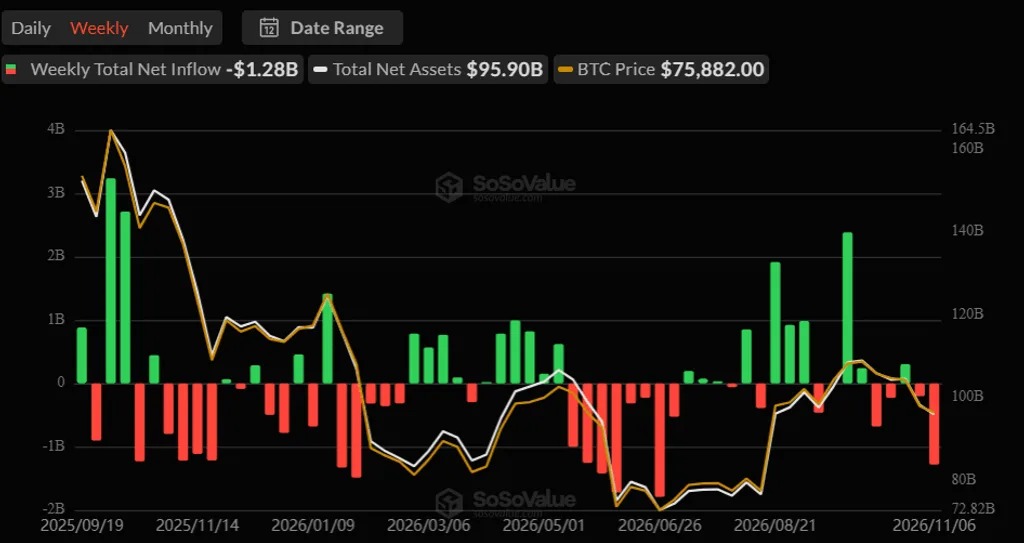
- US spot Bitcoin ETF saw a weekly net outflow of $1.28 billion
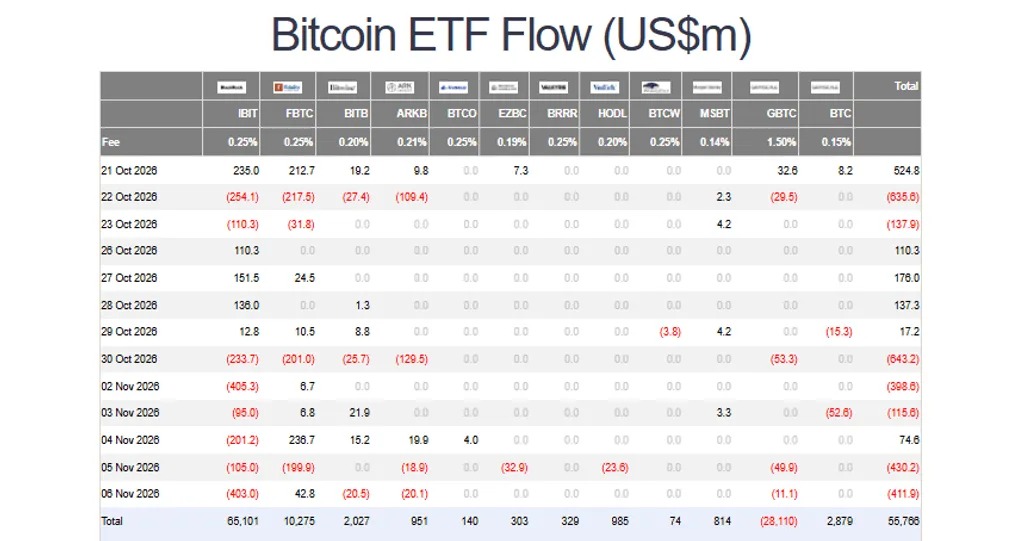
- BlackRock's IBIT led the decline, with a weekly net outflow of approximately $1.21 billion
- Bitcoin falls below $76,000, market sentiment weakens
US spot Bitcoin exchange-traded funds (ETF) recorded a net outflow of approximately $1.28 billion during the week from November 2 to 6, marking the largest weekly withdrawal since late June. This round of selling also caused the Bitcoin (ETF) capital flow to turn negative in 2026.
According to the data from SoSoValue, these funds have seen a net outflow of approximately $919 million so far this year, following another disappointing month in October.
In the weekly net withdrawals, one fund, IBIT, accounted for approximately 95% of the industry's weekly net outflows. The situation on Friday was particularly bad, with funds under BlackRock seeing an outflow of about $403 million that day.
However, not all funds are facing selling pressure. Fidelity's Wise Origin Bitcoin Fund (FBTC) attracted approximately $93 million in net inflows this week, despite experiencing nearly $200 million in capital outflows on Thursday.
ETF The withdrawal of funds coincided with another difficult week for Bitcoin. As investors digested the various events that occurred this week, Bitcoin once fell below $76,000. These events included the aftermath of a reported $6.3 billion hacker attack, the uncertainty following the U.S. mid-term elections, and the weakening of tech stocks.
Bitfire Research also pointed out that changes in the market's expectations regarding Federal Reserve interest rates, as well as concerns over whether Congress will be able to pass the CLARITY legislation by the end of 2026, are additional sources of uncertainty.
Regarding what will happen next to Bitcoin, Bitfire Research warns that Bitcoin is in a phase of price discovery towards potential market bottoms, and if key support levels are breached, it could continue to fall further. The institution considers the range of $74,400 to $75,000 to be a critical support area and warns that if this range is continuously broken below, it may trigger more selling.
Investors will next be watching the upcoming U.S. inflation data, signals from the Federal Reserve, and the capital flows of Bitcoin ETF to determine whether institutional demand can recover after one of the most challenging stages of withdrawal this year.