Adobe is adding more AI features to its products, including Photoshop, Premiere, Illustrator, and InDesign. This is an important product feature announcement by the company at its event in Miami MAX. Adobe is also expanding the AI capabilities of its creative tools Firefly and launching a new Model Context Protocol ( MCP), allowing other chatbots such as ChatGPT, Claude, or Gemini to utilize the functions of Adobe.
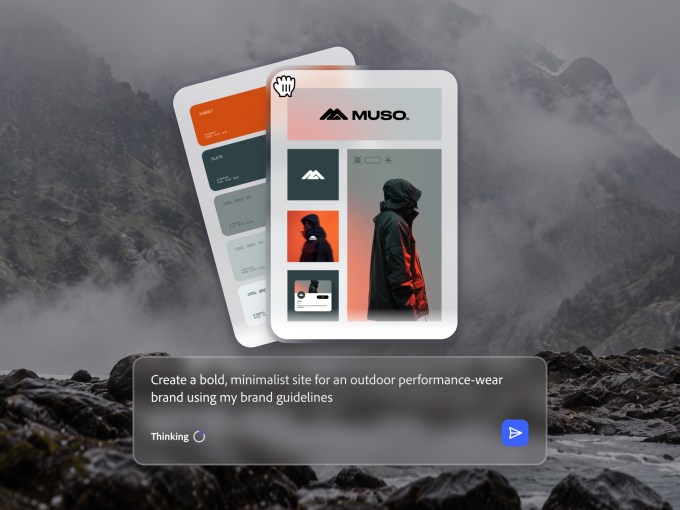
The Firefly application of Adobe is extending into the domain of Figma, with the addition of a new prototype design tool named Builder. It is currently in the private testing phase, and users can use it to create designs to showcase their ideas. Firefly has also added a tool for creating brand consistency charts, as well as an image editing tool that allows users to modify a certain part of an image without altering other elements.
One of the new AI video tools in Firefly will allow users to combine clips with images, sound effects, and other elements into videos. Adobe indicates that the company is making its agents more proactive and always online in order to gain more context about the work and be able to participate in any operation. Adobe also makes it easier for users to quickly perform tasks such as removing backgrounds or generating thumbnails for videos.
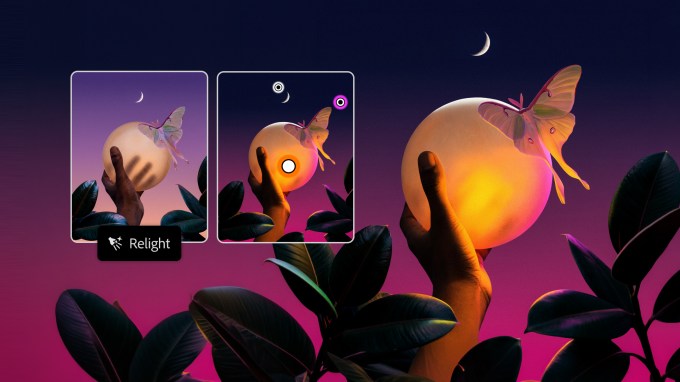
The company has previously incorporated a large number of AI features into applications such as Photoshop, Express, Premiere, and Illustrator. At this MAX event, Adobe continues to advance this trend. Photoshop will receive new re-lighting functions, as well as a generative style slider based on prompts; Premiere will introduce a new color tuning system and a video object removal function for professionals; Lightroom will add tools for correcting blinking and removing blemishes.
Adobe currently provides a large number of third-party models from Google, Runway, ElevenLabs, Black Forest Labs, OpenAI, Kling, and ByteDance, among others. One of its more recent acquisitions, Topaz Labs, is launching two image models, named Wonder 4 and ImageHDR respectively. Wonder 4 is used for zooming in and noise reduction, while ImageHDR can convert standard images into HDR.
The company has previously provided integration with ChatGPT and Claude to facilitate users' access to some of their product features. Now, Adobe is launching a local MCP to open up more features of the Creative Cloud application to users.
Adobe Vice President Deepa Subramaniam told TechCrunch that the company is still figuring out which capabilities to open up and will rely on user feedback.
Subramaniam said, "We are still working out where the boundaries should be, when they should be set, and how they should be defined. What we have launched is a series of endpoints and capabilities that span Illustrator, Photoshop, After Effects, and Premiere. We will observe how people use them, what they want to do with them, and then we will continue to introduce more. There is no need, nor is there any desire on our part, to limit what information can be exposed through these MCP endpoints. What we really want to do is to support this kind of creative workflow, no matter how you choose to carry it out."
Last month, Figma, a competitor of Adobe, and Dylan Field, one of its co-founders, stated at an event in India that MCP is not a perfect standard and is actually more beneficial for cutting-edge laboratories.