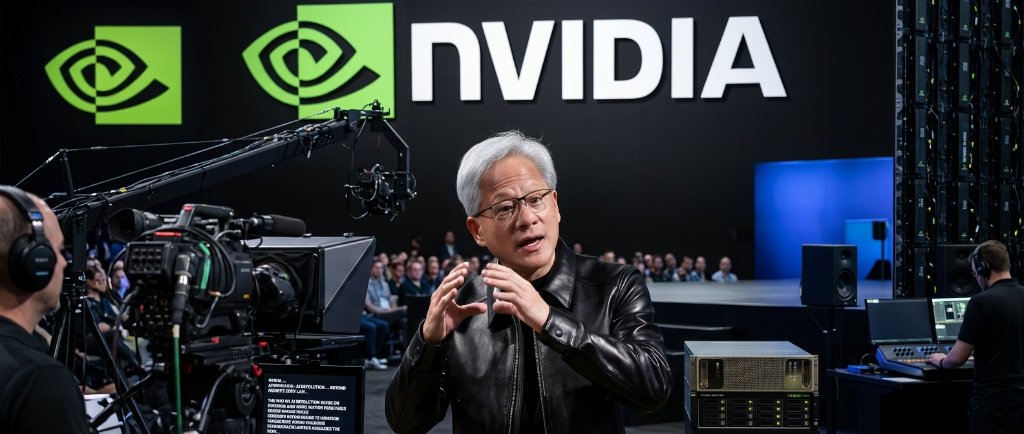





NVIDIA is facing a crisis that could reshape the leadership structure of this world's largest artificial intelligence chip manufacturer by market value. Due to CEO Jensen Huang's involvement in several extramarital affair scandals, the company's board of directors is currently actively seeking potential successors to address any possible power vacuum that may arise.
According to Bloomberg and The Wall Street Journal, NVIDIA's board of directors held an internal meeting on Wednesday to decide on Jensen Huang's future, and has collaborated with external organizations to select candidates for the new CEO position, including considering appointing a temporary CEO during the transition period. Previously, The New York Times revealed that Jensen Huang had an improper relationship with one of his direct subordinates, which further exacerbated earlier serious allegations regarding his involvement with a Chinese woman.
The uncertainty of succession quickly triggered a violent reaction in the financial markets. During after-hours trading on Wednesday, NVIDIA's stock price plummeted by 9%, not only erasing a huge amount of market value in a single day but also triggering widespread selling sentiment, which dragged down other artificial intelligence concept stocks such as Intel and Dell Technologies as well.
As NVIDIA is set to release its quarterly financial report next week, this series of unexpected events forces investors to confront an unprecedented "key personnel risk." Wall Street is closely assessing the extent of the direct impact that would be incurred on the capital chain, customer confidence, and development prospects of the entire AI industry if this core architect of artificial intelligence infrastructure is forced to leave his position.
Independent investigation and the board of directors face a test
According to Reuters, NVIDIA's board of directors initiated an internal investigation on Sunday in response to the national security vulnerabilities mentioned in the news reports.
However, the company's governance structure is under strict scrutiny from the outside world. NVIDIA does not have a chairman of the board among its 11 directors, and several independent directors, such as Mark Stevens, have been in office since the 1990s, indicating a highly rigid personnel structure.
The head of research at ISS in the United States, Marc Goldstein, pointed out that although Wall Street generally tolerates charismatic founders from Silicon Valley to some extent, since Jensen Huang's own judgment has been questioned, the board of directors must hire independent legal counsel to enhance the credibility of the investigation.
He suggested that the board of directors consider having long-serving directors recuse themselves from the investigation to prevent potential legal challenges from shareholders in the future. Former U.S. Department of Justice official Gil Soffer emphasized that if the investigation confirms that Jensen Huang concealed relevant relationships and engaged in improper behavior, then his removal would be an appropriate decision.
Key question: Did Jensen Huang disclose it voluntarily?
One of the core focuses of the investigation is whether Jensen Huang disclosed this relationship to the company at any time.
NVIDIA's code of conduct lists "personal relationships" as one of the situations that may lead to conflicts of interest, and explicitly requires employees to proactively contact the legal department for guidance when facing potential or actual conflicts of interest.
Former U.S. Department of Justice official and current chairman of the Katten law firm, Gil Soffer, stated in an email that if Jensen Huang had disclosed the information completely and truthfully, it would be beneficial to his current situation, as it would mean he did not conceal this relationship, and the board of directors would also have the opportunity to assess it and implement corresponding control measures.
Soffer also pointed out that before more facts are made public, it is still impossible to determine whether this relationship has actually caused a conflict of interest, whether the board of directors' handling so far has been appropriate, and what degree of punishment Jensen Huang should receive. He stated that if Jensen Huang has concealed this relationship and engaged in improper behavior, 'removal from office may be an appropriate measure of action.'
According to NVIDIA's latest proxy statement, Jensen Huang's total compensation over the past three years amounted to $120 million, which was mainly in the form of stock awards. The company's articles of association allow the board of directors to remove him from his position by a majority vote, under both 'founded' and 'unfounded' circumstances.
Wall Street Re-evaluates "Key Person Risk"
Market analysts have expressed widespread concerns about potential leadership turmoil at NVIDIA.
Karobaar Capital Chief Investment Officer Haris Khurshid pointed out that this is no longer just a single individual scandal, but has evolved into a serious governance and key personnel risk. Investors are beginning to reprice their sentiment towards the entire AI sector.
Integrity Asset Management Portfolio Manager Joe Gilbert clearly stated that this represents "no doubt a negative impact" on NVIDIA and the entire AI ecosystem, as it is almost impossible for the newcomers to replicate Jensen Huang's strategic vision.
Jonestrading Chief Market Strategist Michael O and Rourke pointed out that NVIDIA previously predicted sales growth of 70% this year. With its aggressive sales strategy and supplier financing model, the successor may need an entire year to "put out the fire and clean up the mess."
Miller Tabak + Co, the Chief Market Strategist, warns that as an important financier in the AI industry, NVIDIA's senior management turmoil could lead to a reduction in spending across the industry. Zacks Investment Management's Brian Mulberry believes that even if Jensen Huang steps down from his CEO role, he may still retain certain functions as a strategic advisor or board member.