



Cryptocurrency sentiment analysis explains how to distinguish between price trends, news, and community discussions in order to assess market sentiment, rather than predicting trends.

Emotional analysis of cryptocurrencies is a method to examine the sentiment surrounding a particular coin or the broader market. The first step is to identify what people are discussing, and then to compare these discussions with price movements and the news behind them. What is ultimately obtained is a portrait of a specific discussion at a given time, rather than a reliable prediction of future price changes.

Abstract
What does encrypted emotion measurement measure?
Market sentiment describes attitudes such as optimism, concern, or uncertainty. There is no single source that can measure the feelings of all those who hold or trade cryptocurrencies. Surveys are aimed at a selected group of people; social media tools analyze the content they can access; market indices, on the other hand, may combine various types of data. Each of them presents different perspectives of the same market.
It is necessary to separate three issues that are often confused. The focus of “attention” is on how much a particular asset is discussed. The tone of discussion indicates whether these discussions are positive, negative, or neutral. “Market activity” describes what the participants actually do, such as completing transactions at certain prices. More discussions may be accompanied by excitement, may stem from security concerns, or may be debates surrounding a particular announcement; it is not possible to distinguish between these situations based solely on the number of mentions alone.
Range and labels are equally important. The sentiment towards a particular token does not necessarily equate to the sentiment of the entire market. Similarly, discussions among developers regarding protocol updates can be vastly different from those of short-term traders focusing on prices. Before comparing different readings, it is essential to confirm which asset they refer to, what sources they come from, in what languages they are presented, and over which time period they cover.
Select signals that are capable of answering different questions.
Prices and Trading Activities
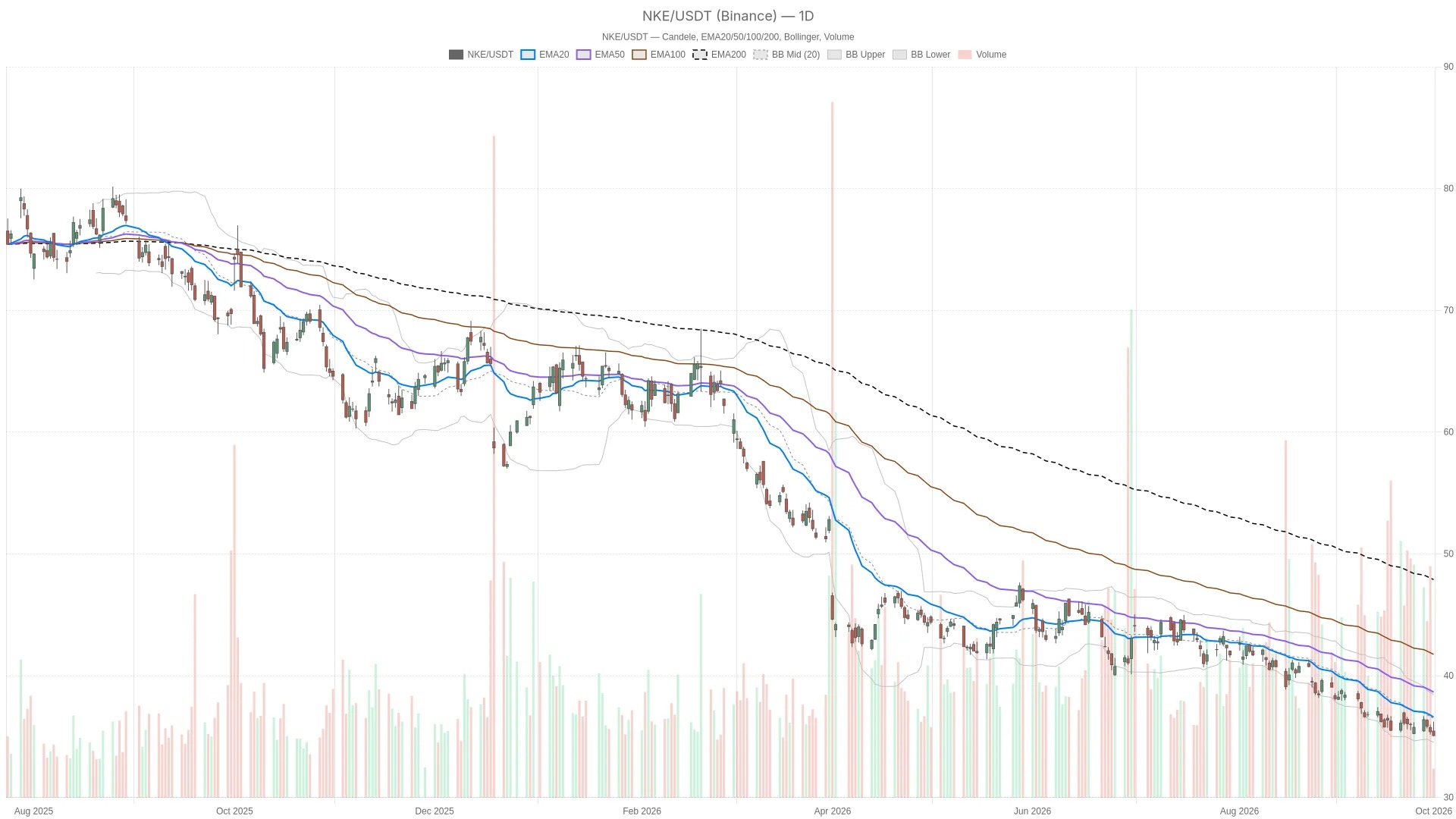
Price is the starting point for observing market reactions. It is necessary to record the asset, the currency of pricing, the trading venue, or the data provider, as well as the time of observation. Then, compare over consistent time periods: 24-hour price changes and 7-day price changes correspond to different starting points. The “Today’s Crypto Prices” page on OnCoin can help readers view current quotes and compare the movements of a single asset with those of other assets.
Trading volume provides more information about the activity within the selected time frame. An increase in price accompanied by an increase in trading volume indicates that more transactions occurred during that period; however, this does not necessarily indicate whether new funds have entered the market, nor does it tell us whether there are more buyers than sellers. Every completed transaction involves both parties. The trading volume figure also depends on which exchanges and markets are included, so it is important to ensure that the comparison is made using consistent criteria.
Price and trading volume are useful background information for sentiment analysis, but they are not a direct survey of investors' emotions. Prices can fluctuate due to multiple orders placed for various reasons. Charts should be viewed as evidence of market activity, while "what motives drove these activities" should be considered a separate issue.
News and the events behind the reactions
The title helps to identify what people might be reacting to. The next step is to find the underlying announcements, regulatory documents, or project updates, and to verify their dates, jurisdiction, and status. Proposals, approvals, and changes that have already been implemented are different events. A report that is reissued today may also be describing something that happened even earlier.
Public discussions can reveal what questions people are asking and which explanations are gaining attention. Don't just look at the most vocal post; instead, sample the original comments to identify the topics of discussion and check whether these accounts are providing independent information or simply repeating the same statements. An increase in mentions driven by a few active accounts is not the same as an increase in mentions brought about by broader participation.
Real-time dialogue provides another layer of context. Speakers can explain complex updates and may change their interpretations as more details emerge, while viewers can ask questions in real time. The OnCoin and web3 live streaming communities combine live streaming with community discussion. When a streamer makes a substantive statement, the original source they cite should be noted for verification after the live stream ends.
How to Interpret Emotional Ratings
Some services aggregate language or market data into a single score. Text-based indicators may categorize sampled posts as positive, negative, or neutral; comprehensive indices, on the other hand, may take into account factors such as price changes, trading volume, or other activities. Before using any such score, it is important to read its methodology first. The name of a score rarely provides an accurate indication of what specific factors are included within it.
Before comparing two readings, check the samples first. Which platforms are included? Are referrals taken into account? Is this metric based on the number of posts, the number of independent authors, or the level of interaction? Does it cover a specific cryptocurrency, or a basket of assets across the entire market? If a change in a score is due to the provider adding a new platform, then unless the method has been adjusted to account for such changes, it cannot be directly compared with previous scores.
Automated tags can also misinterpret the context. A comment like “This drop almost drove me crazy” could be a complaint, a joke, or it could also be part of a longer discussion expressing a desire to buy actively. Abbreviations similar to stock codes may overlap with unrelated words, and marketing accounts might repeatedly post the same information. If the provider makes available examples of the underlying posts, a few of them should be randomly checked. If these examples seem irrelevant or highly repetitive, then the summarized results should be viewed with caution.
High scores or low scores may both persist. It may describe a state of emotional congestion, but in itself, it cannot reliably provide points of entry or exit. If a tool does not explain its input items, update frequency, or historical revision methods, this uncertainty should be retained in the records.
Example: When discussing simultaneous changes in price
Imagine a fictional token ALP. On Monday, a reader found 100 public posts in the selected sample: 40 positive, 30 negative, and 30 neutral. On Tuesday, the same search returned 200 posts: 90 positive, 70 negative, and 40 neutral. These numbers are for illustration only and do not represent measurements of any real token.
Let's add another hypothetical timeline. The price of ALP rose by 6% between 9:00 and 10:00, followed by an upgrade announcement at 10:15, and the trading volume peaked at 11:00. This announcement may have influenced subsequent discussions, but it cannot explain the entire price increase that occurred before that time, as the relevant information was only made public for the first time at 10:15. It is also possible that there was earlier information or other factors that influenced the price; however, this small example cannot determine which one was responsible.
Before reaching a conclusion, readers should eliminate obviously repetitive content, compare the number of independent authors whenever possible, and check whether the posts are discussing the upgrade itself or merely celebrating the price increase. A useful conclusion might be: "Discussions increased after the announcement was released, but the price had already risen prior to that; the reasons for that previous rise are still unclear." This is less dramatic than making predictions, but it is more in line with the evidence.
Establish a repeatable review process
Making a light record is sufficient to make it easier to compare observations from different times. Use the same assets, time window, and source each time, and record any changes in the coverage area. A consistent process helps to determine whether the story itself is changing, or if it's just being described in different ways.
- Clarify the issue: Determine whether you are studying the entire market or a specific asset, and indicate the time frame you are focusing on.
- Record the market context: Note the source of prices, comparison windows, and any trading volume data. If the data from two services differs, check their coverage and timestamps.
- Identify events: Try to find the original statements as much as possible, and distinguish between things that have already occurred and those that are still in the proposal or prediction stage.
- Inspection of discussions: Sample and review discussions from multiple sources to identify repeated statements, and record any apparent commercial interests. Distinguish between the volume of discussions and the tone of the discussions.
- Draw a conclusion with restrictive conditions: list the observations, one explanation, and at least one reasonable alternative explanation. Also, note what would change your opinion when more information becomes available.
This is a research process, not a trading system. Analyses that are conducted at a slower pace may miss rapidly changing markets; even if the information itself is accurate, it may already be reflected in prices. If a decision involves a particular exchange or financial product, the associated risks, availability, and legal considerations may vary depending on the jurisdiction.
Conclusion
The most useful time for sentiment analysis is when it makes a discussion easier to understand. Prices and trading volumes describe activities, reports identify events, while community discussions reveal interpretations that warrant further investigation. By separating these observations and noting the times they occur, readers can make more restrained judgments, rather than mistaking popular narratives for predictions.
Frequently Asked Questions
Is it possible to assess crypto sentiment without using paid tools?
Sure. Conducting small-scale manual reviews of public posts, related news, and market data can help you understand a discussion. However, it does not represent all participants, so it is important to record the sources you have checked and avoid presenting such samples as if they were a survey representing public opinion across the entire market.
How often should I update my emotional review?
The update frequency should match the nature of the issue itself. Rapidly developing announcements may require frequent checks; more extensive research projects might be better suited for consistent snapshots taken daily or weekly. Timestamps should be retained to prevent subsequent updates from quietly overwriting the initial information available.
What if the provider of emotional data changes their methodology?
The date of the method change should be marked, and it should be checked whether the provider has recalculated the previous values. If not, the readings before and after the change should be compared carefully: changes in scores may reflect differences in samples or formulas, rather than a change in the viewpoint itself.
Amelia Tomasicchio
As a digital marketing expert, Amelia entered the field of fintech in 2014 after completing a thesis on Bitcoin technology. She had previously contributed to several international cryptocurrency-related magazines and served as the Chief Marketing Officer for Eidoo. Today, she is a co-founder of The Cryptonomist. She also works as a marketing teacher at Digital Coach in Milan and has published a book about NFT for an Italian publisher Mondadori. Additionally, she is helping artists and businesses enter this field. As a consultant, Amelia has also participated in projects related to the metaverse, such as The Nemesis and OVER.