Core Points
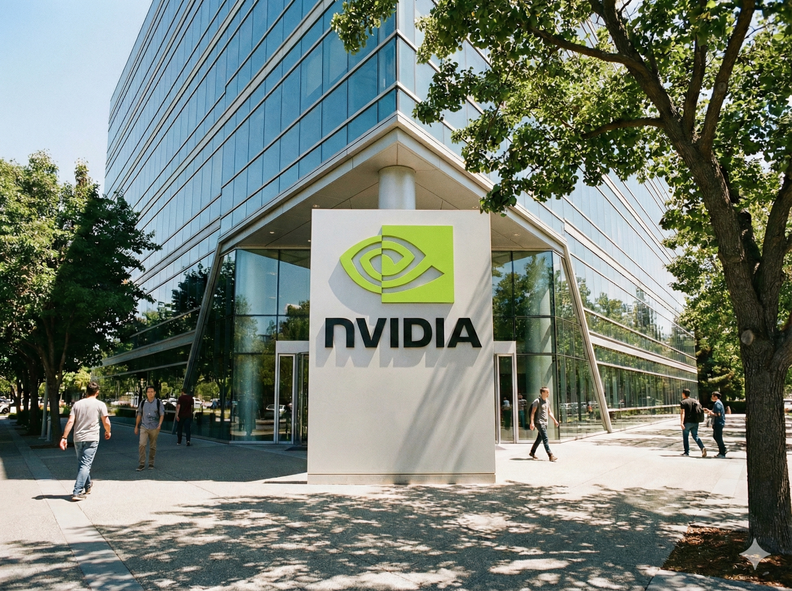
- As of the close on Thursday, NVIDIA has seen a cumulative decline of 11% this week, and is on its way to experience its sixth consecutive week of declines.
- This will be the longest consecutive weekly decline for the company since 2012.
- Since the start of the stock price decline in early October, the market value of this chip giant has evaporated by about $1.6 trillion.
Even before the Jensen Huang controversy erupted this week, NVIDIA's investors had already turned bearish. However, the selling pressure on Wall Street has accelerated in the past few days, pushing the stock to record its sixth consecutive week of decline, marking the longest streak of weekly losses since 2012.
This chip giant, which topped the global market capitalization for most of this year, saw its stock price decline by 29% as of Thursday's close, resulting in a reduction of about $1.6 trillion in market value. Apple has now surpassed it in market capitalization.
Jensen Huang, as one of the co-founders of NVIDIA, led the company for a period of 33 years. Jensen Huang announced his resignation on Thursday. The board of directors appointed Chief Financial Officer Colette Kress as the interim CEO, and at the same time, the board will initiate the formal selection process for a new CEO candidate.
NVIDIA tumbled 4.3% on Thursday alone, with a cumulative decline of 11% this week. The first news of an extramarital affair made headlines last weekend, when Jensen Huang sent an internal email to all employees apologizing publicly for being "unfaithful to his wife." After The New York Times exposed another extramarital affair with NVIDIA's Vice President of Healthcare, the board of directors held an emergency meeting on Wednesday evening.
On Thursday morning, Jensen Huang officially resigned, marking a dramatic end to the career of this heavyweight in the business world. Jensen Huang was once one of Trump's most important allies in the business community.
Analyst Gil Luria stated in a research report on Thursday: "With CEO Jensen Huang's regrettable departure, we expect NVIDIA to face a challenging management transition period in the coming months." Luria lowered his target price from $300 to $200 but still maintained a "buy" rating. He wrote, "We believe the market has already priced in this management transition appropriately."
Last week, when the news of Jensen Huang's resignation emerged, NVIDIA's stock price had already fallen by about 9%. This decline was largely due to the results of the U.S. mid-term elections: the Democratic Party achieved a comprehensive victory, and several referendum bills were passed, which could potentially slow down the pace of expansion in the artificial intelligence industry.
In the weeks leading up to the election, influenced by concerns that rising interest rates would severely impact highly indebted companies, the stock price of NVIDIA and a number of AI concept stocks declined simultaneously. Although NVIDIA itself has extremely strong profitability, its core major customers, such as Microsoft, rely heavily on debt market financing for capital expenditures.
Next week, the pressure will fall on the interim CEO Cres. NVIDIA is scheduled to release its quarterly financial report on Tuesday. According to the consensus forecasts of analysts compiled by LSEG, the company's revenue is expected to increase by 91% year-on-year, reaching $108.9 billion. Compared to the same quarter of 2022, which was on the eve of OpenAI releasing ChatGPT and triggering the wave of generative AI, today's revenue scale is already 18 times that of that time.
Oberhumer's analysts stated in a research report on Thursday that even though NVIDIA's financial results are likely to remain impressive, "we believe that in the short term, fundamentals will take a backseat."
Analysts wrote, "In our view, Jensen Huang's departure may pose a persistent downward pressure on the stock price."
Responsible Editor: Guo Mingyu