Key Points
- NVIDIA's perpetual contracts reportedly reached a daily trading volume of $2.14 billion.
- Traders can obtain 24/7 leverage exposure to NVDA.
- The increase in stock derivatives activities has strengthened the institutional narrative of Hyperliquid.
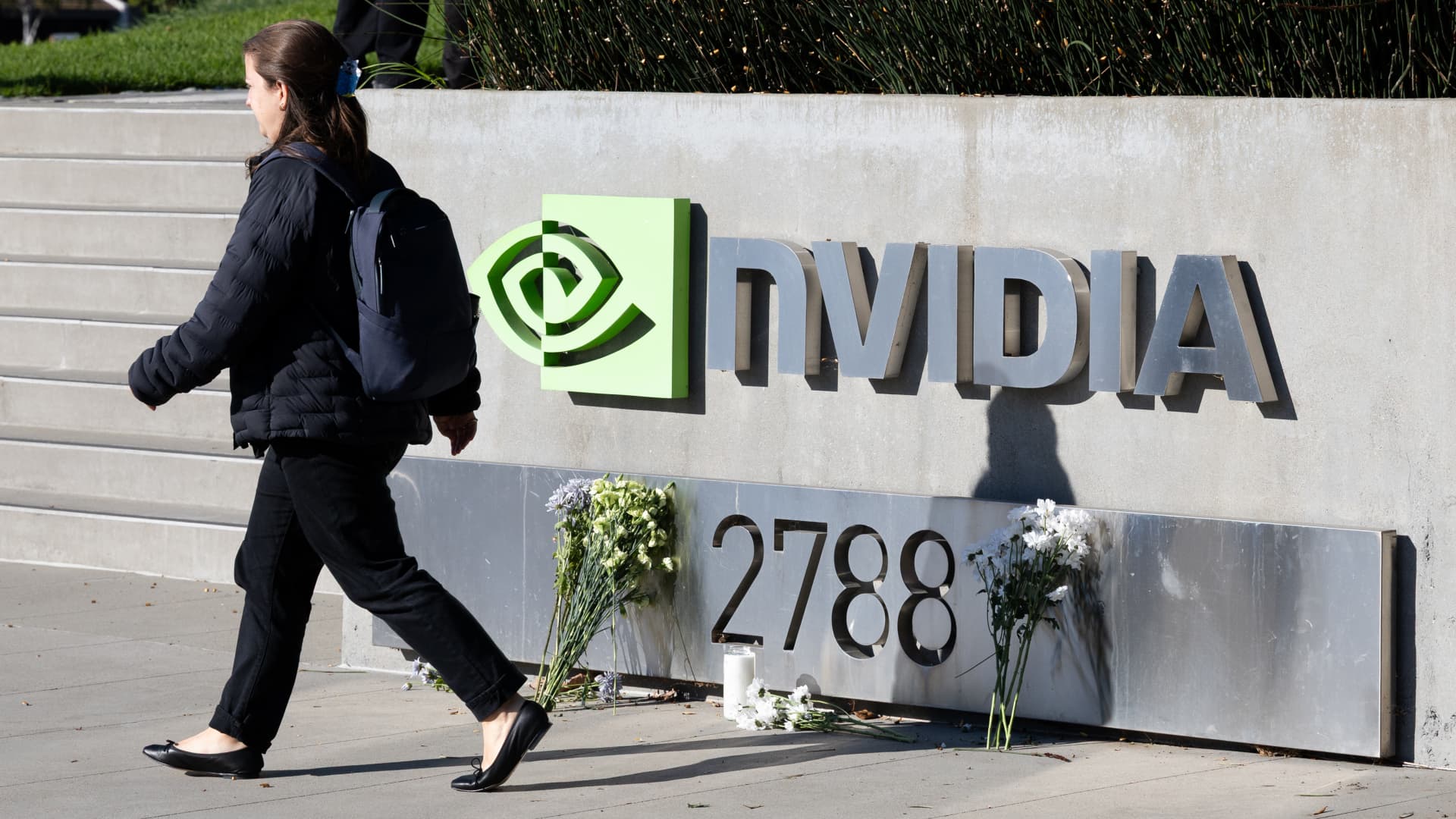
It is reported that as the volatility surrounding this artificial intelligence chip manufacturer intensifies, traders are turning to decentralized derivatives markets. On November 13th, perpetual contracts linked to NVIDIA on Hyperliquid recorded a record daily trading volume of $2.14 billion.
According to the on-chain report from Lookonchain, this contract, operated by Trade.xyz and named NVDA, just reached this milestone on November 12, 2025, marking its first anniversary since its launch.
After NVIDIA's CEO Jensen Huang unexpectedly resigned, market uncertainty increased again, and at the same time, trading activity for that contract also increased. Unlike traditional NASDAQ trades, this contract for Hyperliquid allows eligible traders to bet on NVIDIA's stock price movements around the clock.
NVIDIA’s perpetual contract trading volume exceeded $2 billion at Hyperliquid.
As traders responded to NVIDIA's latest leadership crisis, the activity of NVIDIA perpetual contracts related to Trade.xyz increased significantly.
On November 12th, after confirming that Huang had resigned, NVIDIA's stock price plummeted significantly. Colette Kress, who had served as the Chief Financial Officer for a long time, was appointed as the interim CEO.
The uncertainty among the company's leadership has intensified the volatility of semiconductor stocks, creating opportunities for traders who wish to hedge their positions or bet on further price movements.
Market data on November 13th showed that NVIDIA's open interest in perpetual contracts was close to $385 million, while the 24-hour trading volume was still near $2 billion.
The reported record of $2.14 billion reflects an earlier statistical period, hence the subsequent rolling trading volume figures are lower.
Unlike the purchase of ordinary stocks, these contracts do not provide ownership of NVIDIA shares, voting rights, or dividends.
On the contrary, what they provide is a cash settlement exposure to price changes of NVDA, with leverage that can reach up to 20 times the margin deposited by the trader.
The 24/7 stock trading momentum of Hyperliquid has strengthened.
NVIDIA contracts run through the HIP-3 framework of Hyperliquid, which allows independent developers to launch a perpetual contract market.
Hyperliquid has expanded its business from cryptocurrencies to stocks, commodities, and stock indices, and its market data is also available on Bloomberg terminals.
This infrastructure allows traders to maintain or adjust their positions outside of the trading hours of traditional exchanges; however, liquidity and pricing may differ from those of the underlying stock markets.
The integration of the Ripple Prime perpetual contract has also expanded the range of institutions that can access it, supporting transactions in markets operated by Trade.xyz.
However, the ability to trade around the clock does not mean that liquidity risks disappear. A thin order book can amplify price fluctuations, especially when the exchange where the underlying stock is traded is closed.
Earlier this year, a flash crash of the SpaceX perpetual contract demonstrated that even relatively small orders could trigger widespread liquidations.
What does NVIDIA’s record-breaking trading pair HYPE mean?
The expansion into traditional financial markets by Hyperliquid may increase the market's demand for its infrastructure and generate more protocol revenue.
HIP-3 requires market deployers to stake HYPE, thereby establishing a connection between the derivatives market expansion and the network's native tokens.
The ecosystem has already attracted the attention of institutions, including Coinbase custody arrangements and a $3.5 billion HYPE treasury strategy.
However, an increase in trading volume does not necessarily translate into higher HYPE prices automatically. Actual transaction fees, market competition, token supply, and regulatory developments will all affect the relationship between the two.