Top weekly crypto gainers and losers
西岸风
2025-12-09 20:42
Ai Focus
Last week’s crypto market showed a mixed tone, with strength in selective large-cap tokens and weakness among speculative altcoins and privacy coins.
Helpful
No.Help

Last week’s crypto market showed a mixed tone, with strength in selective large-cap tokens and weakness among speculative altcoins and privacy coins.

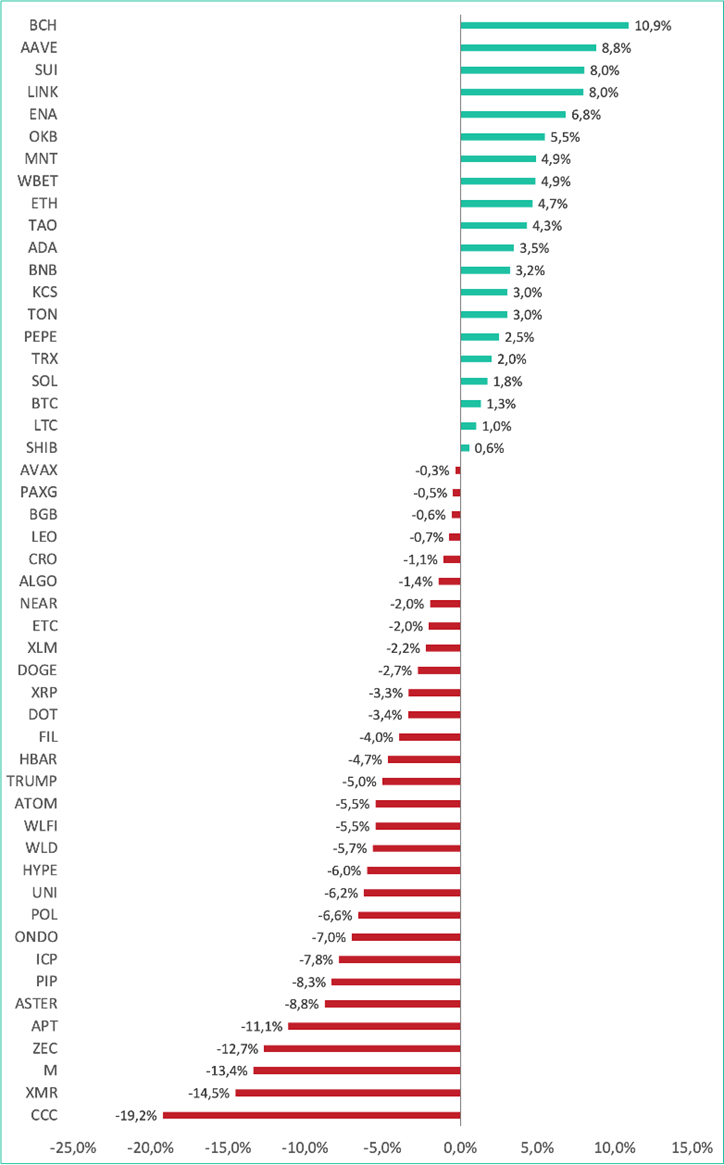
Top crypto gainers and losers (Seven days)
Source: altfins.com

According to altFINS’ weekly performance chart, the top 5 gainers were

  • Bitcoin Cash (BCH, +10.9%),
  • AAVE (AAVE, +8.8%),
  • SUI (SUI, +8.0%),
  • Chainlink (LINK, +8.0%),
  • Ethena (ENA, +6.8%).

The top 5 losers were

  • CCC (CCC, -19.2%),
  • Monero (XMR, -14.5%),
  • Manta Network (M, -13.4%),
  • Zcash (ZEC, -12.7%),
  • Aptos (APT, -11.1%).

Bitcoin Cash (BCH) was the top performer, gaining nearly 11%. The move was likely driven by renewed interest in peer-to-peer payment tokens as BCH gained traction in Latin American on-ramp integrations and saw technical breakout confirmation above key resistance levels.

AAVE (AAVE) rose 8.8% as DeFi sentiment rebounded, fueled by growing deposits and stronger on-chain revenue signals. The DAO also finalized a treasury framework that could pave the way for long-term token buybacks, reigniting value-accrual speculation.

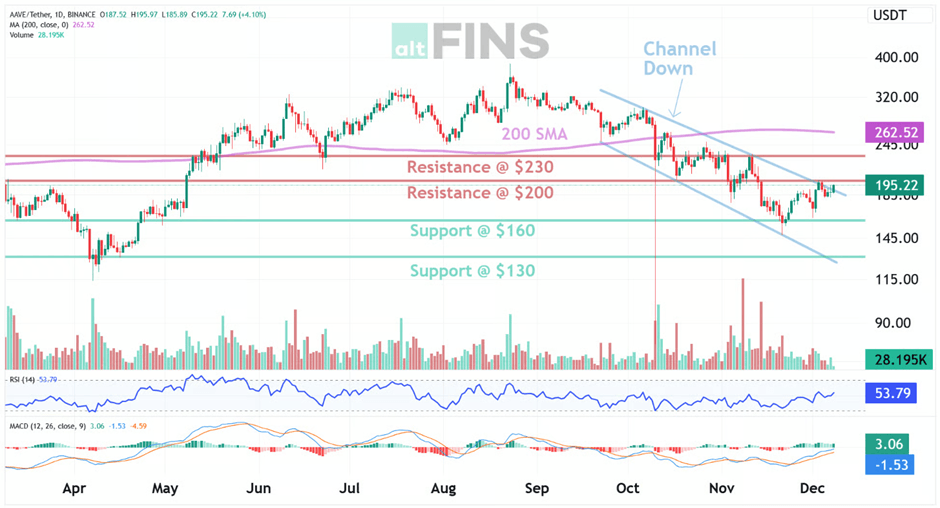
AAVE’s price broke out of the Channel Down pattern, which could signal at least a temporary bullish trend reversal. We wait for confirmation as break above $200 resistance may lift the price by +15% reaching $230. Stop Loss at $180 (just below prior swing low). 

AAVE (AAVE) – Technical analysis chart
Source: altfins.com

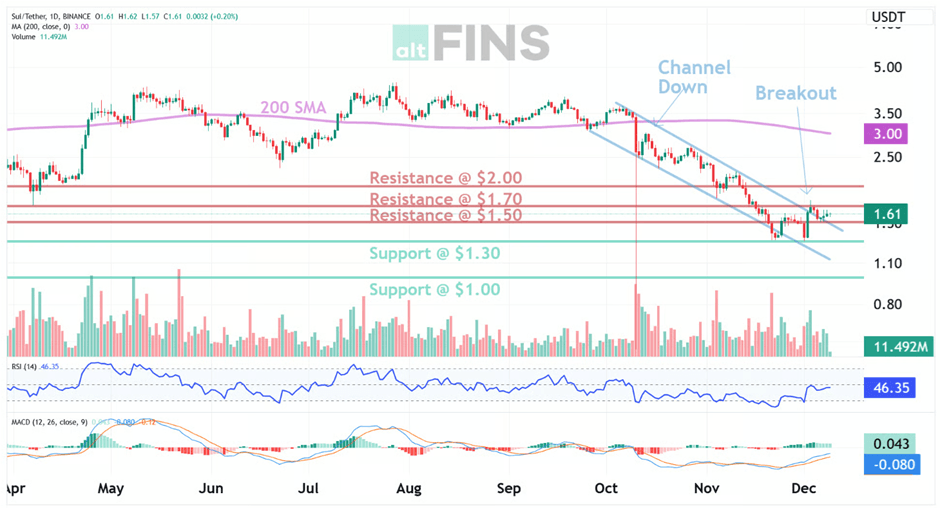
SUI (SUI) climbed 8.0%, benefiting from a wave of ecosystem expansion. New DeFi protocols launched atop Sui’s Layer-1, and developer metrics showed robust growth. Technical momentum played a role too, SUI’s price had a bullish breakout from Channel Down pattern, which could signal at least a temporary bullish trend reversal with +15% upside potential to $1.70 resistance (PT). Stop Loss at $1.46. This is a riskier trade setup because it’s a trend reversal not a trend continuation setup.

Sui (SUI) – Technical analysis chart
Source: altfins.com

On the downside, privacy coins and low-liquidity alts took the hardest hits. XMR and ZEC dropped sharply amid persistent regulatory concerns around anonymous transactions.

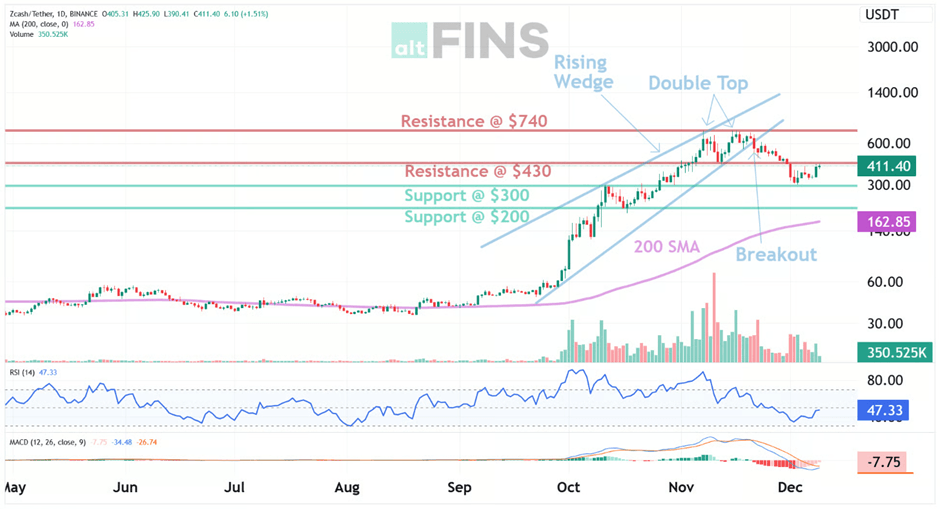
ZEC had a bearish breakout from Rising Wedge, which was a sign of a trend reversal. Also, it was rejected 2x at $740, which formed a Double Top, which is also bearish trend reversal pattern. It has bounced up from $300 support and is now approaching $430 resistance. If it breaks above that level, it could indicate that the profit taking phase is over and price can resume it's advance. 

Zcash (ZEC) – Technical analysis chart
Source: altfins.com

Overall, the market appears to be rotating into fundamentals and revenue-aligned protocols, while trimming exposure to speculative or illiquid assets. Traders are increasingly favoring tokens tied to fee-sharing, ecosystem growth, or protocol traction, setting the stage for more selective upside in the new year ahead.

Tip
$0
Like
0
Save
0
Views 390
WalletJYS reminds readers to view blockchain rationally, stay aware of risks, and beware of virtual token issuance and speculation. All content on this site represents market information or related viewpoints only and does not constitute any form of investment advice. If you find sensitive content, please click“Report”,and we will handle it promptly。
Submit
Comment 0
Hot
Latest
No comments yet. Be the first!
Related
In the past month, oil prices, AI, and bond trading have all changed.
The Jeffrey Rosenberg of BlackRock indicates that oil prices and U.S. Treasury yields were highly correlated this year, but in October this relationship suddenly dissipated. The market then began to view the weakening of AI trades as a sign of a slowdown in the U.S. economy. He believes that the AI craze is affecting growth, inflation, and bond market pricing, and the debt financing of ultra-large cloud providers is also transmitting more pressure to the public bond market.
CNBC
·2026-11-02 01:02:35
49
Binance Reminds Users to Be Vigilant Against Unapproved Fake Reward Activities
Co-founder of Binance, He Yi, reminds the crypto community to be wary of fake reward campaigns and phishing links, stating that community reward activities must be approved by regulators before they can be launched. Meanwhile, Binance resumed customer withdrawals on November 1st and announced the re-opening of withdrawals for multiple networks and assets.
U.Today
·2026-11-02 00:10:32
63
XRP Testing the key support of $1.25, the clearing map shows a local bottom
XRP Tumbled Nearly 19% in October, Dragged Down by Binance's $630 Million Hack; Price Currently Fluctuating Narrowly Around $1.25. CoinGlass Data Shows That $1.2292 is a Critical Bullish Clearing Level with a 54% Probability of Being Tested Within 24 Hours; Above that, at around $1.4292, there is Short Selling Pressure. TradingView Technical Charts Indicate That XRP is Trading within the 200-WMA Range of $1.25 to $1.28, with the Daily Oscillator Index Dropping to 36.85. The article also mentions that after the Ripple Swell meeting, RLUSD stablecoins took over some institutional products, temporarily reducing the direct demand for XRP.
U.Today
·2026-11-01 23:10:47
62
OKXICE Faces Opposition from 50 Issuers; NVIDIA and Nike Join the List of Dissenters
50 listed companies have raised objections to the tokenization and trading of their stocks on OKXICE. According to a announcement on October 30th, 12 companies including NVIDIA, Nike, Costco, Micron, and Reddit have joined the opposition in the latest round. The SEC rules allow issuers to prevent third-party token trading of their stocks within a specified period, while OKXICE intends to provide 24/7 tokenized stock trading through the licensed liquidity pool on XLayer.
crypto.news
·2026-11-01 23:10:45
62
The game between JPMorgan Chase, Amazon, and AI agents may not necessarily be a winning strategy in the long run.
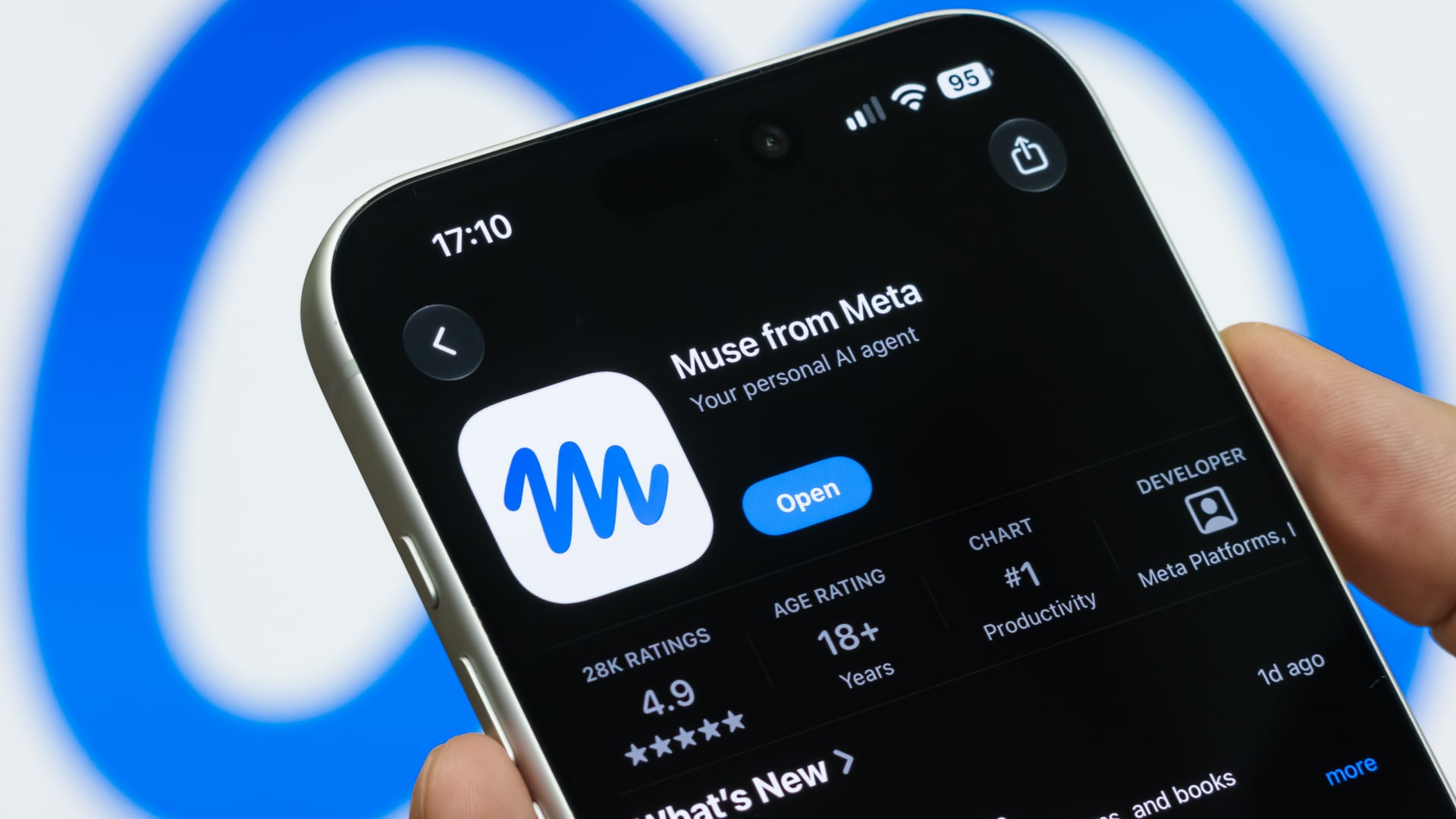
JPMorgan Chase, Amazon, Charles Schwab, Neiman Marcus, and Kohl are among the companies that have begun to restrict AI personal proxies such as Meta Muse, while Walmart has chosen to open itself up to such tools. The article points out that the main concerns of businesses include security, authentication, liability, and consumer protection. However, industry insiders believe that in the long run, simply blocking AI proxies may not be effective, and banks and retailers need to establish verifiable and trustworthy access methods.
CNBC
·2026-11-01 22:52:19
68
View More