





As the capabilities of large models are integrated into platform-based products more rapidly, an increasing number of independent AI applications are beginning to lose their viability. The latest overview by TechCrunch shows that over the past two years, a number of products from OpenAI, Apple, Microsoft, to several AI startups have been shut down, withdrawn, or clearly failed to meet expectations.
Relay out of service, independent tools under pressure
The latest one to stop operating is Relay. This is a workflow automation tool driven by AI proxy, positioned as a substitute for Zapier, and supports automation of email and task processes. This product has ceased operations on Monday.
Reports indicate that as large platforms such as OpenAI and Google directly integrate similar automation capabilities into their own products, it is becoming increasingly difficult for Relay, which has been established for five years, to justify its independent existence. Data from S& P Global Market Intelligence also shows that about 42% of AI projects are ultimately abandoned by their parent companies.
The reasons for a project to withdraw are not singular; common factors include insufficient funds, technical difficulties, intensified competition, difficulties in expansion, and inadequate user demand.
OpenAI Multiple products have been merged back into ChatGPT
Even leading companies have not been able to avoid product trial and error. OpenAI has undergone several adjustments in recent years.
One of the more notable attempts was to transform ChatGPT into a more comprehensive “super app.” On July 9th, OpenAI updated its app interface, merging modes such as “Chat,” “Codex,” and “Work” into a single display, and renamed the previously familiar versions as “ChatGPT Classic.” This redesign quickly caused dissatisfaction among users due to the more complex interface and increased confusion in usage, leading the company to revert this change later on.
OpenAI also gradually shut down several independent applications and merged their functions into ChatGPT:
- AI Browser ChatGPT Atlas was discontinued on August 9th, with a lifespan of less than one year.
- The Operator that can browse web pages and execute tasks on behalf of users has also been integrated back into the main application.
- Image generation capabilities are being more directly integrated into ChatGPT. The independent entry points for DALL-E are being weakened.
In addition, the video sharing platform Sora also ceased operations in March 2026. Reports mentioned that the platform faced high operating costs and challenges in retaining users.
Apple and Microsoft's AI feature advancement is not going smoothly.
On the Apple side, when Apple Intelligence was released in 2024, the upgraded version Siri was one of the key selling points. The company promised at that time that the new version Siri would be able to understand context, recognize cross-app information, and complete tasks more effectively.
However, the new version Siri has been postponed multiple times since then, with Apple citing engineering issues and vulnerabilities as reasons for the delays. This postponement was ultimately related to a $250 million settlement, with allegations focusing on how Apple marketed the iPhone capabilities of AI. It wasn't until July of this year that Siri AI appeared in the beta version on iOS and was first launched to English-speaking users this month.
Microsoft's Recall also encountered similar resistance. This feature was announced at the Build developer conference in 2024, positioned as a "photo-style memory" to Windows PC's AI. It regularly captures screenshots of users' operations to facilitate subsequent searching of personal digital records.
This design quickly sparked debates regarding privacy and security. Critics argued that it could create searchable archives of sensitive information, including passwords, private messages, and financial details. As a result, Microsoft postponed the feature for nearly a year and reworked its security and privacy protection measures. However, even after the revision, the controversy did not completely subside. Recently, cybersecurity researchers have developed tools to demonstrate how to extract data captured by Recall.
AI Increase in hardware and application retirements
In addition to the platform company, several other AI startup projects have also withdrawn.
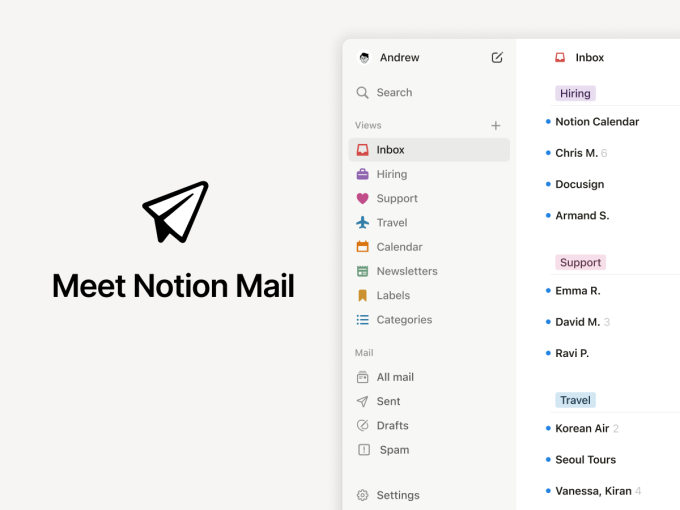
Notion Mail was launched in April 2025, featuring the use of AI to help users organize and automate their emails. However, the company found that users preferred to use independent AI agents to handle emails, therefore this product will be discontinued on September 22nd.
In terms of hardware, Humane AI Pin is one of the most notable failure cases. Humane once raised $230 million, aiming to replace traditional smartphones with wearable devices that offered AI functions. However, the product performed poorly, and later warnings were issued due to the risk of battery fires in the charging cases. Humane ultimately ceased its AI Pin business in February 2025, with most of its assets being acquired by HP for $116 million.
Rabbit R1 was also once highly sought after. This device made its debut on CES in January 2024, positioned as a AI companion device that could perform tasks on behalf of users. Rabbit stated that shortly after the product's release, sales reached 100,000 units. However, early reviews generally criticized it for its incomplete functionality, unstable performance, and limited integrability. Unlike Humane, Rabbit continues to be updated and has announced a new hardware plan named “Project Cyberdeck”.
Other exit cases also include:
- The audio app Huxe was shut down in May 2026, one of the reasons being that larger platforms launched similar features.
- The AI Model Comparison Platform Yupp was closed in March 2026, with the founder stating that the product did not find sufficient market fit.
- The role-playing platform Figgs AI ceased operations from 2023 to 2024, with developers citing high costs for providing free services as the reason.
This list shows that the elimination in the AI industry is not limited to small companies. With the acceleration of platform integration, rising customer acquisition costs, and increased user demands for product completeness, more and more AI projects are reverting from standalone products to platform functions or are directly withdrawing from the market.