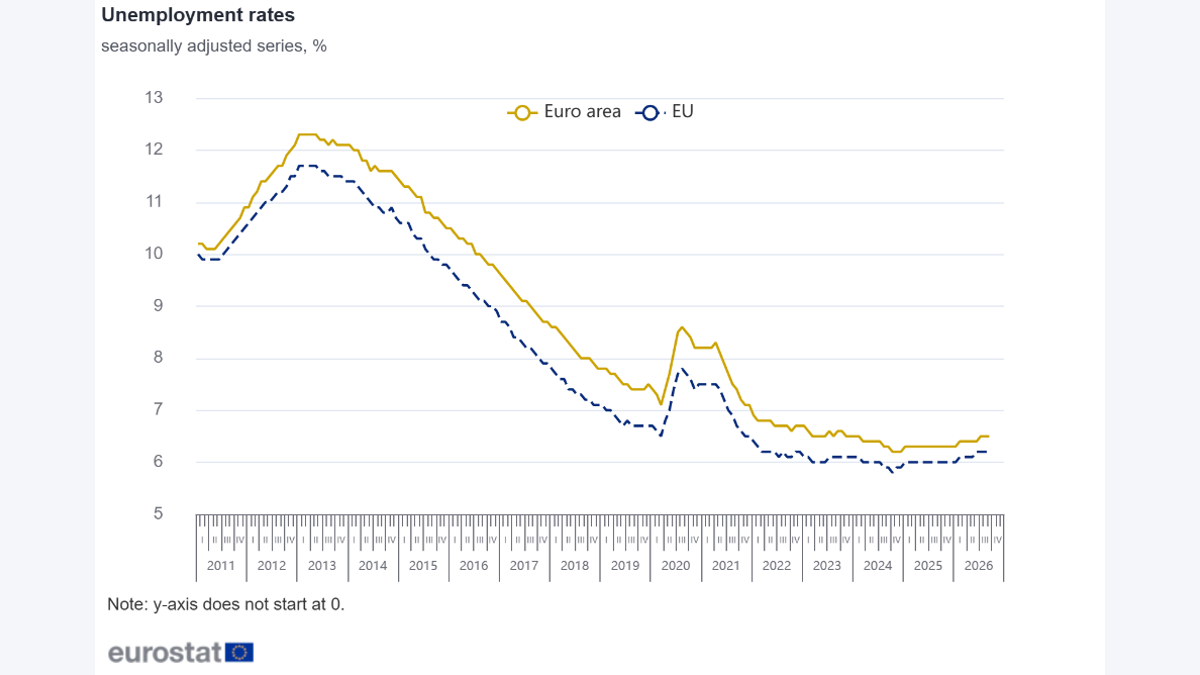


The unemployment rate in the eurozone in September remained the same as in August, at 6.5%; however, the number of unemployed people increased from 11.433 million to 11.555 million, an increase of 122,000 in just one month. These figures, released by the European Union Statistics Office on October 30th, present another side of the so-called "stable unemployment rate": while the rate shown in the headlines remained unchanged, the number of people joining the ranks of the unemployed continued to rise.
The same combination is observed across the European Union as a whole. In September, the unemployment rate was 6.2%, unchanged from August; the number of unemployed persons was 13.773 million, an increase of 105,000 from the previous month. The rate and the number of unemployed persons represent different aspects of the situation, and the published rate is only accurate to one decimal place. To conclude that the job-seeking pressure has not changed based solely on the similarity of the rates would overlook the changes already reflected in the numbers.
If we extend the comparison to a year, the changes become even more apparent. The unemployment rate in the eurozone rose from 6.3% in September last year to 6.5%, with the number of unemployed increasing by 420,000; the unemployment rate in the European Union rose from 6.0% to 6.2%, with the number of unemployed increasing by 471,000. The fact that there was no monthly change while there was an annual increase indicates that the recent surge in rates does not mean that the cumulative pressures before that have subsided.
The youth are making the concept of "stability" more narrow in its meaning.
Age demographics have changed the overall reading patterns. In the eurozone, the unemployment rate among youths under 25 years old was 15.4% in September, up from 15.1% in August; the number of unemployed youths increased by 69,000 to reach 2.469 million. While the overall unemployment rate remains stable, the employment prospects for this group continue to deteriorate.
The youth unemployment rate in the EU also rose from 15.4% to 15.5%, with the number of unemployed youths increasing by 44,000 to reach 3.022 million. On an annual basis, the number of unemployed youths in the eurozone increased by 80,000, and in the EU by 45,000. Only by comparing the trends of youth unemployment with the overall unemployment rate can one see the uneven distribution of pressure beneath the seemingly stable figures.
Age breakdown also involves a denominator that can easily lead to misunderstandings. The youth unemployment rate measures the proportion of unemployed individuals within the youth labor force, not the number of unemployed people among all those under the age of 25. Those who are still in the education system and have not entered the labor market are counted differently from those who are actively looking for work. Therefore, 15.4% should not be interpreted as meaning that fifteen out of every hundred young residents are unemployed.
This distinction is relevant to both practical policies and corporate decision-making. Employment services are aimed at people who are currently looking for work, while educational arrangements cover a broader group of individuals. If the two are combined into a single total population, it may lead to an exaggeration of the situation for certain groups and also fail to highlight the specific barriers that job seekers face. It is essential to first define the target population based on the data, so that subsequent explanations can be more precise and targeted.
In a regional table, there are different directions.
National data further breaks down the overall figures. In France, the unemployment rate in September was 8.5%, higher than 8.3% in August; in Germany it remained at 4.1%; in Italy it rose from 6.2% to 6.3%. Spain saw its unemployment rate increase from 10.2% to 10.3%, while in the Czech Republic it decreased from 3.1% to 2.8%. Despite all being part of the European labor market, the changes experienced by different countries this month were not consistent.
Gender statistics are also not fully synchronized. The unemployment rate for women in the eurozone is 6.7%, unchanged from August; for men, it is 6.4%, up from 6.3% the previous month. In the European Union, the unemployment rates for women and men are 6.4% and 6.0% respectively, which remains the same as last month. These figures can indicate which groups are under pressure, but they cannot explain on their own industry layoffs, wage changes, or the structure of job vacancies.
Statistical definitions determine what this table can answer. The official definition follows the standards of the International Labour Organization, considering those who are unemployed as individuals who have no job, have actively sought work in the past four weeks, and are able to start working within the next two weeks. Even if someone wishes to work, they may not be counted among the unemployed if they do not meet these criteria. This makes the unemployment rate a metric with clear boundaries, rather than a sum of all those facing employment difficulties.
To complement this perspective, the EU Labour Survey also provides indicators for part-time workers who are underemployed, those who are looking for work but cannot start immediately, and those who are able to work but are not seeking employment. The data from the third-quarter labour survey is scheduled to be released on December 11th. Separating the monthly unemployment figures from the more comprehensive survey allows for a more thorough analysis without relying on a timely but narrower set of data that may not cover all relevant issues.
Regarding recruitment and job hunting, the most practical change in this data is the widening gap between the overall figures and the specific demographics. In the Eurozone, the ratio remains at 6.5%, with the youth ratio continuing to rise, and the numbers and ratios vary from country to country. If companies arrange recruitment based on these figures, they still need to focus on the corresponding countries and positions; however, if job-hunting services distribute their attention based on average figures, they may easily overlook the increased demand from young people. The headline provides a regional perspective, while the actual numbers and sub-items determine where the pressure should be focused.