

On September 28, 2026, Coinbase announced a new feature that is not directly related to tokens, wallets, or trading charts—at least not in a direct manner. The crypto exchange previewed Coinbase Pokémon card packs, which users can open on their mobile phones, with each digital draw corresponding to a real physical trading card. This is an unusual move for a company that focuses on crypto trading and raises an obvious question: Is this merely a collectible gimmick, or is it the next step Coinbase intends to take with its platform?
Key Points
- Coinbase announced on September 28 a mobile trading card feature, allowing users to enable card packs supported by physical cards.
- Users can choose to store the drawn cards in a safe, or have them sent to their home.
- After being directly asked by the user, Coinbase confirmed that Pokémon cards are part of this product.
- The company has not provided a launch date, only indicating “Soon on Coinbase”, nor has it specified the blockchain used to record ownership.
- A similar model of tokenization for physical assets already exists through Collector Crypt. The Defiant reported on this model in September 2025.
Coinbase Launches a mobile transaction card package supported by physical cards
The core of the preview for Coinbase is quite simple: users can “open a pack” on their mobile phone screens, but each digital draw corresponds to a real physical card kept in a specific location. The company stated in their announcement, “Open a pack on your phone. Each draw is supported by a real physical card. It can be stored in a safe or sent to you.” This description makes it clear that this is not just a digital collection scheme; rather, it builds a bridge between tangible, physical items and what is recorded on the screen.
This feature allows for the activation of card packs endorsed by entity cards.
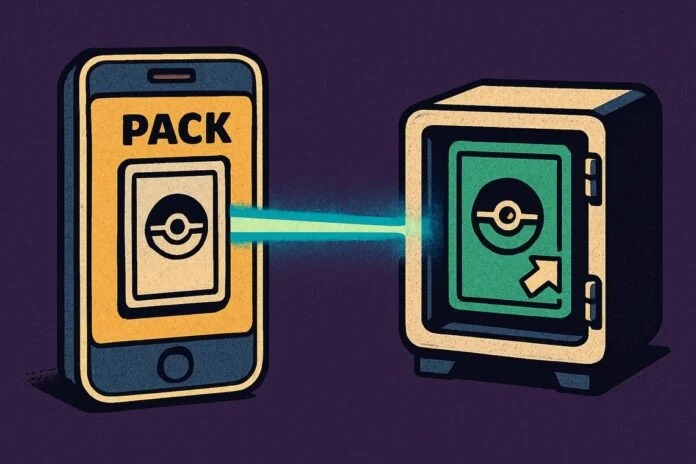
Its core mechanism is similar to the operation of physical trading card packs, except that it has been adapted for mobile interfaces. Users no longer need to tear open foil packaging at a store counter; instead, they open the card packs within an app, and any card drawn corresponds to a real item on the Coinbase hosted blockchain.
Users can choose to store their favorite cards in a safe or have them sent to their home.
Once a card is drawn, the choice lies with the user. The user can keep the card in a safe – presumably managed by Coinbase or their partners – or they can request to have the physical card sent to them. This option is at the core of the product’s selling point: it allows people to easily collect cards online, as well as to actually hold them in their hands.
Pokémon cards have been confirmed to be included in the product, and the platform strategy is aimed at “Everything Exchange”.
Pokémon cards have been confirmed as the flagship collectibles for this launch, which brings this feature directly into one of the most active collectible markets in the world. When a user straightforwardly referred to this concept as “online Pokémon card packs,” Coinbase responded in the same straightforward manner: “You get it.”
Pokémon cards have been confirmed to be included.
This interaction represents the most clear confirmation we have so far. Coinbase has not released the complete product specifications, detailed terms, or pricing information; they have only confirmed the categories of collectibles through social media replies – which indicates what is about to be launched, but not how it will specifically function.
Coinbase's " Everything Exchange " Vision
When another user asked about the larger logic behind this move, Coinbase replied, "Well, we are just Everything Exchange." The company had previously described this strategy as bringing any asset that people want to trade—whether it's a crypto asset or not—to one platform. From this perspective, Coinbase Pokémon card packs are less of a fringe project and more of a test to see just how far the slogan's everything can be extended.
If Coinbase can integrate physical collectibles into the same application that people use for encrypted transactions, then the actual nature of the platform will change. It will no longer be just an exchange; instead, it will begin to compete with specialized collectible markets – and there's even no need to explicitly state this.
However, what is still lacking at present are those mechanism details that are usually most important to native cryptocurrency users. Coinbase has not provided a launch date, only stating that this feature will be available “Soon on Coinbase”. The company has also not specified the blockchain used to record the ownership of the underlying cards, which makes it unclear how the digital and physical aspects of each card can remain associated after they are transferred.
Comparison with the existing tokenization model for physical collectibles
Coinbase did not start from scratch to invent this idea. Similar patterns already exist in the crypto market, which provides a useful preview of how such systems would function in practice.
Collector Crypt The tokenization of Pokémon cards
According to a report from The Defiant in September 2025, Collector Crypt has tokenized physical Pokémon cards and provided a digital vending machine as an alternative way to open physical card packs. This setup allows collectors to interact with the cards entirely on the blockchain before deciding whether to obtain the physical cards.
Digital Vending Machines and NFT Destruction and Redemption Mode
The process of converting digital rights into physical cards is quite specific: according to the platform’s own instructions for withdrawing funds, users need to pay for shipping fees and destroy the corresponding NFT before they can receive the physical card. This “redeem after destruction” structure is a method to ensure that digital tokens no longer coexist with the physical card once it has been collected – however, Coinbase has not yet clarified this point in its own version of the instructions.
This comparison is very enlightening, but it also highlights the content of Coinbase that has not yet been disclosed. The model of Collector Crypt demonstrates a feasible blueprint: connecting physical collectibles with on-chain rights through tokenization. Whether Coinbase will adopt a similar approach to build its own system, or whether it will take a different approach to NFT trading cards, remains an open question that the company has not yet answered.
This article was generated with the assistance of artificial intelligence and has been reviewed by an editorial team.