General Motors takes an important step with its next-generation lithium-rich manganese-based battery; range expected to be 33% higher than that of lithium iron phosphate batteries
The Block
1h ago
Ai Focus
General Motors announces that the next generation of lithium-rich manganese-based ( LMR ) batteries will be mass-produced at its Ultium Cells plant in Tennessee, which is jointly operated with LG New Energy. The plant began renovation at the end of this year and will become the world's first to mass-produce lithium-rich manganese-based prismatic battery cells upon completion in 2028. General Motors claims that the new batteries offer a 33% increase in range compared to the current lithium iron phosphate batteries, and the first models equipped with these new batteries are expected to be launched in 2028.
Helpful
No.Help

IT News on September 30th: On the 29th local time, General Motors announced that the next generation of lithium-rich manganese-based (LMR) batteries will be mass-produced at the joint venture factory in Spring Hill, Tennessee, which is operated jointly with (LG) New Energy.

General Motors stated that the plant will begin renovations by the end of this year and will be completed in 2028. By then, the plant will become the world's first to mass-produce lithium-rich manganese-based square battery cells.

According to reports by foreign media insideevs, as expected by General Motors, the new batteries will enable vehicles to have a range that is 33% greater than that of current lithium iron phosphate batteries. Lithium iron phosphate batteries hold a dominant position in the Chinese market and are also the low-cost battery solution favored by the entire industry. General Motors will use lithium-rich manganese-based batteries in full-size pickups and SUV; under EPA driving conditions, the range will exceed 644 km.

From a fundamental principle perspective, lithium-rich manganese-based batteries are similar to traditional ternary lithium-ion cells, but the proportion of cobalt and nickel is much lower. These two materials are more polluting to extract and also have higher costs. Lithium-rich manganese-based batteries significantly increase the proportion of manganese. General Motors states that manganese is easier to obtain, and its extraction and processing costs are also lower.

This is also one of the reasons why General Motors believes that lithium-rich manganese-based batteries can provide a longer range at a cost close to that of lithium iron phosphate batteries. Its electric vehicles with the longest range will still use ternary lithium batteries, while lithium-rich manganese-based batteries are positioned between ternary lithium batteries and low-cost lithium iron phosphate batteries.

IT Home has learned from reports that the first batch of electric vehicles equipped with lithium-rich manganese-based batteries is expected to be launched in 2028. By then, it will also be tested whether such batteries can provide a substantial improvement in driving economy compared to the currently available models of large SUV and pickups.

Tip
$0
Like
0
Save
0
Views 15
WalletJYS reminds readers to view blockchain rationally, stay aware of risks, and beware of virtual token issuance and speculation. All content on this site represents market information or related viewpoints only and does not constitute any form of investment advice. If you find sensitive content, please click“Report”,and we will handle it promptly。
Submit
Comment 0
Hot
Latest
No comments yet. Be the first!
Related
The report states that before AI got out of control, OpenAI had received warnings from employees, but the management chose to ignore them.
According to The New York Times, long before the artificial intelligence of OpenAI exhibited out-of-control behavior, two employees had already alerted senior management to security issues during the testing phase, but their warnings were not taken seriously. The report also states that OpenAI has recently been exposed to multiple security vulnerabilities and abnormal behaviors. The company has acknowledged that some of its protective measures have failed and has decided to postpone the release of the latest version of the model GPT-6.1 Astra.
The Block
·2026-09-30 11:12:42
8
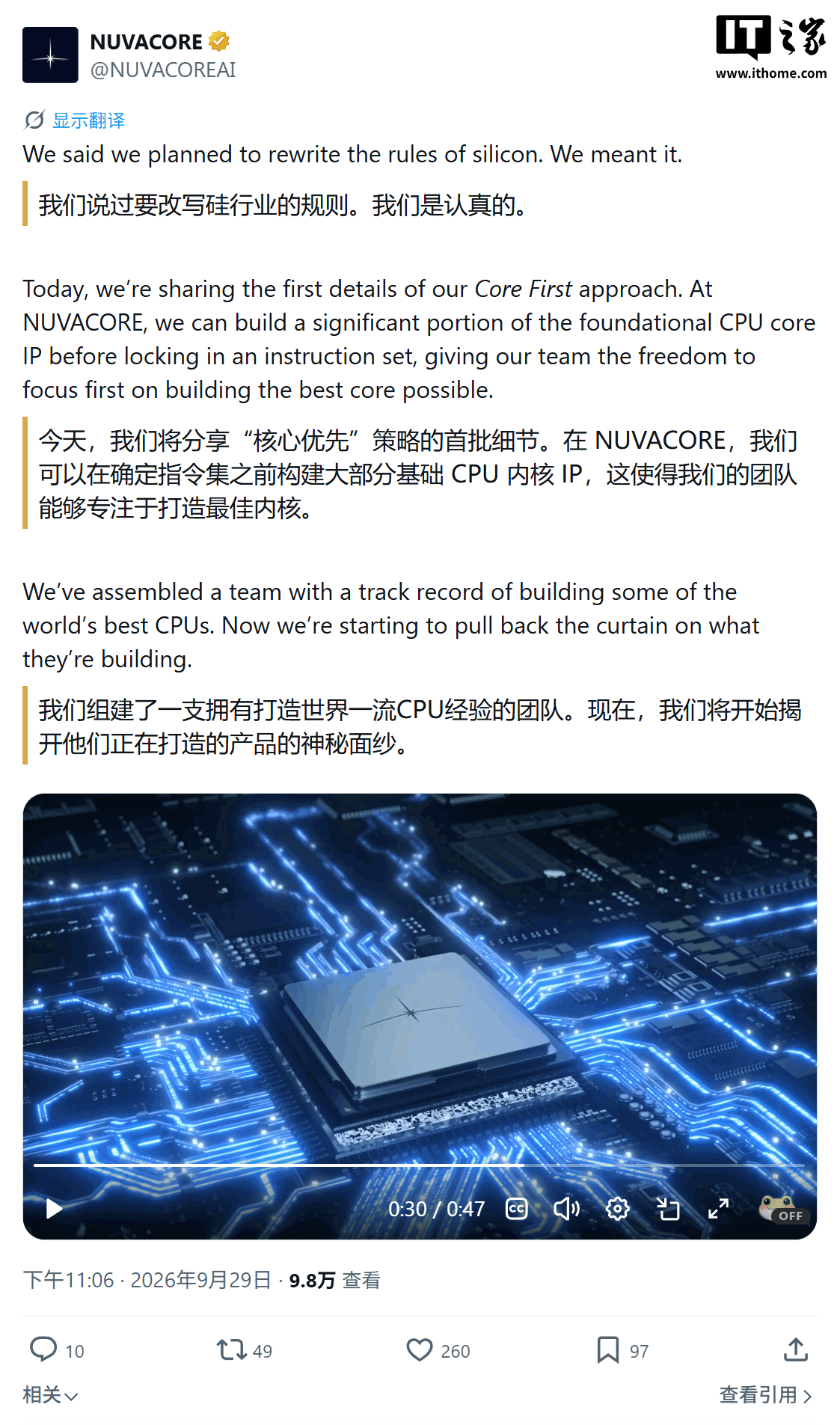
Former Qualcomm and Apple engineers team up to develop WarpCore; prioritize core technology, claiming to rewrite the rules of the semiconductor industry
Tech media reports that Nuvacore has disclosed the "core-first" development approach for its WarpCore processor, which involves constructing most of the underlying microarchitecture first before determining the instruction sets such as x86, Arm, or RISC-V. The company claims that this approach allows the team to focus on performance, energy efficiency, and chip area initially, but ISA, licensing, and compatibility will still limit the final design.
The Block
·2026-09-30 11:12:41
10
IEHP Celebrates 30 Years of "Joint Care"
Inland Empire Health Plan ( IEHP ) announces the launch of a "30 Years, Hand in Hand for Care" anniversary campaign on World Heart Day to celebrate its 30-year journey in promoting access, safety, and quality of healthcare services in the Inland Empire region of California. They also introduce a community-oriented " IEHP 30 for 30" health challenge.
PR Newswire
·2026-09-30 11:03:18
12
Chainlink Launched, CCIP 2.0: An additional cross-chain institutional self-validation step; faster settlement, but the finality cannot be omitted
On September 28th, Chainlink announced that CCIP 2.0 has been launched, providing institutions and digital asset issuers with a new version of cross-chain infrastructure. What is most noteworthy in this new version is not the grand figure of "capital going onto the chain" as advertised, but rather a specific change: asset issuers can now connect their own or third-party cross-chain verifiers in addition to the existing verification on Chainlink. Therefore, for a cross-chain transaction to be executed on the target chain, it must receive signatures from both the default verification committee and the additional verifiers. For institutions that issue tokenized funds, stablecoins, or other assets on the chain, this means that cross-chain transactions are no longer just about choosing a bridge; they also have to decide who has the authority to approve the release of these assets.
币界网
·2026-09-30 10:53:07
16
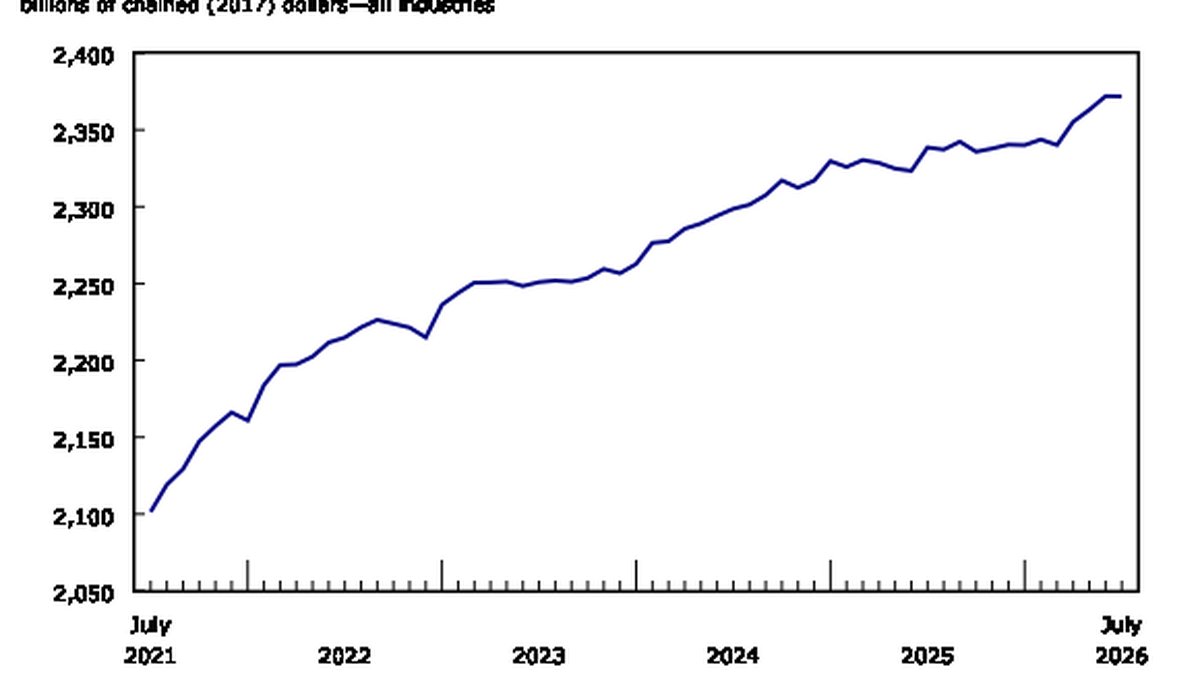
Canada's economy remained virtually stagnant in July: Construction and electricity sectors supported the overall growth, while manufacturing and retail sectors dragged down the overall figure.
The monthly GDP calculated by industry, released by Statistics Canada on September 29th, showed that in July the actual GDP was basically flat on a month-on-month basis, which rounded to 0.0%. Ten industries experienced expansion, while another ten did not show any growth. It would be inaccurate to describe this result as a "stall in the Canadian economy": construction, public utilities, and some service sectors continued to increase output; however, it is also lacking in basis to call it a "steady recovery," as manufacturing, mining, retail, and wholesale sectors were moving in the opposite direction. The overall figure appears calm on the surface, but beneath that there are clear tensions among different industries.
币百科
·2026-09-30 10:53:05
11
View More