XLM, NEAR, XRP: The upward trend may be coming to an end as exchange deposits surge by 160%
U.Today
1h ago
Ai Focus
According to CryptoQuant data, on September 28th, the total number of fake coin deposits in a seven-day period rose to approximately 78,000, a significant increase from 29,800 on September 14th, setting a new high since October 2025. After strong gains, increases in exchange deposits are seen as a potential sign of increased selling pressure, but this does not mean that these upward trends have definitely come to an end. NEAR, XLM, and XRP.
Helpful
No.Help

Pressure may rise further.

Is there more for sale?

Pressure may rise further.

According to CryptoQuant data, on September 28th, the total number of transactions related to fake coin deposits reached approximately 78,000 in seven days, compared to about 29,800 on September 14th. This is the highest figure since October 2025. More importantly, the number of deposit addresses nearly increased from 17,600 to about 51,600, indicating that this growth is widespread and not driven by a few large wallets.
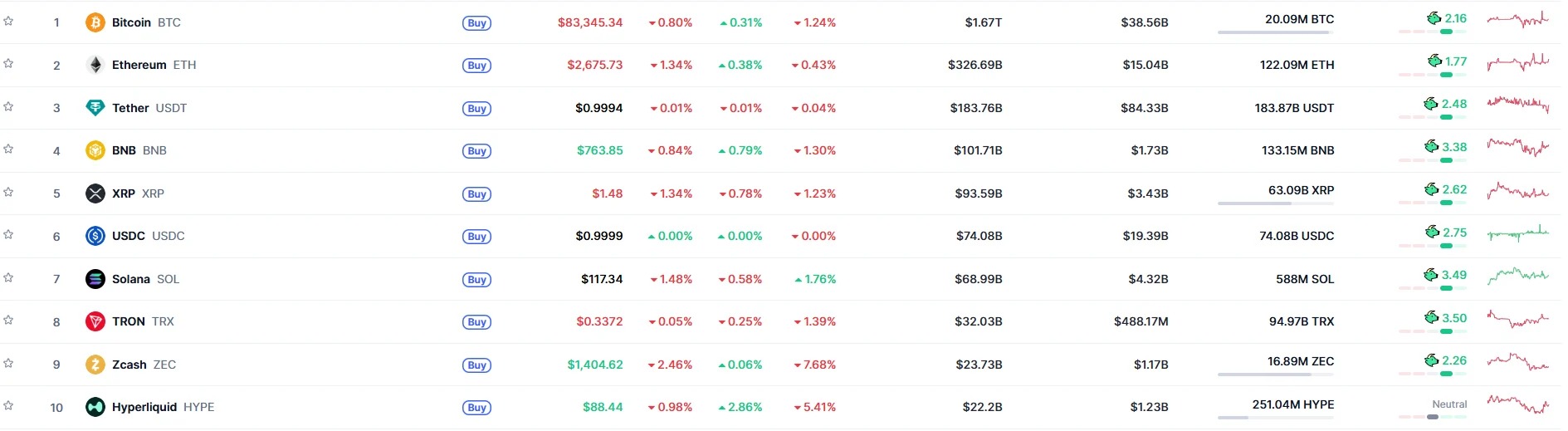
This has created an uncomfortable backdrop for some of the strongest-performing cryptocurrencies in September. According to the market data provided, Near Protocol ( NEAR ) has risen by about 21.7% in the past seven days and is currently trading at around $5.29. Stellar ( XLM ) has also seen a rise of about 9.9% this week, trading at $0.2236, while XRP has seen a significant increase in September and is now trading at around $1.48.

Is there more for sale?

The problem is that these price increases have significantly expanded the number of holders who have not yet realized a profit. Transferring tokens to centralized exchanges does not necessarily mean that investors will sell them, but it does put these assets immediately within reach of market liquidity.

Therefore, CryptoQuant interprets this surge as a sign of increasing selling pressure. At the same time, there are signs that momentum is no longer so consistent. Although NEAR and XLM have performed strongly this week, they have fallen by about 2.9% and 1.5% respectively in the past 24 hours; XRP has fallen by about 1.2%.

A broader environment also warrants caution. CryptoQuant Data shows that the spot demand for Bitcoin has decreased by about 170,000 in the past 30 days, BTC, while speculative futures demand fell by about 90% between September 14 and September 29. Investors who bought Bitcoin recently also hold an average of about 33% unrealized profits.

None of these can prove that the upward trend of XLM, NEAR, and XRP has clearly come to an end. However, high prices, widespread profitability, and deposit activities in altcoin exchanges that are near their highest levels in over a year combined to significantly increase the distribution risks. The next test will be whether market demand can absorb these deposits without breaking below the support level established during the upward trend in September.

Success!

Tip
$0
Like
0
Save
0
Views 25
WalletJYS reminds readers to view blockchain rationally, stay aware of risks, and beware of virtual token issuance and speculation. All content on this site represents market information or related viewpoints only and does not constitute any form of investment advice. If you find sensitive content, please click“Report”,and we will handle it promptly。
Submit
Comment 0
Hot
Latest
No comments yet. Be the first!
Related
Young mothers always want to control too much because they care too much about what others think. I really wish I could have stopped earlier.
The author reflects on how, after becoming a mother at the age of 19, she constantly interfered with her son's clothing, academic performance, and behavior due to an excessive concern for external opinions. It wasn't until her son entered puberty that she gradually let go, only to find that her child became more responsible, and as a result, their mother-son relationship became much more peaceful.
Businessinsider
·2026-10-01 17:57:29
9
Google Engineer Talks About Career Transition: What I Learned After Switching from Software Engineering to Cybersecurity
This article “as told to” is based on the account of Prerit Pathak, a security engineer at Google in New York. He reflects on his journey from starting as a software engineer in India, getting in touch with cybersecurity during his university years, furthering his studies at Carnegie Mellon University, interning at Google, and ultimately joining the company. He also shares tips for job hunting and interviews in the field of cybersecurity.
Businessinsider
·2026-10-01 17:57:24
9
The Hidden Challenges of Edge AI Design
As the evolution speed of models exceeds that of chip cycles, chip architects must strike a balance between flexible computing power, data transfer, and advanced security measures. The article points out that the key to edge AI is not just peak TOPS, but also includes memory bandwidth, latency, power consumption, data flow and security, as well as the collaborative design of hardware and software.
The Block
·2026-10-01 17:35:02
15
Open-source security fundamentals are just the starting point: How does Caliptra hardware move towards mass production and deployment?
As the value of the AI model, training data, and specialized workloads increases, so does the demand for data center security. The article discusses the role of open-source silicon-level Root of Trust architectures Caliptra in data center equipment, as well as how Rambus can complement the security orchestration, lifecycle management, and encryption agility required for production deployment through CryptoManager Root of Trust.
The Block
·2026-10-01 17:27:09
13
Internal documents reveal that Amazon has developed a secret emergency plan for the scenario of 'lacking the United States Postal Service'
According to an internal planning document reviewed by Business Insider and sources familiar with the matter, Amazon last year faced tense negotiations with the United States Postal Service (USPS), which led it to begin preparing to continue serving customers in the event that a new contract could not be reached. Although the two parties eventually reached an agreement in April, this emergency plan, dubbed “Project Aurelian”, prompted Amazon to adjust its long-term delivery strategy with the goal of expanding its own network coverage to approximately 39,400 US postal code areas by 2029.
Businessinsider
·2026-10-01 17:27:04
16
View More