

According to an internal planning document reviewed by Business Insider and sources familiar with the matter, Amazon's negotiations with the United States Postal Service (USPS) last year reached such a tense point that the company began to prepare for its future without one of its most important delivery partners.
This internal emergency plan is named “Project Aurelian”. According to an official planning document seen in Business Insider and statements from individuals familiar with the project, this plan outlines how Amazon will continue to provide services to customers in the event that new USPS contract negotiations fail.
Amazon and USPS finally reached an agreement in April. However, this planning exercise has already reshaped Amazon's future delivery strategy.
The document shows that this e-commerce giant's goal now is to expand its network to approximately 39,400 US postal code areas by 2029, which covers about 95% of all postal code areas and is sufficient to meet the needs of 99.9% of American customers. Under this new "dual coverage" model, Amazon hopes that each serviceable postal code area will be covered by both its own delivery network and at least one third-party carrier, thus having two ways to reach customers.
This is Amazon's most ambitious attempt to date, aimed at reaching customers in nearly every corner of the United States through its own delivery network. It not only protects the company as delivery partners adjust their plans but also gives Amazon more leverage in future negotiations.
An Amazon spokesperson stated that the predictions in the document are still preliminary and may change in the future, and added that the document reflects the views of "a limited group of people."
The spokesperson said, "We always make predictions about operations and routinely produce and revise multiple versions of planning documents. Nevertheless, Amazon strives to build redundancy into its logistics network to ensure continuous service to our customers, and this should not come as a surprise to anyone." USPS declined to comment.
A high-risk USPS negotiation
Project Aurelian begins with a simple but significant question: what would happen if Amazon no longer owned USPS?
For a long time, Amazon has been the largest customer of the United States Postal Service, and USPS has helped Amazon extend its delivery range to rural and remote areas where Amazon's own network coverage is relatively weak.
The negotiations between the two parties later became publicly tense. Amazon claimed that the United States Postal Service withdrew from the negotiations at the "last minute" in December last year, creating "significant uncertainty."
According to internal documents obtained from Business Insider, the new agreement reached by both parties in April sets a minimum volume for Amazon deliveries at 1.27 billion items, which is 19% lower than the minimum volume specified in the previous agreement.
However, analysis by Project Aurelian shows that even if an agreement is reached between the two parties, this vulnerability still exists.
The document states that when Amazon renegotiated its contract with USPS, it identified what it referred to as "structural vulnerabilities in reliance on external carriers." If external carriers suddenly change their shipping volumes or contract terms, services in areas without Amazon's own delivery alternatives will immediately experience issues, and "there are no available mitigations."
How Amazon Covers Nearly 40,000 Zip Code Areas
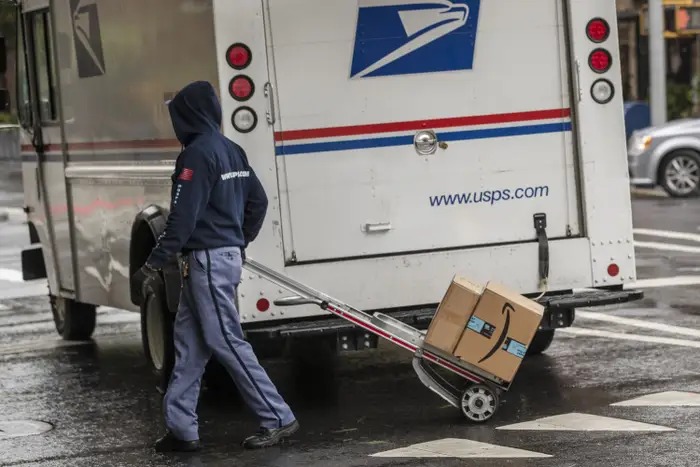
Amazon's plan to cover the rest of the United States relies in part on building more traditional distribution centers. These facilities are located at the final stage of the transportation process; they receive the goods after they are dispatched from the fulfillment centers, then sort and load them onto vehicles for drivers to deliver to customers.
But the plan goes far beyond that; it is built on three main components as a whole.
Firstly, Amazon plans to open 165 new core distribution centers between 2027 and 2029, with 50 of them located in new regions. The documents show that this expansion will add approximately 3,300 postal code areas that can be served by Amazon's dedicated van trucks. The company is also advancing its "Project Mercury" initiative, which involves building over 1,000 same-day delivery fulfillment centers, and placing popular inventory within a 10-mile range of most Prime customers. Business Insider previously reported on this plan exclusively.
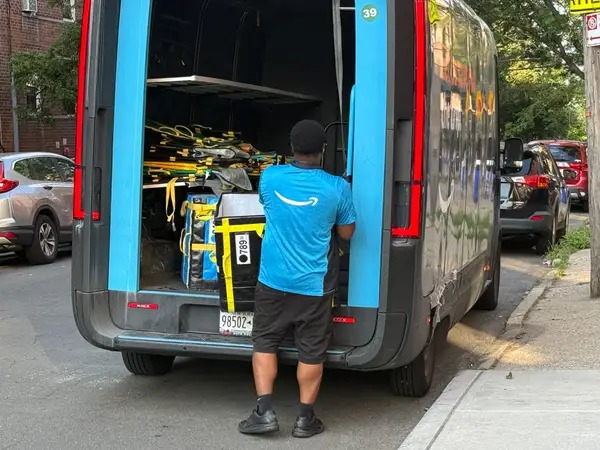
The second part is Hub Delivery. This project pays local businesses, especially in rural areas, to deliver Amazon packages. Amazon expects that this initiative will enable the addition of about 4,500 new postal code areas with almost no additional capital expenditure required. According to the documents, in areas where it is not economical to build dedicated delivery stations, Project Aurelian is identified as the most attractive option for Amazon in terms of cost and customer experience.
Finally, Amazon plans to lower the minimum number of parcels required to qualify for its own delivery service in a postal code area, from the current 50 parcels per day to ultimately having no minimum threshold at all. The document states that this will allow existing delivery stations to include postal code areas with lower volumes of parcels in their delivery routes without the need to build new facilities.
By implementing these measures, Amazon's delivery coverage will expand from the current 23,700 postal code areas to 26,500 by 2027, and reach approximately 39,400 by 2029. In the document, Amazon describes its ultimate goal as covering "all servable postal code areas."
For comparison, USPS indicates that there are approximately 41,600 postal code areas in the United States, but this number includes special postal codes assigned to specific institutions, as well as postal codes that are not typical residential delivery areas.
Amazon still needs USPS.
Despite Amazon's expansion, it is not preparing to completely eliminate USPS.
According to this planning document, Amazon's current contract with the United States Postal Service is set to expire in September 2029. The company assumes that the cooperation between the two parties will be renewed, on the grounds that there is a 'mutual dependence' between Amazon and USPS.
Economics also explain this point. The documents show that if the contract is not renewed, Amazon estimates it will need to handle an additional 5.2 million packages per week during peak seasons, build dozens of new delivery stations, and incur approximately $323 million in capital expenditures.
The purpose of this strategy is not to eliminate external carriers, but rather to reduce Amazon's dependence on any single carrier. Project Aurelian has found that the costs incurred due to unexpected disruptions by carriers may be higher than the long-term expenses associated with continuously expanding Amazon's own delivery network.
The aforementioned Amazon spokesperson said regarding Business Insider: "We will continue to invest in our last-mile delivery network and collaborate with carriers such as UPS, FedEx, and USPS to complete deliveries for our customers."
Author: Eugene Kim; Source: Business Insider