

At the beginning of the new quarter, Bitcoin remains in its usual range of $82,000 to $85,000. This cryptocurrency is still trapped between these two levels, continuing a volatile sideways trend that has lasted for over a week.
On Wednesday, after U.S. inflation data fell short of expectations, cooling down market bets for a Federal Reserve interest rate hike, prices briefly broke through $85,000. However, the bulls failed to hold onto their gains, and the spot ETF also failed to provide support.
According to data provider SoSoValue, the US-listed company ETF recorded a net outflow of $148.7 million on Wednesday, ending a streak of 9 consecutive days of net inflows. Prior to this, the total inflows amounted to $3.08 billion, representing the largest consecutive increase in net inflows this year measured in US dollars.
However, before this wave of inflows comes to an end, the momentum has already begun to weaken. Analyst Bitfinex suggests that the average daily inflows need to accelerate again for prices to continue to rise.
Bitfinex Analysts stated in the market report:"The average daily speed remains the key determinant in clearing the supply above."
The absorption/issuance ratio of Bitfinex ( BAER ) is a measure that is calculated by dividing the quantity of BTC purchased during a certain trading period by the approximately 450 BTC produced by miners each day. This ratio has been reduced from 25.6 times on September 21st to 1.8 times on September 29th.
They stated:Absorbing a break-even supply of 13,900 BTC (ranging between $84,000 and $86,500) requires the BAER to rise to about 5.0 times, which is approximately $190 million per day.
The FxPro Chief Analyst Alex Kuptsikevich focuses on macro factors instead.
In an email, he stated:Bond selling continues, and this is a very concerning sign that could trigger a sell-off in all markets almost overnight. Historically, there have been periods when traditional financial turmoil has been favorable to cryptocurrencies. However, it is impossible to predict when the market will shift from caution to panic.
At the same time, some smaller cryptocurrencies are recording considerable gains. For example, the Layer tokens on the Stacks network have risen by 25% in 24 hours. Other tokens such as LIT, JST, and ENA have also increased by more than 5%.
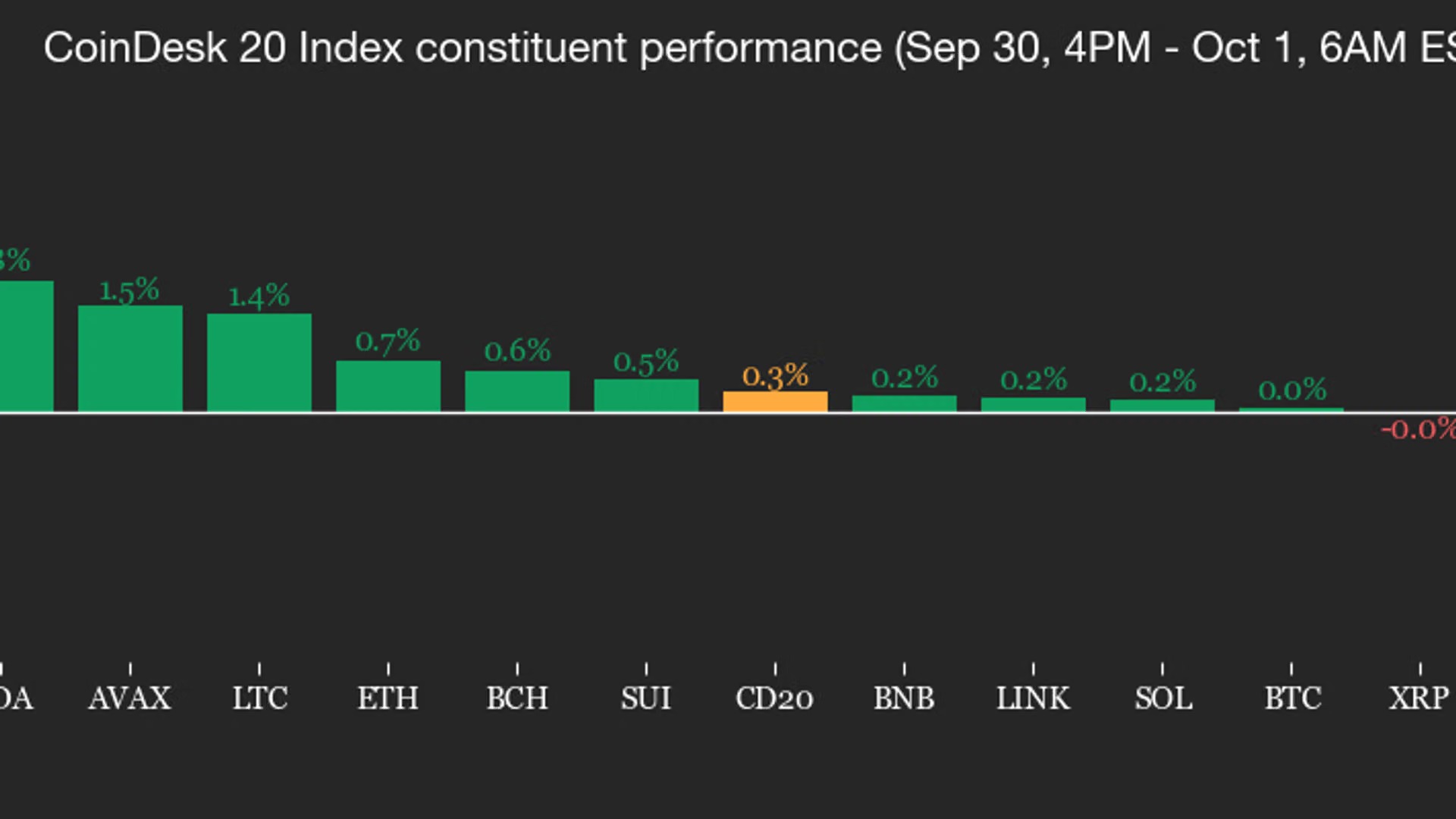
However, the performance of the more numerous altcoins remains quite varied. The CoinDesk DeFi Select index is the only one that has risen by 1% within 24 hours. The Computing Select and CoinDesk 80 indices have risen by 0.3% and 0.2% respectively, while the rest of the indices have seen slight declines.
Derivatives positions
The open interest of BTC contracts decreased from $21.8 billion to $20.9 billion, and the funding rates on various trading platforms remained relatively stable at around 3% annually. The exception is the term structure: on Deribit, the annualized basis spread increased from less than 5% to over 6% in the last three months, indicating a slightly stronger demand for leveraged long positions.
In terms of options, the 24-hour bullish/bearish ratio has risen to 83%, indicating a bullish bias, up from the previous 66/34. The delta skew has decreased from around 15% to about 4% over the past week, while the ATM term structure is still in the contango range, but has slightly declined—about 29.5% for the near term and around 40% for the far term until mid-2027. Overall, the volatility environment is calm: bullish option trades are active, but the premium paid for upward movements is not substantial.
Coinglass data shows that there were a total of 100 million US dollars in settlements within the past 24 hours, with long and short positions each accounting for half. Calculated by nominal amount, BTC (100 million US dollars), ETH (51 million US dollars), and other assets (26 million US dollars) were among the top. The Binance settlement heat map indicates that if prices rise, 84,800 US dollars is a key settlement level that requires close attention.
Token Dynamics
The STX of Stacks reported a price of $0.3860, soaring by about 26% to $0.39 within 24 hours, becoming one of the top-performing large-cap tokens. This increase is related to the appointment of Muneeb Ali, the founder of Stacks, as the Chief Executive Officer of Stacks Labs. This project is actively promoting the adoption of its Bitcoin staking products.
The NIGHT of Midnight reported a price of $0.04446, up approximately 23% to $0.04 within 24 hours, continuing the upward trend from several consecutive trading days. Since midnight on UTC, NIGHT has risen by about 7%, following a 21% increase on Wednesday.
Ethena ( ENA ) and Near Protocol ( NEAR ) are also among the tokens with the strongest performance, having risen by approximately 11% and 10% within 24 hours, respectively. The trading price of ENA is close to $0.27, with a cumulative increase of over 30% in the past week.

Quant ( QNT ) continues to experience severe fluctuations, reaching around $290 in some market snapshots, with a rise of about 9% within 24 hours. After a series of sharp rises and falls over the past week, the value of this interoperable token has more than tripled in total.
Avalanche ( AVAX ) and Internet Computer ( ICP ) fell against the trend, declining by about 5% and 4% respectively within 24 hours. These declines reversed some of the gains from Tuesday, when AVAX had risen by 7% since midnight of UTC, and ICP had risen by 8.3%.