IT News on October 3rd: According to a report by "Business Insider" this morning (October 3rd), Matt Gorman from Amazon Web Services warned that the growing opposition to data center construction across the United States could cause the U.S. to lose its advantage in global AI competition.
Gelman published a blog post of over 3,000 words stating that if the United States were to halt data center construction on a large scale, the effects could last for several generations. "Data center construction is urgent because it is not just the United States that sees how AI can drive economic development and enhance national security. Whoever takes the lead in the field of AI will be able to influence the direction of AI and reap the greatest benefits in both the short and long term. The choices we make today will determine the final outcome. If the United States becomes distracted or wavers as a result, it may fall behind and might never be able to catch up again."
Gelman stated that there are over 100 measures being discussed across the United States to suspend data center construction. If these measures are implemented, the United States could potentially push itself towards defeat, a result that is certainly unacceptable.
At the beginning of his article, Gorman looked back at post-World War II America, noting that one of the “important lessons” the United States learned at that time was the necessity of establishing a nationwide transportation network within its borders. Subsequently, the modern transportation system has transformed the American economy and lifestyle.
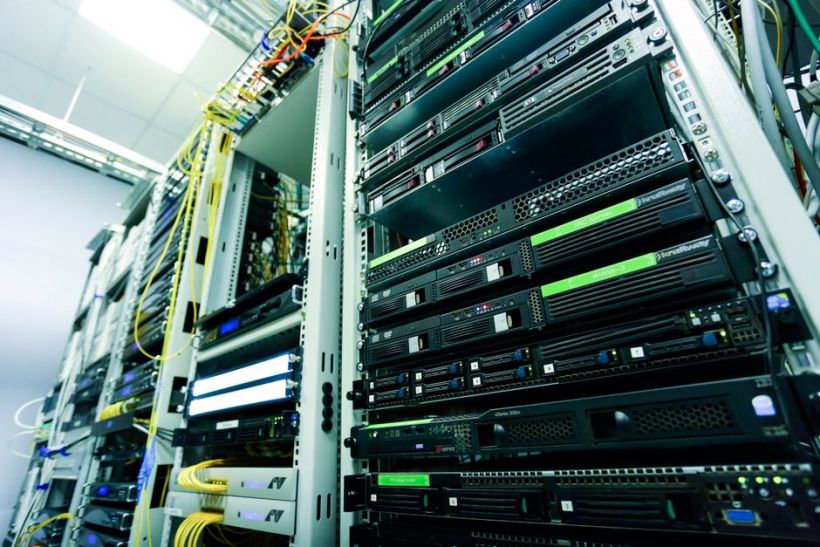
In his view, today's trend in data center construction is equivalent to a new round of infrastructure construction on the same scale. "Seventy years from now, we will witness the largest scale of infrastructure construction since the establishment of the road system, that is, the construction of digital infrastructure."
Gelman pointed out that data centers provide the computing power necessary to operate the AI system. Everyday activities such as shopping, banking, stock trading, travel booking, streaming entertainment, as well as disease prevention and treatment, all rely on data centers. "The development of AI is still in its early stages, yet it has already begun to change the way businesses, industries, and customer experiences in ways that were unimaginable just a few years ago. The next generation of businesses, hospitals, schools, and other essential public services will depend on AI, as will critical defense systems, intelligence analysis, network defense, and satellite operations. At the same time, this will also give rise to new skilled jobs to support these applications."
Gelman also announced that over the next five years, Amazon will invest more than $1 billion (Note from IT: The current exchange rate is approximately 6.715 billion RMB) in communities surrounding its data centers. "What the community needs is not decided by Amazon. Amazon is responsible for providing resources, and it is up to the community to make the decisions themselves."
Amazon participates in data center construction through its Amazon Web Services business. According to Reuters, Amazon stated that between 2011 and 2025, the company invested a total of $276 billion (approximately 1.85 trillion yuan at current exchange rates) in the data center sector. Amazon also recently announced that it plans to invest $220 billion (about 1.48 trillion yuan at current exchange rates) in capital expenditures this year, with a significant portion of this amount to be used for AI infrastructure.
Residents' opposition has already affected some of Amazon's data center projects. In August this year, Amazon Web Services withdrew its plan to build a data center of about 223,000 square meters in Calvert County, Maryland. Two weeks later, the county council decided to suspend the approval of new data center projects for a period of six months.
Data from the research project Data Center Watch shows that in the first half of 2026, at least 120 data center projects in the United States were delayed or hindered due to local opposition, with a total value estimated to reach 198 billion US dollars (about 1.33 trillion yuan at current exchange rates). As concerns about the environmental and economic impacts grow among communities, there is also an increasing number of voices opposing the construction of data centers.