

Microsoft joins hands with NVIDIA to launch a new round of攻势 in the AI PC arena.
On Wednesday, Microsoft launched its flagship laptop Surface Laptop Ultra equipped with NVIDIA chips in San Francisco, claiming that its AI performance surpasses that of Apple's MacBook Pro M5 in multiple metrics, and it enters Apple's core market with a lower starting price.
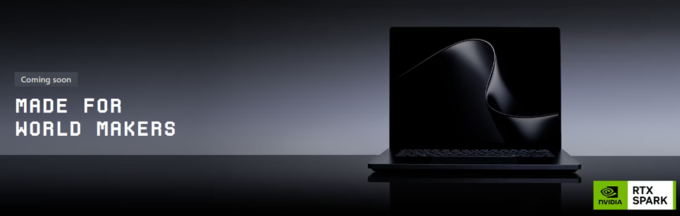
At the launch event in San Francisco, Microsoft executives stated that when Surface Laptop Ultra runs the AI model locally, its response speed is twice that of MacBook Pro M5, and the video generation speed is six times faster. The product has a starting price of $2,599, which is about $400 lower than the 16-inch entry-level MacBook Pro model, and shipments are about to begin.
This series of actions is intended to solidify the dominant position of Windows in the era of AI. Apple's Mac computers, with their outstanding ability to run AI models locally, have seen strong demand in recent years. Microsoft's counterattack will directly intensify the competition.
At the same time, during the Build developer conference held during the same period, Microsoft announced the launch of the AI proxy product Microsoft Scout. Scout is positioned as a "always-online personal proxy".
NVIDIA Enters the Game PC; The Competitive Landscape Changes
Surface Laptop Ultra adopts NVIDIA's brand-new RTX Spark chip, which is designed for Windows laptops. This chip is capable of handling both general computing and AI computing tasks simultaneously.
NVIDIA CEO Jensen Huang and Microsoft's CEO Satya Nadella attended the event together, jointly supporting this new PC chip. Jensen Huang stated on-site:
"We have completely reinvented the personal computer."
NVIDIA's entry directly challenges the traditional dominance of Intel and AMD in the field of general-purpose PC processors. In addition, PC manufacturers such as Dell and HP, which also use the Windows operating system, have also launched devices equipped with NVIDIA's new chips.
This release event focuses on building a set of business logic centered around the local AI computing: Developers can save on cloud service costs by running computing tasks on local devices, while also enhancing data security. Unlike the previous Copilot Plus PC targeting consumers, the RTX Spark platform is clearly positioned for AI developers and creators.
Nadella indicates that over time, developers and users will expect the AI tool to be driven by a combination of local hardware and cloud services. Microsoft also demonstrated at the event the Windows security features designed to monitor and control AI proxy behavior.
However, the large-scale adoption of AI PC is facing a test of time. Industry research institution Gartner previously predicted that the rapid increase in memory costs could result in AI PC not occupying the majority of market share until 2028.
AI extends its product line, while Scout focuses on enterprise collaboration.
In addition to the hardware release, Microsoft also announced the launch of the AI proxy product Microsoft Scout at the Build Developer Conference held during the same period.
Scout is positioned as a "always-online personal agent" and belongs to Microsoft's newly established "Autopilot (Autopilots)" agent category, capable of executing tasks autonomously without the need for prompts at each time.
This product is built on OpenClaw open-source technology. Each Agent instance has its own independent Microsoft Entra service account and is incorporated into a unified permission governance system, combined with Microsoft Purview data protection policies to fully meet corporate compliance requirements.
Currently, Scout is conducting a private preview with a limited group of customers, and at the same time, it is making the desktop application available to subscribed users who have chosen to access the "Frontier" feature. To use this desktop application, a valid GitHub Copilot subscription is required. Microsoft stated that its internal sales team has become one of the largest and fastest-growing groups in terms of usage of Scout.
While rapidly advancing the implementation of proxy products, Microsoft is also facing challenges on the security front. Proxy tools such as Scout are at risk of prompt injection attacks, meaning that malicious actors may induce the AI proxy to perform unauthorized operations or disclose sensitive information.
Microsoft's response strategies include: launching the product in phases on a limited scale, providing administrators with tools to track all operations performed by proxies, and implementing a manual approval process for sensitive operations.
This challenge is not unique to Microsoft. As early as the summer of 2024, when Microsoft collaborated with Qualcomm to optimize AI for PC, they faced public opinion pressure due to privacy concerns related to the flagship features, which delayed the overall release schedule. How to strike a balance between automation capabilities and user trust remains a core issue that Microsoft needs to continuously address in the AI proxy competition.