


Cryptography hackers and vulnerability exploits have caused reported losses of over $11.4 billion in 2025 and 2026.
Binance encountered a security vulnerability worth $6.36 billion, and within about 20 minutes, the attackers transferred most of the funds to 10 different blockchains.
Hackers also damaged the refrigeration systems of supermarkets across 7 European countries.
In 2025 and 2026, the cryptocurrency industry suffered losses of over $11.4 billion due to hacker attacks and exploitation of vulnerabilities. These attacks exposed weaknesses in exchange infrastructure, wallet security, and blockchain networks.
Attacks driven by AI are spreading beyond encrypted exchanges, with at least 10 countries reporting cyber incidents in the past 48 hours.
Cryptocurrency hackers' losses more than tripled in 2026
Data from DeFiLlama's Hacks shows that the crypto industry suffered losses of approximately $2.7 billion in 2025. As of November 3, 2026, reported losses have more than tripled to $8.776 billion, involving 328 incidents.
The Bybit hacker attack in February 2025 was one of the largest attacks of that year, with approximately $1.5 billion in assets stolen.
However, the losses in 2026 were much higher, mainly due to the Binance vulnerability incident on October 29th, which accounted for 6.36 billion dollars of the reported losses.
What makes the attack on Binance notable is the speed at which the hackers transferred the stolen funds. Investigators traced the funds and found that they were moved across 11 blockchains through approximately 12,000 wallets in less than four days.
This is equivalent to adding a new wallet every 25 seconds.
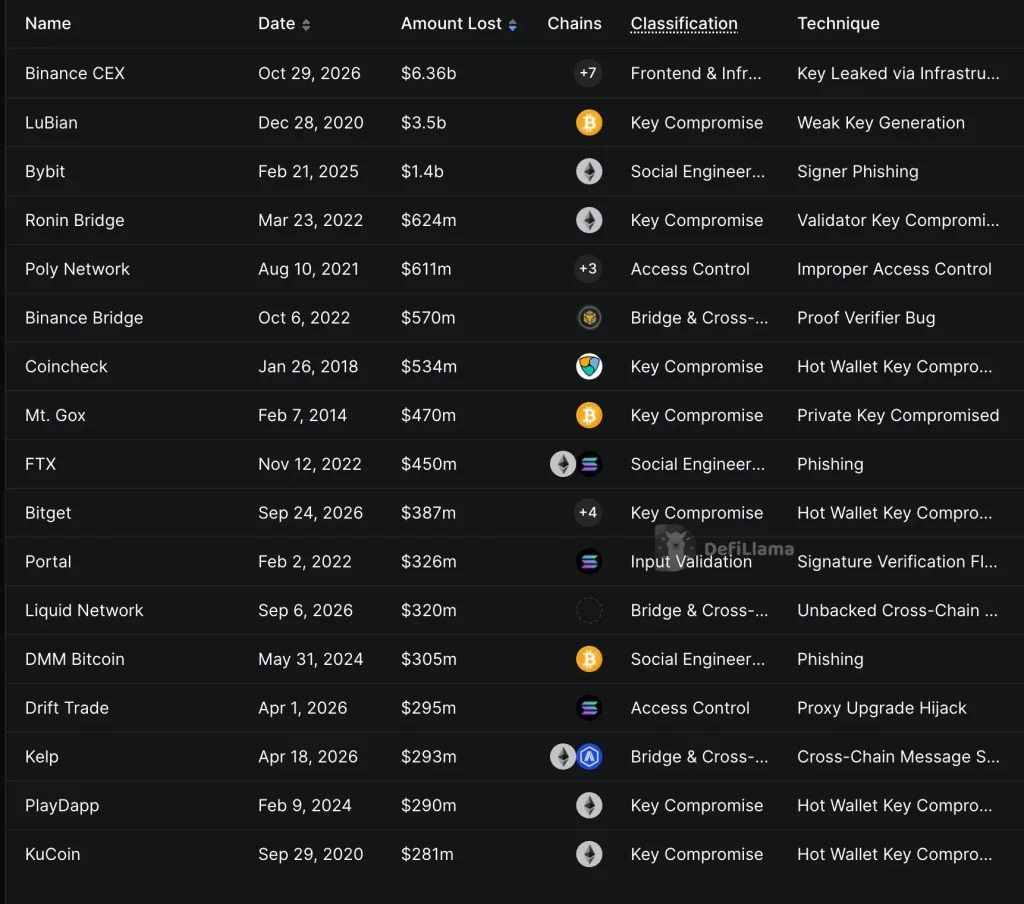
However, FBI links this attack to North Korea's TraderTraitor hacking group. This group stole over $6 billion in virtual assets and converted most of that funds into Ethereum.
The following are some of the largest-scale crypto attacks reported in the past few years.
AI Makes cyberattacks faster and easier
Artificial intelligence is helping hackers carry out attacks in less time and with less effort.
Google researchers discovered that attackers built and launched an automated tool within less than 6 hours to steal login information. Anthropic also reported a case of AI assisted attack, where hackers completed the intrusion in 2 to 3 hours.
AI can help hackers find vulnerabilities in computer systems, create malware, steal passwords, and attack multiple targets simultaneously. This means that attacks that in the past required large teams and days of preparation can now be carried out by fewer people in a shorter amount of time.
Cyber attacks affect 10 countries; governments urge the stockpiling of emergency supplies
Cybersecurity concerns have also extended beyond the field of digital assets. In the past 48 hours, hackers have launched attacks on at least 10 countries, disrupting services and spreading false emergency alerts.
Europe: Hackers invaded the freezers of supermarkets in 7 countries, with some temperatures rising to 50 degrees Celsius. Last month, around 700 French supermarkets were also attacked, resulting in an estimated loss of tens of millions of euros.
Ukraine and Russia: Emergency applications issued false alerts about nuclear strikes and chemical threats.
Germany: After the alert about Apple's spyware, members of parliament were informed to consider their iPhone as possibly having been compromised.
Brazil: Mercado Bitcoin suspends withdrawals after hackers stole over $40 million across at least 10 blockchains.
United States: Before the mid-term elections, parts of Washington D.C. experienced power outages due to a fault at a substation.
At least 16 countries have issued similar recommendations.