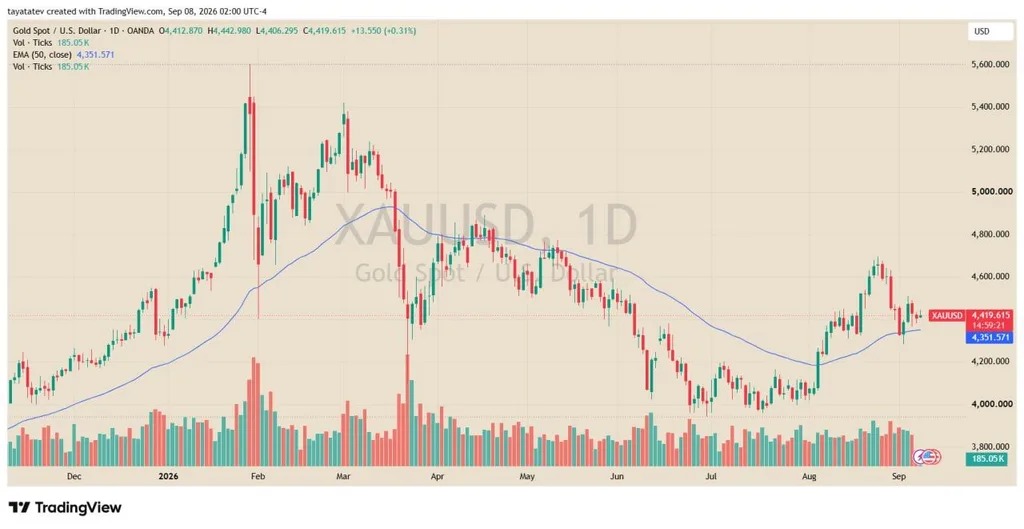







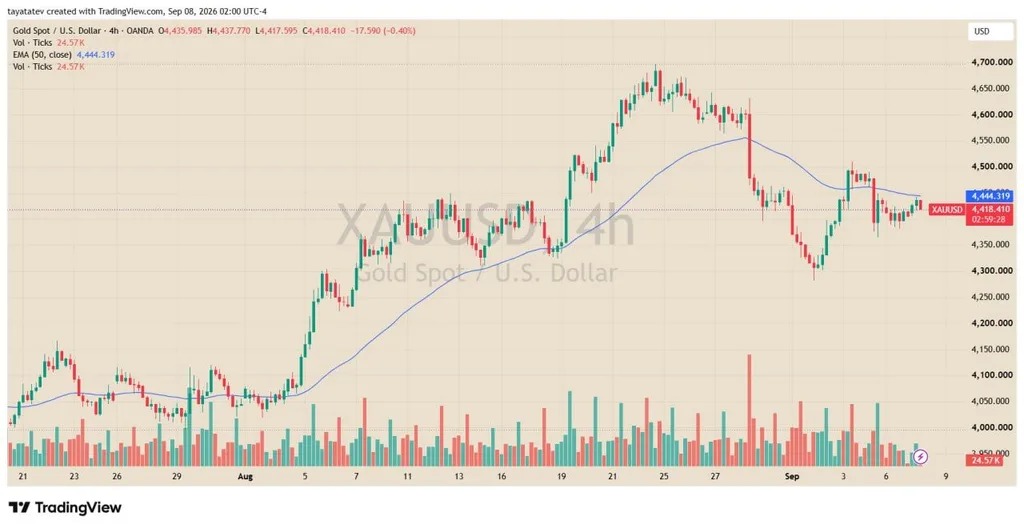
Spot gold remained above $4,400 per ounce during the week. The weakening of the US dollar provided support for gold prices, but the yields on US Treasury bonds remained high, and increasing expectations of further interest rate hikes by the Federal Reserve limited further gains in gold prices.
As of early trading in Europe, Reuters data shows that spot gold was at $4,432.79 per ounce, up 0.6% for the day. Market attention has shifted to the U.S. inflation data to be released later this week, which will affect interest rate expectations and the short-term direction of gold.
Weaker U.S. dollar supports gold prices
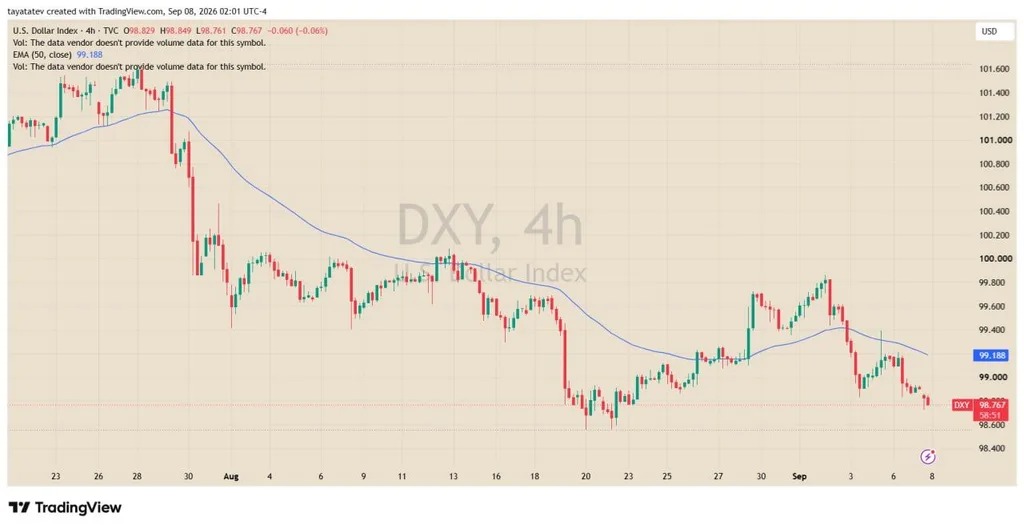
The US Dollar Index fell by about 0.3% in early trading on Tuesday, continuing its weak trend of recent times. As a result, gold priced in US dollars became more attractive to non-US buyers, which also helped stabilize the gold price after it had fallen for two consecutive days.
However, the interest rate environment still exerts pressure on gold. The yield on 10-year U.S. Treasury bonds is close to 4.8%, remaining at a high level. Since gold itself does not generate interest, rising yields increase the opportunity cost of holding gold.
The market is awaiting PPI and CPI.
The current market is assessing the policy path of the Federal Reserve's September meeting. Following the release of employment data in August, which was stronger than expected, traders have increased their bets on an interest rate hike this month. Reports indicate that the market currently estimates a 58% probability of a 25-basis-point interest rate hike in September.
Next, on Thursday, the U.S. Producer Price Index ( PPI ) will be released, and on Friday, the Consumer Price Index ( CPI ) will be announced. If inflation data falls short of expectations, market sentiment regarding interest rate hikes may cool down, and U.S. Treasury yields could also decline, thereby creating conditions for gold prices to rise further. If the data is stronger, gold prices may come under pressure again.
Institutions remain bullish on gold positioning.
Societe Generale stated that, based on positions held, capital flows, and derivatives activities, the overall sentiment in the gold market remains bullish. This indicates that, despite short-term constraints due to interest rate factors, the willingness of institutional funds to allocate to gold has not significantly weakened.
This line also pays attention to subsequent central bank gold purchase data to determine whether the demand from official departments remains an important source supporting gold prices. Overall, the gold market is still in a tug-of-war state between a weakening US dollar and high interest rates in the short term, and this week's inflation data will become an important trigger for the next phase of trends.