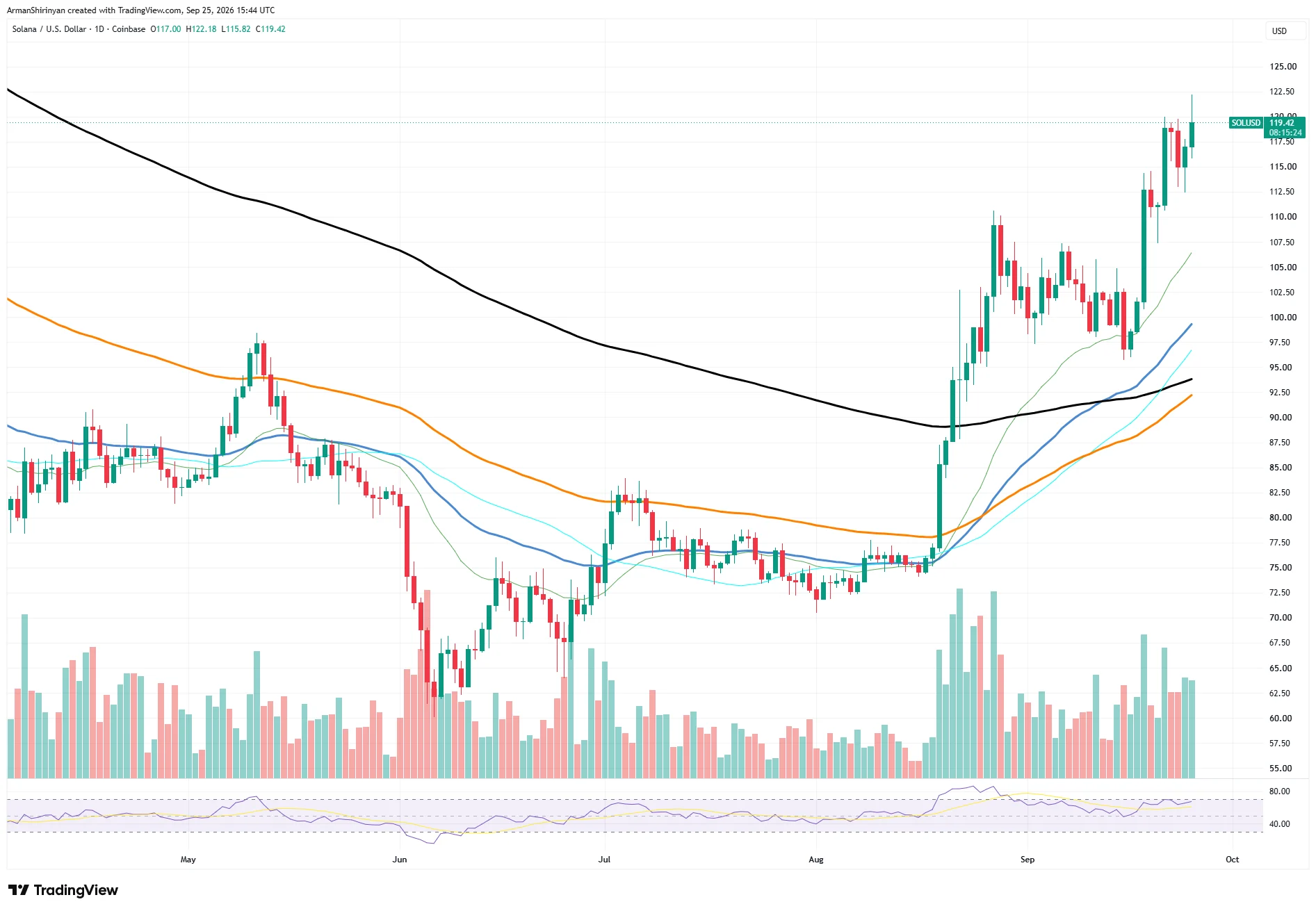


As the third quarter comes to an end, the cryptocurrency market continues to be in a period of long-term consolidation. The apparent calmness conceals the intense changes taking place within the industry. Bitcoin ( BTC ) failed to hold onto its recent high near $87,300 and has now stabilized in the range of $83,300 to $83,700. Ethereum ( ETH ) follows a similar trend; after attempting to break through $2,743 earlier on, it has continued to remain within a narrow range of $2,660 to $2,690.
The emotions of the main participants are still in the "greedy" range, with readings ranging from 66 to 71 points. For BTC, this quarter has been strong, with asset prices rising by about 42%, and September is also expected to be its best September performance yet.
However, the US macroeconomic environment remains the main factor restricting further market gains. The yield on 10-year US Treasury bonds remains at 5.23% to 5.24%, which severely limits the flow of capital into risky assets.
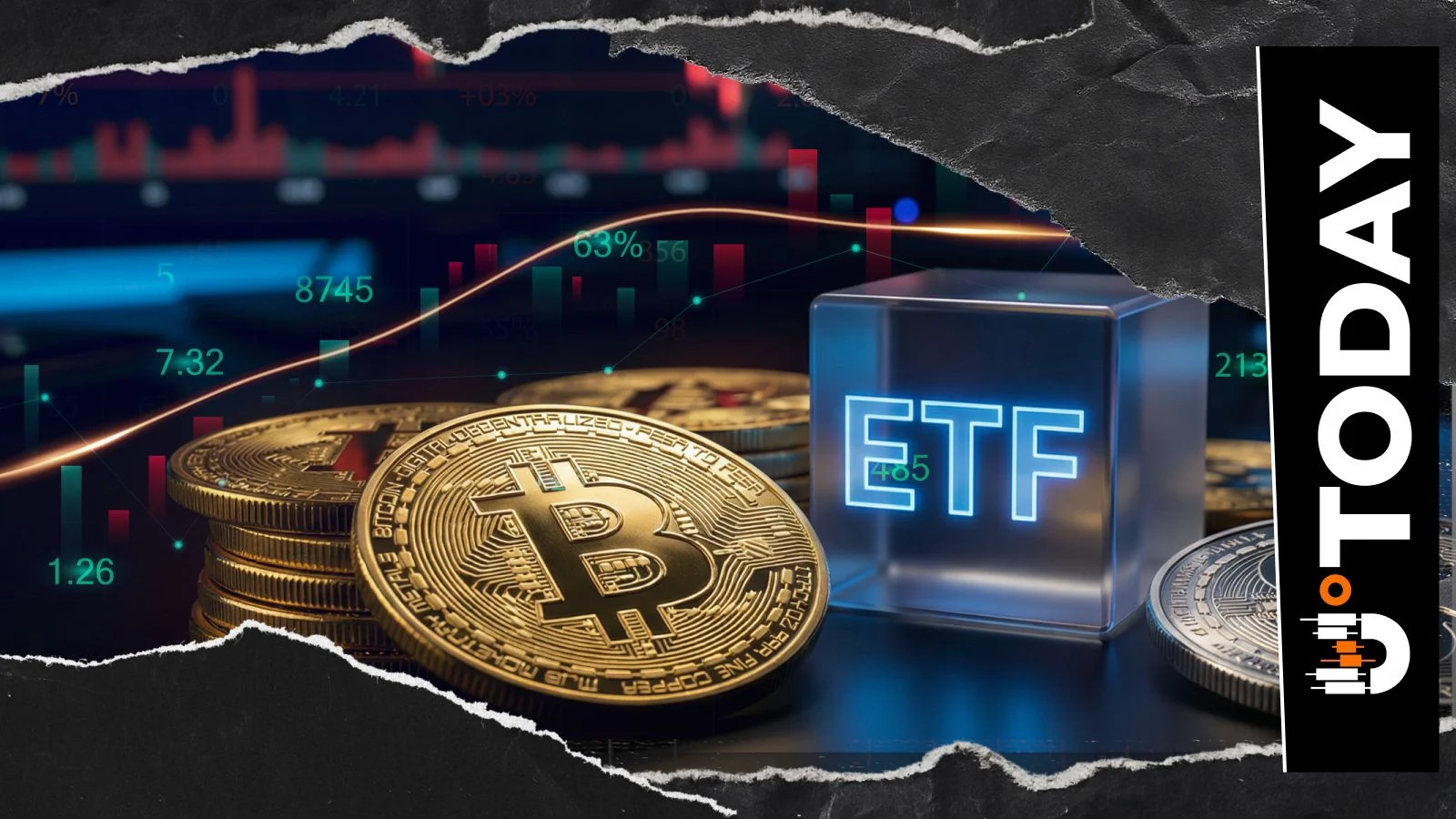
Nevertheless, the demand from institutions has not disappeared. SoSoValue data shows that spot Bitcoin ETF recorded a net inflow of $2.39 billion last week, but by the end of the month, the average daily inflow slowed down to $66.19 million.
The market is also digesting the impact of the Bitget technical failure, which caused a capital outflow of $463 million within 24 hours. Investors remain cautious, waiting for the next release of ISM manufacturing PMI data.
At the same time, excessive leverage is being continuously cleared. CoinGlass data shows that within the past 24 hours, 67,756 traders had their positions forcibly closed, with a total amount of 197.8 million US dollars.
The losses incurred by the long side were more than twice those of the short side—125.61 million US dollars versus 72.2 million US dollars respectively. ETH (46.55 million US dollars) and BTC (33.75 million US dollars) were at the center of this 24-hour storm.
Before the opening of the Seoul Blockchain Week in South Korea, market liquidity remained on the sidelines. However, at the intersection of traditional exchanges and the Ripple ecosystem, a change is taking place today that truly deviates from the overall sideways trend of the market.
How the XRP treasury supported by Ripple is preparing to list on NASDAQ through SPAC merger
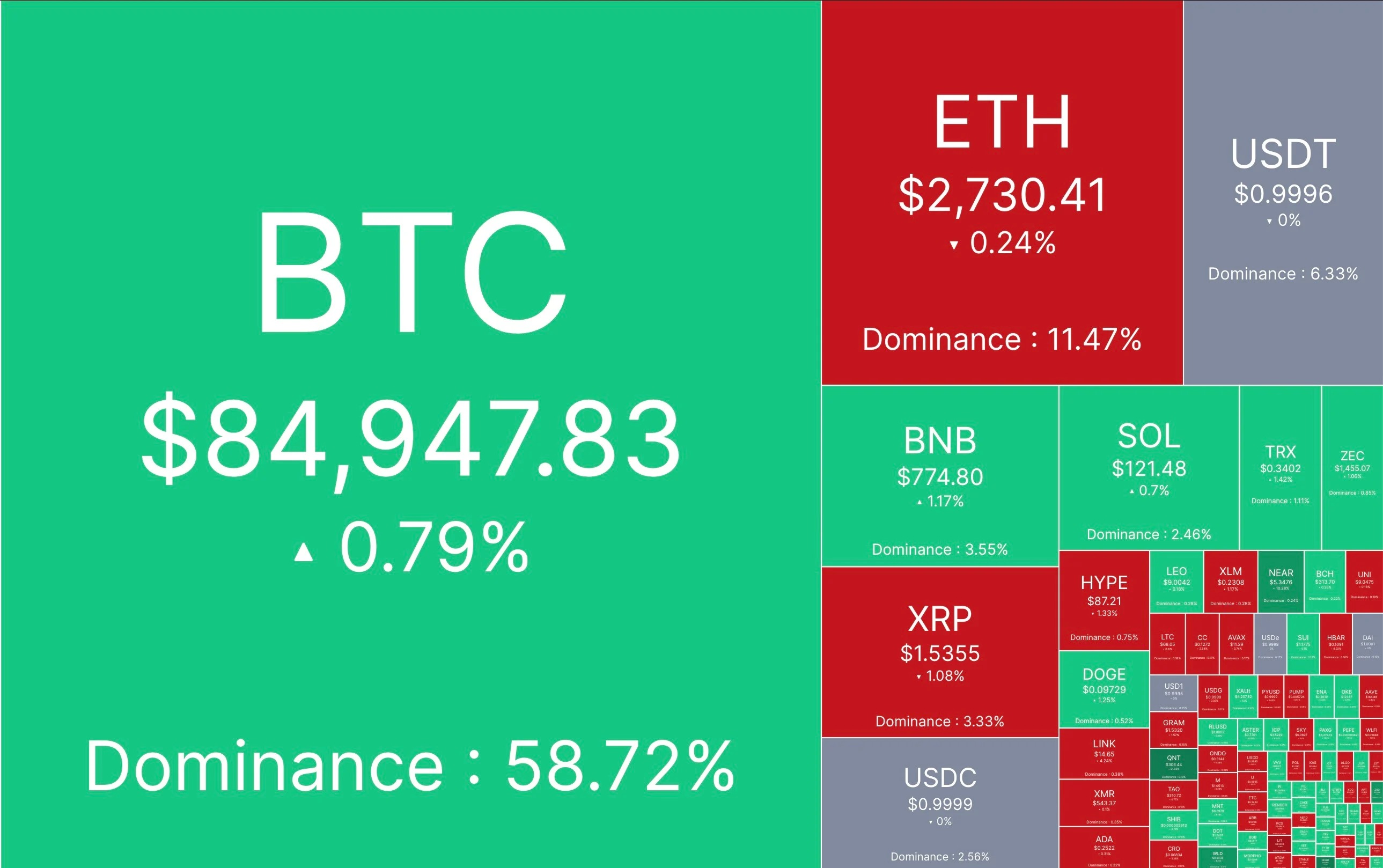
While the market leaders continue to consolidate, XRP is trading at $1.49. This asset has a short covering concentration area within the range of $1.50 to $1.553, totaling $159 million.
According to SoSoValue, a product based on XRP recorded a single-day net inflow of $1.55 million, which is the only product that closed in the green against the backdrop of capital outflows from BTC and ETH funds.
This step has opened a direct path to creating the largest listed company with a treasury of XRP. The merged entity is preparing to make an important listing on NASDAQ under the code XRPN.
What supports investors' confidence are some hard data:
- ReservesApproximately 473 million XRP tokens are directly provided by Ripple.
- CapitalConfirmed investment commitments exceed $1 billion, with institutional investors including SBI Holdings and Arrington Capital.
According to the S-4 document submitted to the U.S. Securities and Exchange Commission (SEC), this transaction is expected to be completed in the fourth quarter of 2026. The market regards this precedent as the emergence of a legitimate proxy tool within the traditional U.S. capital markets.
This NASDAQ case also highly coincides with another major direction of Ripple, which is the company's fundamental breakthrough in the Latin American market.

Ripple announces a partnership with the Central Securities Depository and Clearing Corporation of Brazil, CSD BR. CSD BR oversees assets worth $4 trillion. The shares of BTG Pactual investment funds will be tokenized and mirrored on XRP Ledger using MPT standards and Ripple Custody.
Legally speaking, CSD BR remains the only officially registered institution. The XRPL blockchain serves only as an additional audit layer within a closed, permissioned system, and is equipped with KYC / AML as well as freeze functions.
The regulatory vacuum has turned the tokenization of real-world assets into a fiercely competitive battlefield.
The shift of institutions towards the tokenization of real-world assets ( RWA ) has fully entered a fierce market competition phase. The long-standing regulatory vacuum in the United States has always been a driving force behind this process.
After the Senate vetoed the CLARITY bill, SEC took over the lead. The committee approved a five-year innovation exemption that allows for the trading of tokenized stocks through AMM and liquidity pools.
Traditional finance is building an even more extensive infrastructure:
- RWA Market SizeThe valuation range for the liquid RWA market is between $33.5 billion and $60 billion. The net asset value on-chain has reached $38.54 billion, of which U.S. Treasury bonds account for $16.16 billion, private credit accounts for $5 billion, and commodities account for $4.59 billion. The scale of tokenized stocks and ETF is still only $1.86 billion, but it is growing the most rapidly.
- InfrastructureDTCC is preparing to conduct pilot transactions in July 2026, while NYSE is also building infrastructure around its own blockchain settlement platform. Nasdaq and Kraken aim to launch by the beginning of 2027, following the move made in August this year to transfer the liquidity of tokenized stocks from Abu Dhabi to Aerodrome's Coinbase.
October 1st Focus List: Custody, Macroeconomics, and the Contraction of SEC
AI Token: The market value of this sector is 25 billion US dollars, represented by NEAR, TAO, and RENDER. It has entered a local correction phase. TAO has fallen to 320.33 US dollars, and the launch of the NEAR ETF spot Bitwise has caused a short-term decline in the price of this underlying asset.
SHIB: This meme token trades between $0.0000057 and $0.0000058 in a situation of light trading volume. It remains a passive high-beta "passenger," while the registration of Coinbase Clear to CFTC has drawn regulatory attention towards large corporations.
Regulatory Environment: The regulatory landscape in the United States is clearly contracting. October 2nd will be the last working day for Hester Peirce at SEC; thereafter, the committee will only have two remaining members in office. The GENIUS Act (Stablecoin Act) will still be the primary regulatory tool, and the Federal Reserve has begun to adjust the reserves of issuers to meet its requirements.
In this context, tomorrow will be a decisive day for the Ripple ecosystem. Technical analysis helps to distinguish between marketing noise and the harsh reality.
The main trigger for the first day of the new quarter will be the planned release of 1 billion XRP managed tokens on October 1st. This is a standard calendar mechanism that has been in automatic operation since 2017.
Traditionally, a large portion of these tokens would flow back into the treasury, and currently, the treasury holds 31.98 billion XRP. The net increase of tokens entering the market is usually between 200 million and 300 million tokens.
This completely rules out the possibility of a supply shock in the spot market. However, against the backdrop of XRPN listing on NASDAQ, this event will force derivatives traders to remain closely attentive.
Success!