

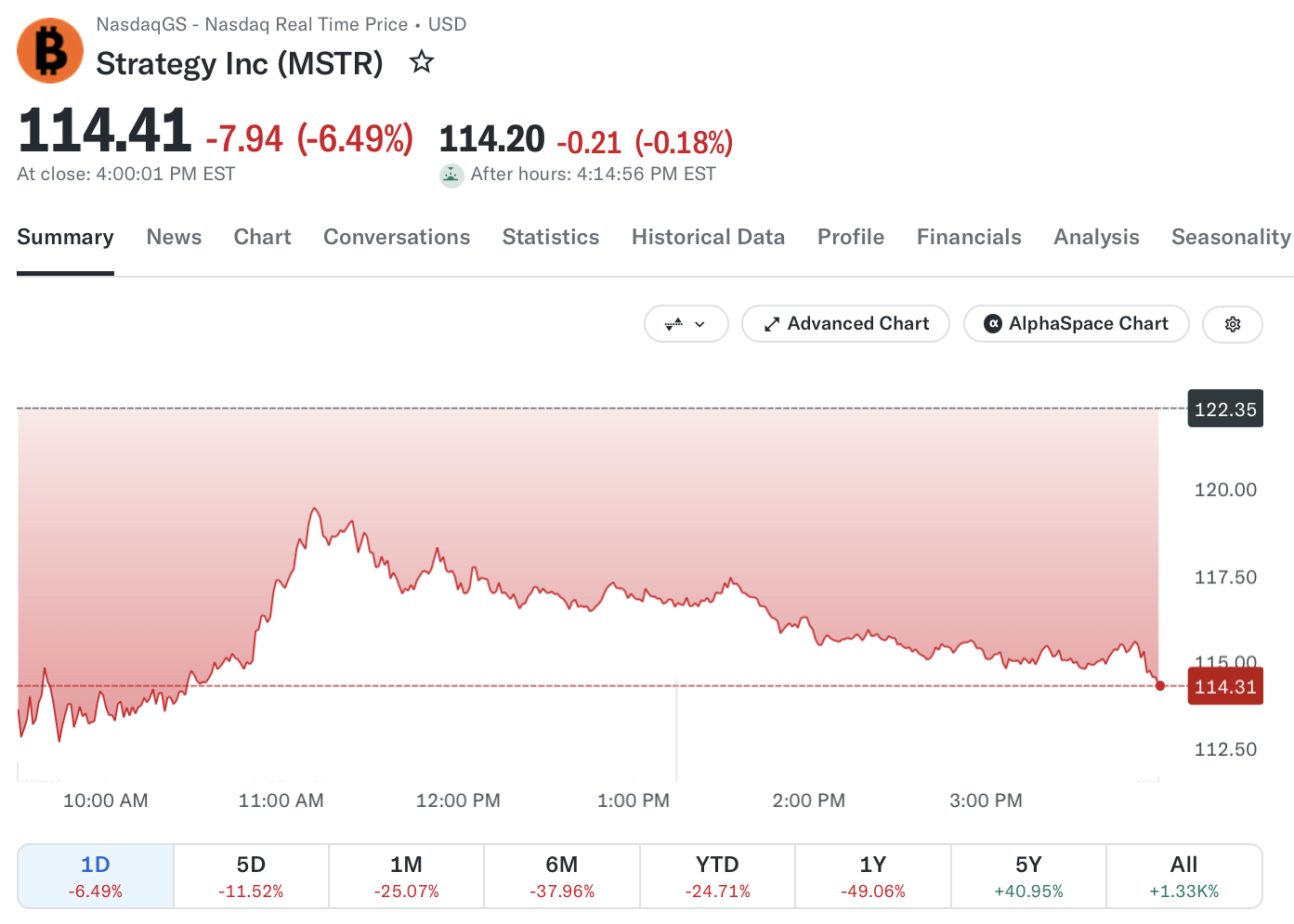
MSCI Confirmed on Wednesday, Strategy will be removed from its global stock indices after the close of trading on November 30th, a move that could trigger funds tracking these benchmarks to sell their holdings. JPMorgan Previously estimated that this exclusion could lead to approximately $2.8 billion in selling pressure.
Global Settlement Network The Chief Executive Officer Ryan Kirkley told Cointelegraph that the decision of MSCI may help to distinguish Bitcoin treasury companies from traditional operating enterprises and limit the indirect cryptocurrency exposure of passive investors.
Being included in an index means that ordinary passive investors, such as those who hold global index funds through pension plans, have acquired a leveraged exposure to Bitcoin without their own choice. “MSCI simply corrects this situation,” he said.
Kirkley added that the decision of MSCI also raised a broader question: whether Bitcoin treasury companies should be classified in the same category as traditional operating enterprises.
“MSCI publicly stated what many financial professionals from institutions have been saying for a long time in private: buying an asset and holding it is not the behavior of a operating enterprise. It’s more like a fund that does not comply with fund regulations.”
In its response to the proposed rules for MSCI on August 31, Strategy stated that these changes were merely an excuse for digital asset treasury companies. The company also downplayed the potential financial impact, claiming that funds linked to MSCI held approximately 13 million of its shares, which accounted for only 3.1% of its total outstanding shares.
The decline in this stock coincided with a broader sell-off in the cryptocurrency market. CoinGecko data shows that as of 4:08 PM Eastern Time on Thursday, Bitcoin was trading at around $71,340, a decrease of 4.3% over the past 24 hours. The total market value of cryptocurrencies fell by 3%, to approximately $2.49 trillion.